
Middle Part Hairstyles for Men: 2026 Cuts That Fit Your Face and Hair

Middle Part Hairstyles for Men divide the hair above the nose and suit oval, square and heart faces best. The top falls past the brow, while the sides and back vary by style. Straight, wavy and curly hair all work when the crown allows a clean split. Length on top decides the look, while the taper sets the sides.
Round faces gain height from a middle part, but the sides need a #2. Two to five inches on top gives the split enough weight to stay put. Curly hair needs a curl cream, while straight hair wants sea salt spray. Ask your barber to dry-cut the part, so the line lands where hair falls.
Quick Answer
Middle Part Hairstyles for Men keep the hair split down the center and even on both sides. They suit most face shapes when the sides stay short and the top stays long. Sides usually take a #1 to #3 guard, blended into a low or mid taper. Expect a touch-up every three to four weeks to keep the part line sharp.
What Are the Best Middle Part Hairstyles for Men?
The best middle part for you depends on your hair type, face shape and how much upkeep you accept. Every cut below keeps the split centered, but each one handles length differently. Your face shape narrows the field, and your hair type settles the rest. Short, medium and long versions each solve a different problem for the wearer.
Short Middle Part Styles

Short versions keep the top between two and three inches, so the split stays visible without much weight. Scissors shape the top, while guards handle the sides and the back. This group suits men who want the look with less drying time each morning. Most need a fresh trim every three to four weeks to keep the line crisp.
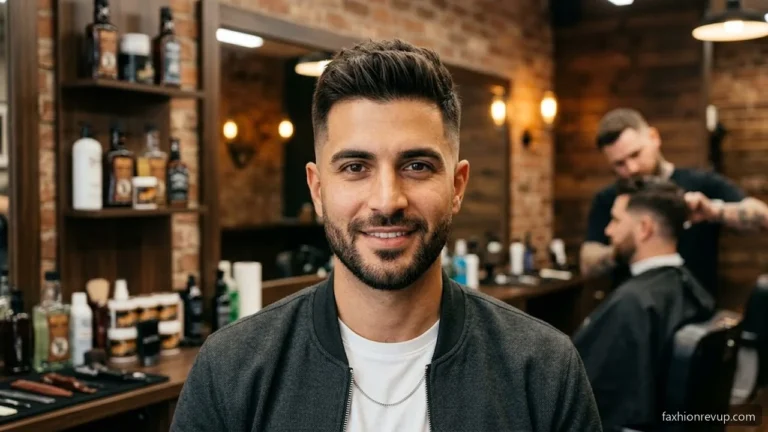
The classic short middle part is the plainest version, cut with scissors to about two inches. Hair falls just past the brow and tucks behind both ears with ease. Nothing is disconnected, so the sides grow into the top without a hard line. A #2 guard at the sideburn and a natural neckline keep the shape soft.
Square and oval faces carry this cut well, because the soft sides balance a strong jaw. Fine to medium hair holds the part with a dime-sized amount of matte paste. Skip it if your hair grows straight forward from the crown, since the split will fight you. Book a trim every four weeks to keep the brow line tidy.
A mid taper fade starts at the temple and strips the sides down to a #1 at the bottom. The fade blends into a #3 just below the part, and the top keeps two and a half inches. This mix reads sharper than a plain taper without going bald at the sides.
Round and square faces get the best balance here, because tight sides cut visual width. A pea-sized amount of matte clay on damp hair keeps the top from flattening. Thick hair should get a softer blend above the temple, so the fade does not jump. Touch-ups land every three weeks, since the fade line shows first.
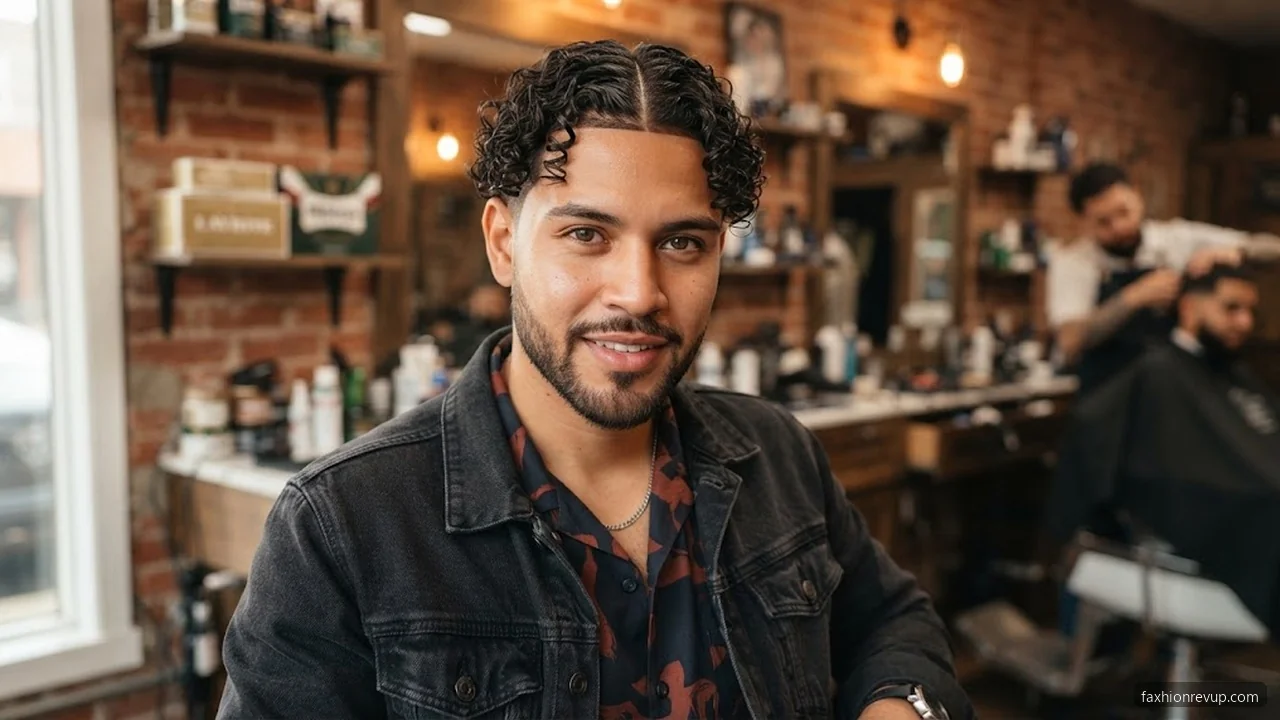
A short curly middle part works with 3A to 3B curls that sit two inches long when stretched. The curls part above the nose and fall into two soft rounded halves. Cutting happens dry, because wet curls spring up and hide the real length. Your barber should shape the sides with a #3 guard to keep the silhouette neat.
Triangle and diamond faces wear this shape well, because the curls add width at the top and temples. Curl cream on soaking-wet hair defines the pattern and controls frizz without any crunch. Dry curls frizz when you brush them, so use your fingers instead of a comb. A trim every five weeks keeps the round shape from turning into a bowl.
A buzzed middle part takes the top down to a #4, which leaves half an inch of hair. The sides run a #1, and a razor part carves the line above the nose. This is the shortest version that still reads as a part rather than a plain buzz. Hair grows back fast here, so the sharp line lasts about ten days.
Square and oblong faces suit this low, flat shape, because it adds no height to the head. Round faces should skip it, since a #4 top gives nothing to stretch the face. Ask for a light matte paste to keep the part line flat without any shine. Book a touch-up every two to three weeks, because the razor line fades first.
A drop fade curves down behind the ear and leaves the back slightly longer than the sides. The fade runs from a #0.5 at the bottom up to a #2 near the part. Two inches on top keeps the front moving without extra weight. This shape hides a flat crown much better than a straight fade does.
Heart and square faces handle the drop fade well, because the curve softens the jaw line. A small amount of sea salt spray adds grit and keeps the two-inch top from sitting flat. Fine hair needs a lighter hand here, since too much product kills the movement. Plan a trim every three to four weeks to keep the curve clean.
Medium Middle Part Styles
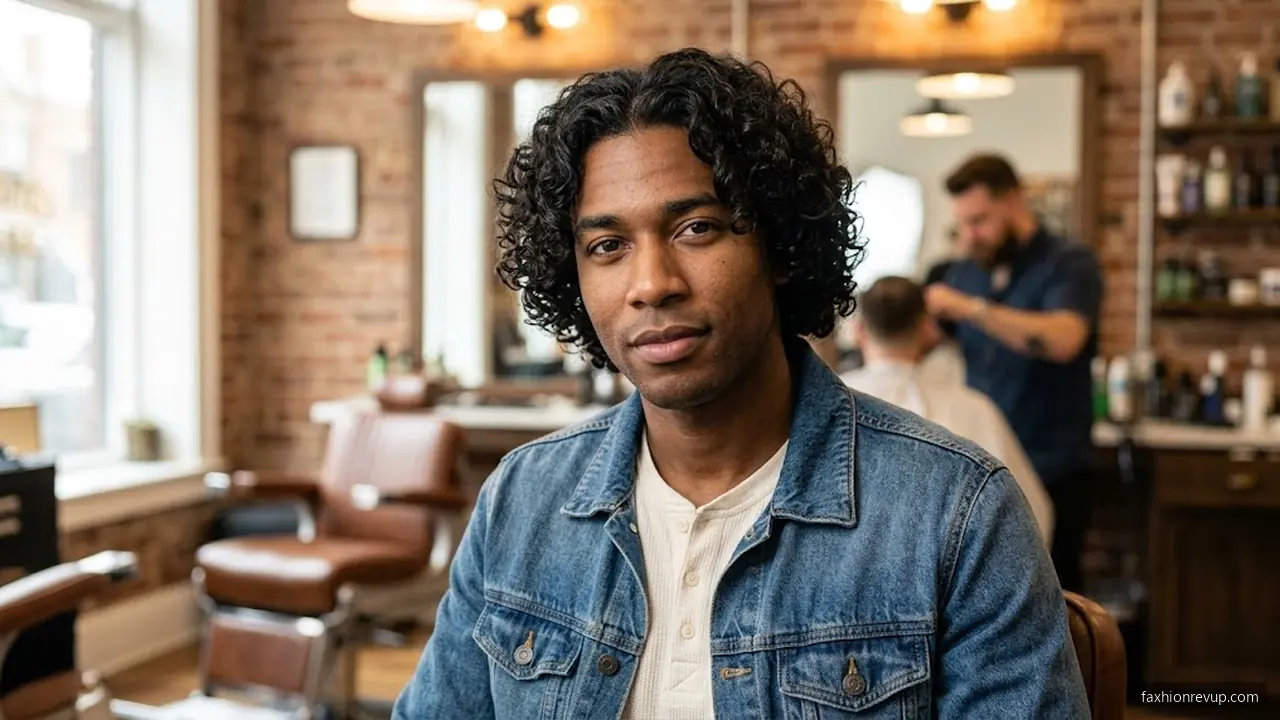
Medium versions run from three to five inches on top, which puts the ends near the cheekbone. The extra length lets the hair curve instead of hugging the head. Choosing between them comes down to your wave pattern, face shape and styling time. Most men need a trim every six weeks to hold the shape.
The classic curtain cut splits four to five inches of hair above the nose. Both ends fall near the cheekbone and curve outward at the jaw. Your barber cuts with scissors and point-cuts the ends to soften the line. The nape stays tapered with a #2 guard, so the back reads clean from behind.
Heart and oval faces carry the curtain cut best, because the fringe covers a wide forehead. Straight and wavy hair from 1C to 2B holds this shape without much effort. Round faces should ask for more height on top and tighter sides instead. A pea-sized amount of matte clay keeps the two halves separated through the day.
Wash-day styling takes about two minutes with a hairdryer on medium heat. Blow the hair forward first, then push each half sideways with a round brush. Trims land every six to eight weeks, since the ends split before the shape drops. Between visits, a small amount of sea salt spray revives the bend at the jaw.
Curtain bangs shorten the front to the brow, while the rest stays four inches long. The split opens in the middle and the fringe sweeps outward, which frames the eyes. Your barber cuts the bangs dry and leaves them slightly longer than the final shape. A #3 guard on the sides keeps the profile narrow without exposing skin.
Diamond and heart faces gain the most, since the outward sweep adds width at the temples. Fine hair handles bangs well, but thick hair needs thinning at the ends to avoid a heavy block. A light gel or mousse holds the fringe while you blow it sideways with a small brush. Trim the bangs every three weeks, because brow-length hair reaches the eyes fast.
A medium curly curtain keeps about four inches of coil on top. The curls split above the nose and hang in two rounded columns. Your barber shapes this dry with scissors, because wet curls hide the true length. The sides take a #2 guard, blended upward to control the width.
3B to 3C coils suit this cut best, since tighter patterns hold the split without falling flat. Triangle faces benefit from the width at the temples, while oblong faces should keep the top shorter. Curl cream on wet hair defines each coil and stops the frizz that ruins the shape. Finger-coil the front pieces after applying, then let them air dry.
Curly hair hides mistakes well, so this cut forgives a late appointment. Trims every six weeks still matter, because split ends travel up the coil and dull the pattern. Ask for a dry cut each time, since a wet cut on curls shortens more than you expect. Sleep on satin if you can, which keeps the front coils from crushing overnight.
A mid fade starts at the temple and runs down to a #1 above the ear. The blend climbs to a #3 near the part, while the top stays four inches long. Curtain-length hair over tight sides makes the head look taller and narrower. This pairing suits men who want a sharp profile with plenty of movement up top.
Round and square faces get the best balance here, because tight sides cut visual width. Diamond faces should keep weight at the temple, so ask for a softer blend. Blow the top dry with a vent brush, then work in a dime-sized amount of matte clay. Sea salt spray works instead if your hair is fine and needs more grit than hold.
Fades lose their edge faster than the top loses shape, so book every three weeks. Between visits, tidy the sideburn line with a trimmer at the lowest guard you own. The top only needs a scissor trim every eight weeks, which saves money across the year. Ask your barber to keep the neckline natural rather than squared off.
Layering adds movement through the middle of the hair, which stops a heavy curtain from hanging flat. Your barber slides the scissors down each section instead of cutting straight across. The shortest layer starts at the cheekbone, and the longest reaches the jaw line. Sides stay scissor-cut with a soft taper, so nothing looks disconnected.
Diamond and triangle faces gain width where they need it, because the layers flare at the temples and upper sides. Thick, straight hair responds best, while very fine hair can look thin at the ends. A few sprays of sea salt spray give the layers some lift before you blow dry. Finish with a fingertip of matte paste to separate the front pieces.
A hard part is a shaved line that marks where the hair splits. On a middle part, your barber carves a line on each side of the split. This works on medium hair because the weight holds both halves flat. The lines grow out in about two weeks, so they need frequent attention.
Square and oval faces wear a hard part well, because the clean lines match a strong bone structure. Keep the rest simple with a dime-sized amount of pomade for shine and control. Razor lines suit straight hair far better than curls, since a coil will not sit flat along the line. Refresh the lines at home with a detail trimmer every two weeks.
Long Middle Part Styles

Long versions run from six inches to shoulder length, and the weight changes how the split behaves. Heavier hair falls straighter, so it needs more time under the dryer. These cuts suit men who already like length and will book trims less often. Most hold their shape for six to eight weeks between appointments.
A long curtain reaches the shoulders or sits just above them, with the ends falling past the jaw. The part stays centered, and both halves hang with a gentle inward bend. Your barber cuts the length wet and then checks it dry, since long hair moves after drying. The sides stay scissor-cut and blended, so no line separates the top from the back.
Square and heart faces carry long hair well, because the length softens a strong jaw or a wide forehead. Medium to thick hair holds this cut, while fine hair can look limp past the collarbone. A small amount of light pomade through damp ends keeps the bend smooth without grease. Book a trim every eight weeks, and ask for the ends dusted rather than shortened.
Waves in the 2C to 3A range turn a long middle part into something looser and wider. Air drying does most of the work here, since heat flattens the pattern. Your barber should cut this shape dry, layer by layer, to follow the wave. The nape stays clean with a scissor-over-comb finish that removes bulk.
Oblong and triangle faces get extra width from the wave, which balances a narrow forehead or a long profile. Curl cream or a light gel defines the pattern while the hair is still wet. Scrunch the ends upward with your hands, then leave the hair alone until it dries. Trims every six to eight weeks keep the layers from growing into a triangle shape.
Fine, straight hair at this length shows every cut line, so precision matters more than layers. A blunt-ish perimeter makes thin ends look fuller than a razor-cut edge. Your barber should avoid heavy layering, because it thins the bottom even more. Oval and diamond faces suit this sleek look, which keeps the profile narrow and clean.
Sea salt spray at the roots adds volume, and a light oil on the ends stops static. Wash no more than every other day, since fine hair gets greasy quickly at the scalp. A dry shampoo at the crown stretches the style an extra day between washes. Trim every eight weeks to keep the ends blunt, which protects the fuller look.
A half-up knot pulls the top section back while the rest hangs loose below. This keeps long hair off the face at work without losing the middle split. Gather the hair from the temples back and tie it with a soft elastic. Round faces gain height from the lift, which stretches the face nicely.
Specialty Middle Part Styles
Specialty versions borrow from other cuts, so they change the silhouette rather than the length alone. Each one solves a specific problem, from thick sides to a flat crown or a need for volume. Ask about upkeep before you commit, because two of these need a chair every two to three weeks.
A burst fade arcs around the ear and leaves the hair behind it longer than the sides. The part stays at three inches on top, and the back keeps its weight. This shape suits men who want tight sides without a straight line across the back. Your barber drops the fade from a #0.5 near the ear up to a #3 above it.
Diamond faces gain from the arc, which keeps weight at the temple and behind the ear. Matte clay keeps the top separated while the faded sides stay flat. Curly hair types 3A to 3C work here too, since the arc follows the natural shape. Book every two to three weeks, because the fade sits high and grows out fast.
A skin fade takes the sides down to bare skin with a foil shaver. The blend climbs through a #0, #1 and #2 above the ear. Three to four inches on top creates a strong contrast with the skin. This is the sharpest look in the group and shows clipper marks on dark, thick hair.
Square and oval faces carry the sharpness best, while round faces should keep more length up top. Pomade gives shine and control, which suits the clean lines of a bald fade. Thick, dark hair shows the blend lines most, so ask for extra time on the transition. Book every two weeks to keep the skin looking fresh rather than fuzzy.
A soft perm adds a loose S-wave to straight hair, which gives a middle part more body. Your barber uses large rods and a mild solution to keep the pattern natural. The top stays at four inches, since permed hair springs up and loses visible length. Sides are scissor-cut or given a #4 guard, depending on how much width you want.
Fine, straight hair gains the most, because the wave adds density that scissors cannot. Oblong and triangle faces benefit from the extra width at the sides. A light mousse scrunching into damp hair keeps the wave bouncy without stiffness. Perms relax after eight to ten weeks, so plan a re-do or a fresh cut around then.
A middle part mullet keeps the front split at the brow and leaves the back long past the nape. The sides stay tight with a #1 guard, which makes the length behind stand out. Your barber blends the top into the back without losing the two front halves. This cut suits men who want the part with a bit of attitude behind it.
Oblong and square faces handle the extra length at the back, because the shape stays tight up front. Sea salt spray builds texture through the top so the split does not look flat. Keep the back trimmed every six weeks while the sides get refreshed at three. Curly hair works here too, but the front halves need more product to stay apart.
Low Taper Middle Part
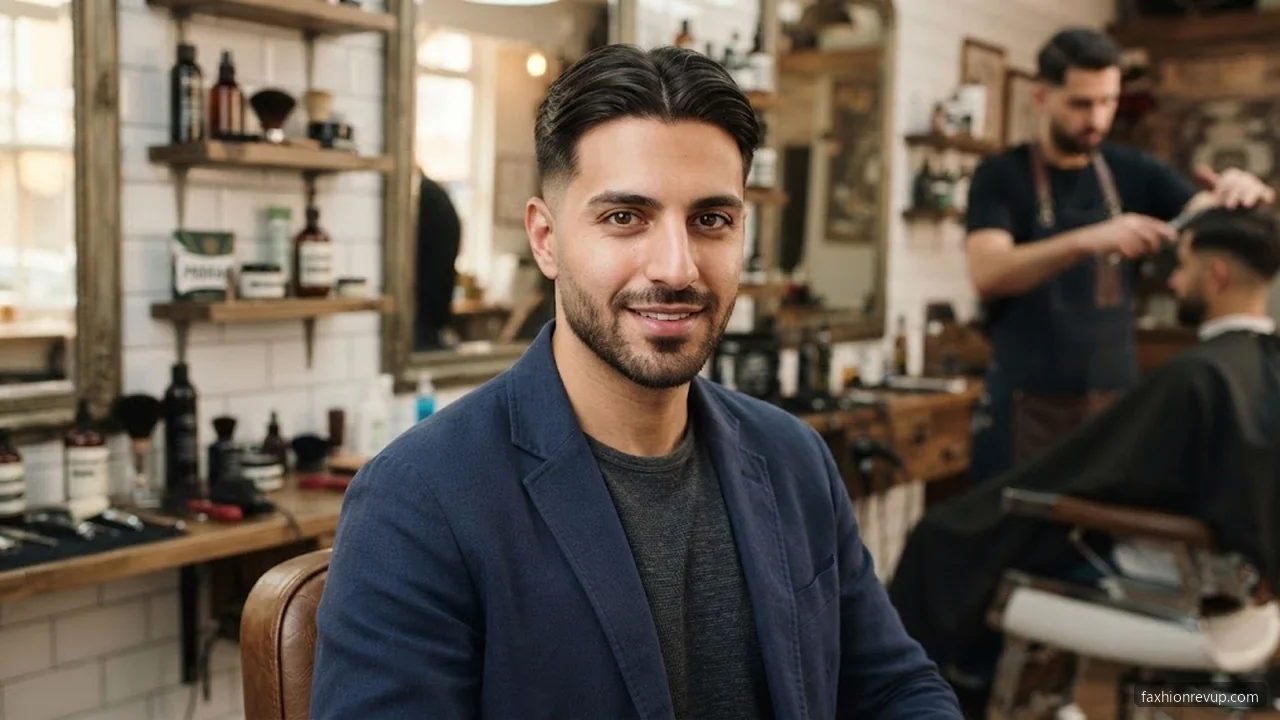
A low taper middle part keeps the sides long enough to look soft just above the ear. Your barber shortens only the sideburns and the nape, which leaves weight through the temples. The top stays three inches long and splits evenly above the nose. Curtain-length ends fall just past the brow and rest near the cheekbone.
Diamond faces get the most from this cut, because the sides stay full. Very full sides would widen a round face, so a tighter finish protects the shape. The taper also hides a cowlick at the nape that a skin fade would expose. Straight and wavy hair from 1B to 2B holds the split without clips.
Textured Curtain Middle Part

Texture turns the curtain cut into something lighter, so the ends break instead of hanging flat. Your barber point-cuts the top to four inches and slides the scissors down each section. The sides stay scissor-cut with a soft taper that keeps length behind the ear. The front pieces fall just past the brow and separate into loose strands.
Heart and diamond faces carry texture well, because the broken ends add width at the temple. Round faces should keep the top shorter, since loose texture near the cheeks adds width. Medium and thick hair from 2A to 3A takes this cut best, while fine hair can look thin. Ask your barber to start the layers at the cheekbone rather than higher up.
Which Middle Part Suits Your Face Shape?
Your face shape decides how much height the top needs and how tight the sides should go. A balanced oval face wears nearly any version, so it never drives the choice alone. Everyone else should fix the sides first, because width is easier to read than length.
The table below matches each shape to a variation and explains why that pairing works. Start with your own row, then read the row above it for a softer option. Your barber can adjust the fade height once the shape is settled.
| Face Shape | Best Middle Part Variation | Why It Works |
|---|---|---|
| Round | Short cut with a mid taper fade | Tight sides cut width while the longer top adds height. |
| Square | Layered curtain cut with soft sides | Texture on top softens a strong jaw without squaring it. |
| Oblong | Long wavy curtain | Side width and lower volume balance a long profile. |
| Heart | Curtain bangs with a short taper | Fringe covers a wide forehead while the length frames a narrow chin. |
| Diamond | Layered medium curtain | Layers add fullness at the forehead and temples to balance wide cheekbones. |
| Triangle | Textured medium curtain with a scissor taper | Volume on top and upper sides balances a jaw wider than the forehead. |
Which Hair Type Works Best with a Middle Part?
Straight hair from 1A to 1C splits cleanly and holds a crisp line, but it falls flat without product. Sea salt spray at the roots adds grit, and a vent brush gives the front some lift. Wash it every other day, since straight hair shows oil at the part fast.
Wavy hair from 2A to 2C works with the least effort, because the natural bend keeps the split open. A small amount of matte clay shapes the ends and stops them from frizzing. Air drying beats a hairdryer here, since heat flattens the natural wave.
How Do You Maintain a Middle Part?
A middle part holds its shape through a mix of washing, drying and regular trims. Train the split while the hair is damp, because wet hair bends where you place it. Keep the sides trimmed on schedule, since the fade or taper grows out before the top does. Between visits, a small amount of product keeps both halves apart all day. See American Academy of Dermatology hair care guidelines for more.
Frequently Asked Questions
How Do You Choose Middle Part Hairstyles for Men Based on Face Shape?
Width matters most, so tight sides flatter round faces while soft sides suit angular ones. Round faces need height on top, so keep the sides short and tight. Oblong faces should pick a longer curtain that adds side weight. Heart and diamond faces gain from fringe coverage or fullness at the temple. See Healthline hair health and wellness resources for more.
Does a middle part work for receding hairlines?
A receding hairline fights a center part, since the split draws eyes to the temples. A fringe or swept front covers those corners better than a sharp line. If you want it anyway, keep the top long and start the split back. Ask your barber to leave weight at the front corners.
How long does it take to train hair for a middle part?
Most hair settles into a center split within two to four weeks of daily training. Push both halves into place with damp hair and let them dry that way. A soft hold product keeps the line through the day while the hair learns. Thick or stubborn hair can take closer to six weeks.
Can you get a middle part with a cowlick?
A cowlick near the front will fight a center split, so work with it rather than against it. Ask your barber to leave extra length on that side, which adds weight. Blow that section toward the split with a round brush until it cools. A strong-hold clay then keeps the stubborn piece in line.
Does a middle part make your face look wider?
The split itself does not widen a face, but the volume around it can. Hair that puffs at the temples adds width across the cheekbones. Keep the sides tight and let the height on top do the work. A mid taper fade keeps that extra width in check.
What happens if you get a middle part with the wrong face shape?
The cut still works, but it stops flattering the face and adds unwanted weight. Round faces with puffy sides look wider, and oblong faces with tall tops look longer. Your barber can fix most of it by adjusting the fade height. Letting the sides grow back out takes three to four weeks.
Should you get a middle part if your hair parts naturally to one side?
A natural side part keeps pulling the hair back, so a center split needs daily training. Short cuts fight it less, because there is less weight to redirect. A longer curtain can be trained with a hairdryer and a round brush. If it keeps slipping, a soft side sweep looks better than a forced split.
What products hold a middle part without making it greasy?
Matte clay and paste hold the split with texture and no shine. Sea salt spray adds grit at the roots and suits fine hair that falls flat. Curl cream defines the pattern on wavy and curly hair without any grease. Keep clay, paste and cream to a pea or dime size, because more product weighs hair down.
How often should you trim a middle part?
Trims depend on how short the sides are, not on the length on top. A taper lasts three to four weeks, while a mid fade needs a touch-up sooner. The top can stretch to six or eight weeks if the ends stay healthy. Book the sides first, and the top when it loses shape.
Can you wear a middle part with a fade?
Yes, and the pairing works best when the fade stays low or mid. A low or mid fade keeps some weight above the ear, which suits the softer split. High and skin fades contrast hard with long hair, so they suit square faces. Pick matte clay to keep the top from looking flat.
Conclusion
Book a middle part once your top hair reaches two inches, and train the split while damp. Round faces should start with a short cut and a mid taper fade, since tight sides cut width. Oblong faces do better with a longer curtain that adds weight at the sides. Choose your length by how much time you will spend drying it.
Tell your barber where the split should sit and how long the top should stay. Ask for a low taper if you want soft sides, or a mid fade for tighter edges. Book a touch-up every three to four weeks so the shape stays clean. Middle Part Hairstyles for Men reward a little patience with the training and the right length.
Peter Johnson has spent over 10 years behind the chair as a licensed barber and hairstylist, working with men’s grooming brands across the US. He writes for faxhionrevup.com to bring practical, tested haircut advice to everyday readers. Peter stays current with trends through hands-on client work and industry training, ensuring every guide reflects real barbering expertise.