
Mod Haircut Ideas for Men: 15 Fresh Cuts for 2026

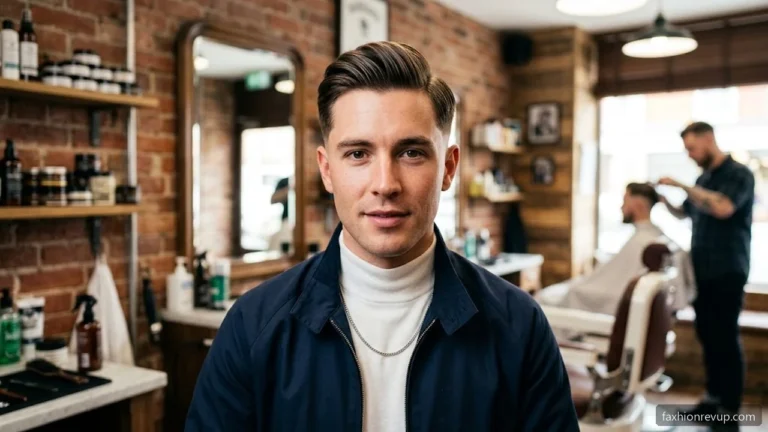
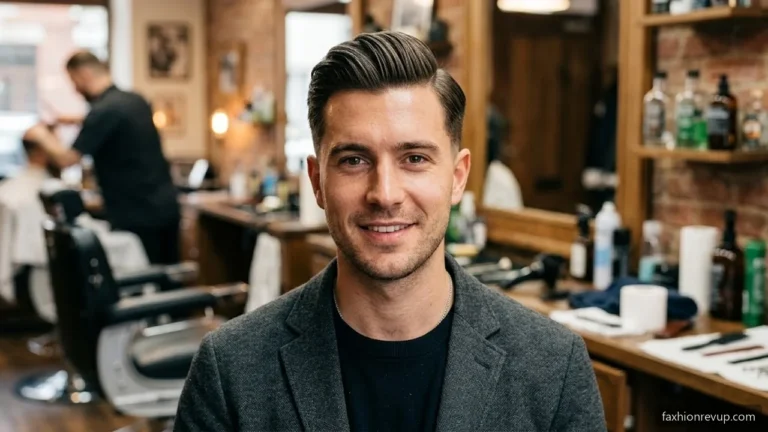
Mod Haircut Ideas for Men cover sharp scissor cuts with a long fringe and short tapered sides. The top stays long enough to part, while the sides and back sit close. The fringe carries the weight, so the shape holds without heavy product. Clean sideburns and a neat nape finish the shape at the edges.
A mod cut suits square faces, because the fringe balances a wide forehead. Ask for three inches on top and a #3 on the sides, with no skin fade. Most men need a trim every four to six weeks to keep it sharp. Straight, wavy and curly hair all work, though fine hair needs extra volume.
Quick Answer
Mod Haircut Ideas for Men start with a long scissor-cut fringe and short tapered sides. The top runs two to five inches, and the sides sit at a #1.5 to #4. Most face shapes work, but round faces need height on top instead of width. Plan on a touch-up every four to six weeks, or three weeks for tight tapers.
What Is a Mod Haircut?
The mod cut grew out of 1960s London, where sharp tailoring met French and Italian styling. Barbers cut the top long and left the sides neat, so the outline looked deliberate. The look spread through bands and boutiques, and it never fully disappeared.
Technically, the cut keeps length on top and tapers the back and sides close. Most versions run two to four inches on top, cut with scissors rather than clippers. The fringe falls forward to the brows, and the sideburns stop mid-ear.
This is not a fade, because a fade blends the whole sides and back down to very short or skin. A mod cut keeps visible weight at the sides, and the taper touches only the edges. That difference shows most on dark, thick hair, where blend lines stand out.
Straight hair gives the crispest result, and it holds the fringe line easily. Waves from 2A to 2C add movement, while coils from 4A upward need extra length. Fine hair can wear the cut, but the top needs sea salt spray for lift.
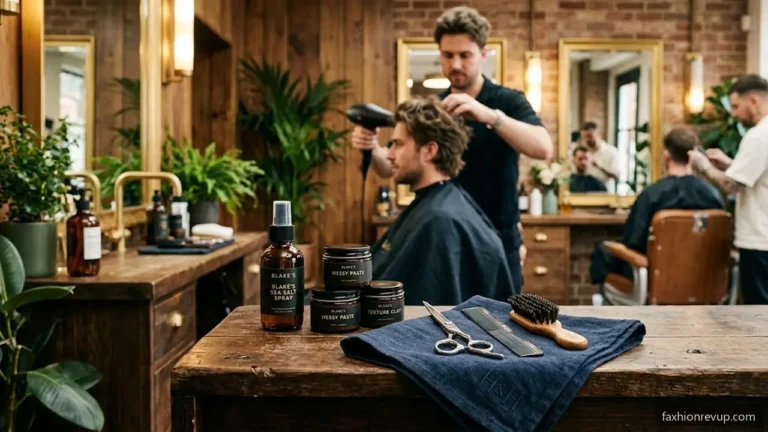
Budget four to six weeks between trims, since the fringe shows growth first. A pea-sized amount of matte clay gives grip and keeps the finish matte. Skip heavy pomade unless you want a slick, glossy look for a night out.
Mod Haircut Ideas for Men: Best Styles to Try
Every mod cut shares the same skeleton, yet the finish changes with your hair and face. Some versions keep the fringe blunt, while others break it into soft pieces. The length you keep on top decides how much styling you do each morning. Match a version to your own texture, face shape and daily routine.
Classic 60s Mod
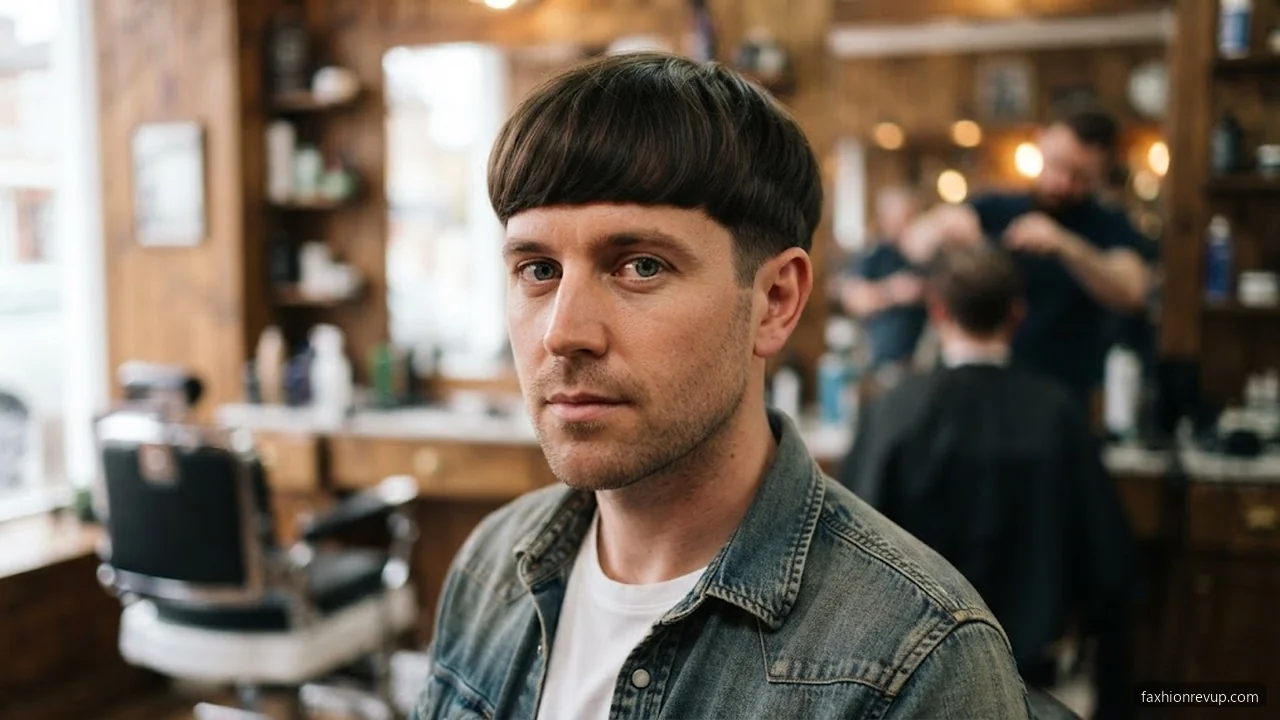
A true 60s mod haircut keeps four inches on top with a blunt fringe. The sides are scissor-tapered to a #4, so the outline stays square and clean. Heart-shaped faces wear it well, because the fringe narrows a wide forehead. Diamond faces also suit it, since weight at the temples balances cheekbones.
Tell your barber: keep the fringe blunt at the brow, and taper the sides. Ask for a natural sideburn reaching mid-ear rather than a clipped line. The back should follow the same taper, with no fade above the neckline. Straight or wavy hair with medium density holds this shape best of all.
Blow the fringe forward while damp, then smooth it with a light pomade. A dime-sized amount keeps the shine low and the line sharp all day. Book a trim every five to six weeks, because the blunt fringe loses shape fast. Curly hair fights this cut, so keep the fringe longer if you have coils.
Britpop Mod
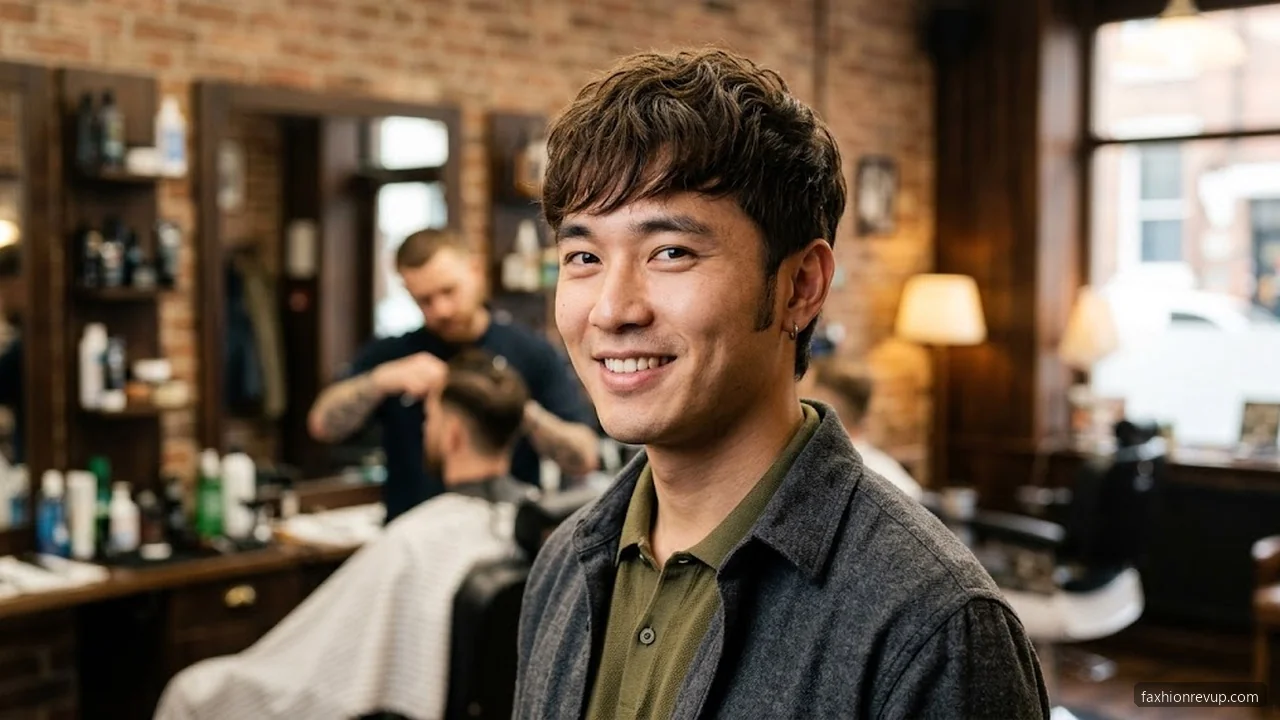
Britpop mod takes the 60s shape and stretches it into a looser, shaggier cut. The top reaches five inches, and the fringe parts off-centre with soft layers. Sides drop to a #2 with a taper that leaves the sideburns visible. Oblong faces suit this length, since the fullness at the sides adds width.
Triangle faces also work well, because volume above the ears balances a wide jaw. Tell your barber you want a shaggy mod with a moving fringe and soft sides. Ask for point-cut ends, so the top looks broken rather than blunt. Wavy hair from 2A to 2C gives the best movement for this version.
Work a small amount of styling paste through damp hair, then dry it. Push the fringe sideways with your fingers instead of combing it flat. A trim every five weeks keeps the layers from turning stringy. Fine hair needs sea salt spray at the roots for extra grip and lift.
Modern Textured Mod
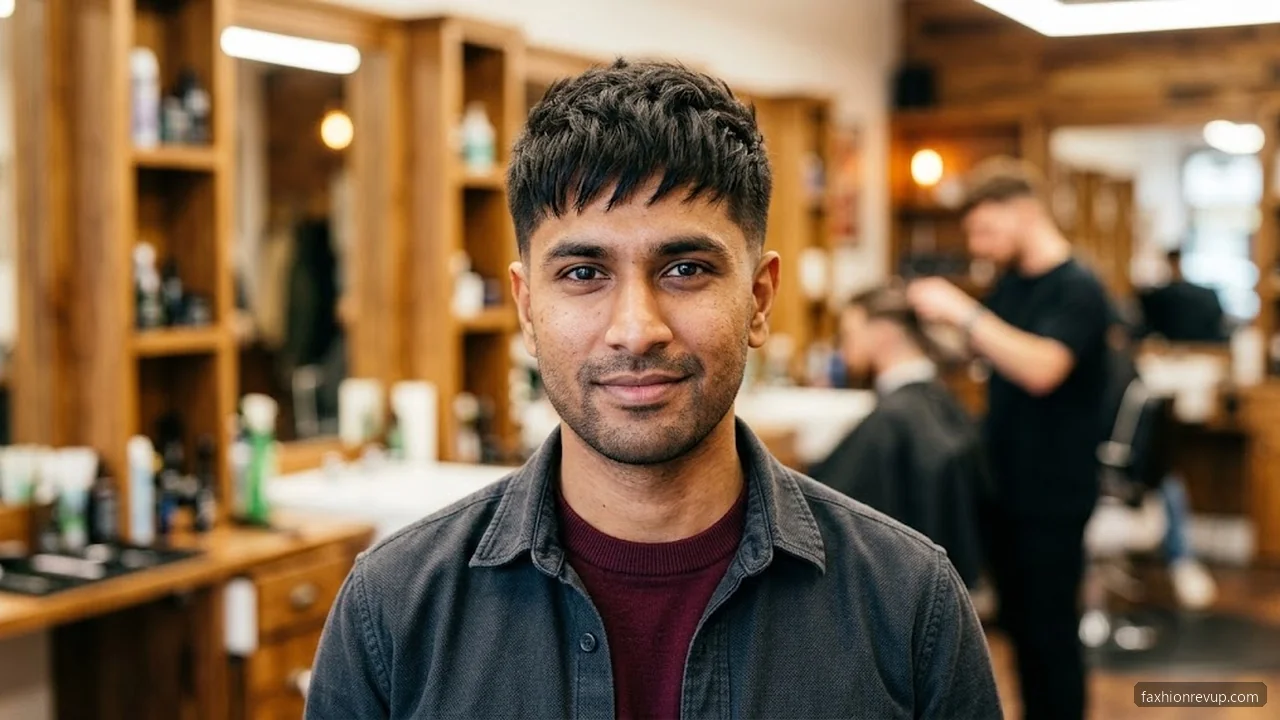
The modern textured mod cut trims the top back to about two and a half inches. Sides run a #1.5 with a low taper that starts just above the ear. Round faces gain height on top, which stretches the face instead of widening it. Square faces soften their jawline when the top carries broken texture.
Ask your barber for a textured mod with a #1.5 low taper and choppy ends. Tell them the fringe should sit above the brows and read uneven on purpose. Thick, straight hair holds the texture best, and it needs thinning at the crown. Fine hair suits it as long as the top keeps enough length to grip.
Scrunch sea salt spray into damp hair, then let it air dry. Finish with matte clay, worked in from the back toward the fringe. This version needs a touch-up every three to four weeks to hold shape. Skip heavy pomade, because it flattens the texture you just built.
Short Mod Cut
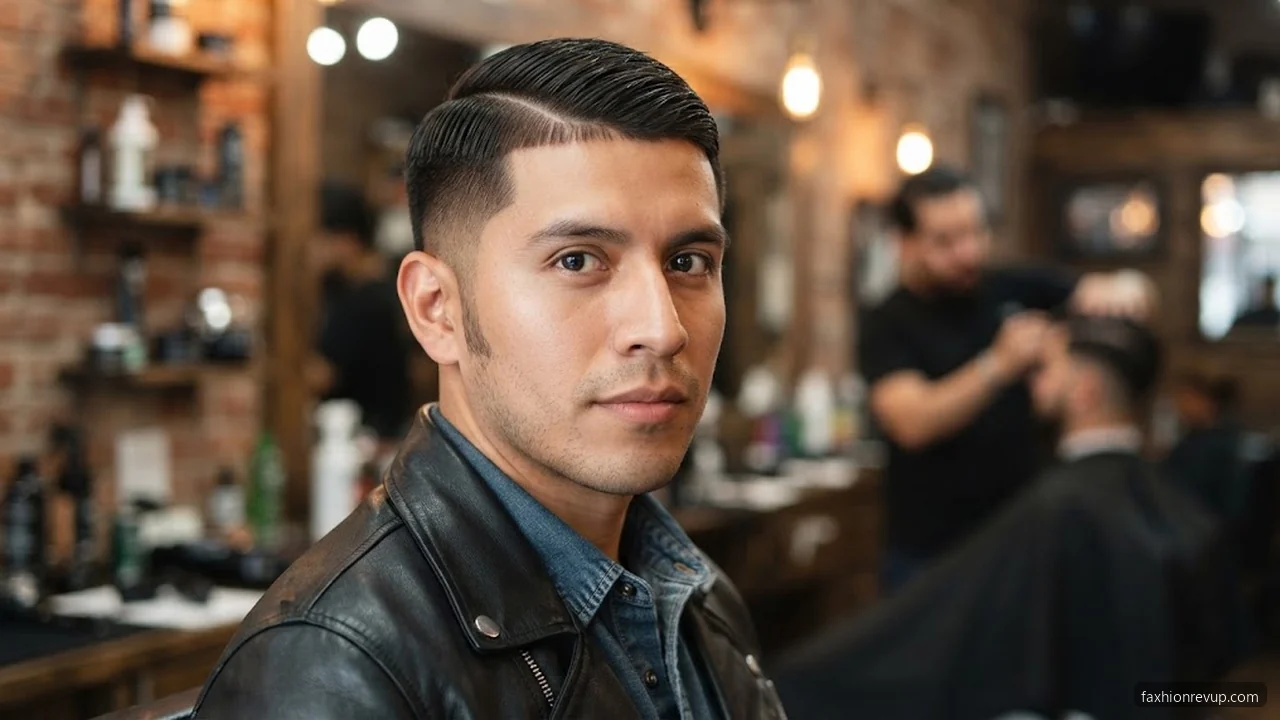
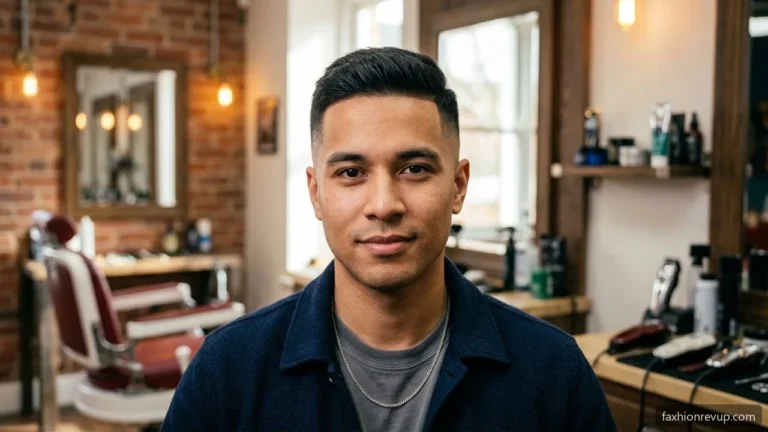
A short mod cut keeps the same clean outline with far less length to manage. The top sits at an inch and a half, cut with scissors and softened at the edges. Sides take a #3, and the back follows the same line without a fade. Oval and square faces carry this shape easily, since nothing overwhelms the jaw.
Ask for a short mod with a soft fringe, and keep the sides square. Tell your barber to leave the neckline natural instead of clipping it high. Thick hair with a slight wave works best, because it fills the shape. Very curly hair should skip this version, since shrinkage hides the fringe.
Rub a small amount of matte clay between your palms and push the top forward. This cut suits men who want a mod look without daily styling work. Book a trim every three weeks, because short fringes lose their line quickly. A light hold keeps the shape tidy under a bike helmet or hat.
Choppy Mod

Choppy mod hair keeps two inches on top and cuts the fringe into uneven pieces. Sides stay at a #2 with a taper, so the jagged top stands out against clean edges. Square faces benefit most, because the broken fringe softens a strong jaw. Medium-density hair with a natural bend holds the chop better than very fine hair.
Ask for a choppy mod with a #2 taper and a fringe cut point-first. Styling takes a dime-sized amount of clay, rubbed through the ends only. Keep the roots free of product, so the top keeps some movement. Trim every four weeks, because choppy ends lose their shape as they grow.
Messy Mod
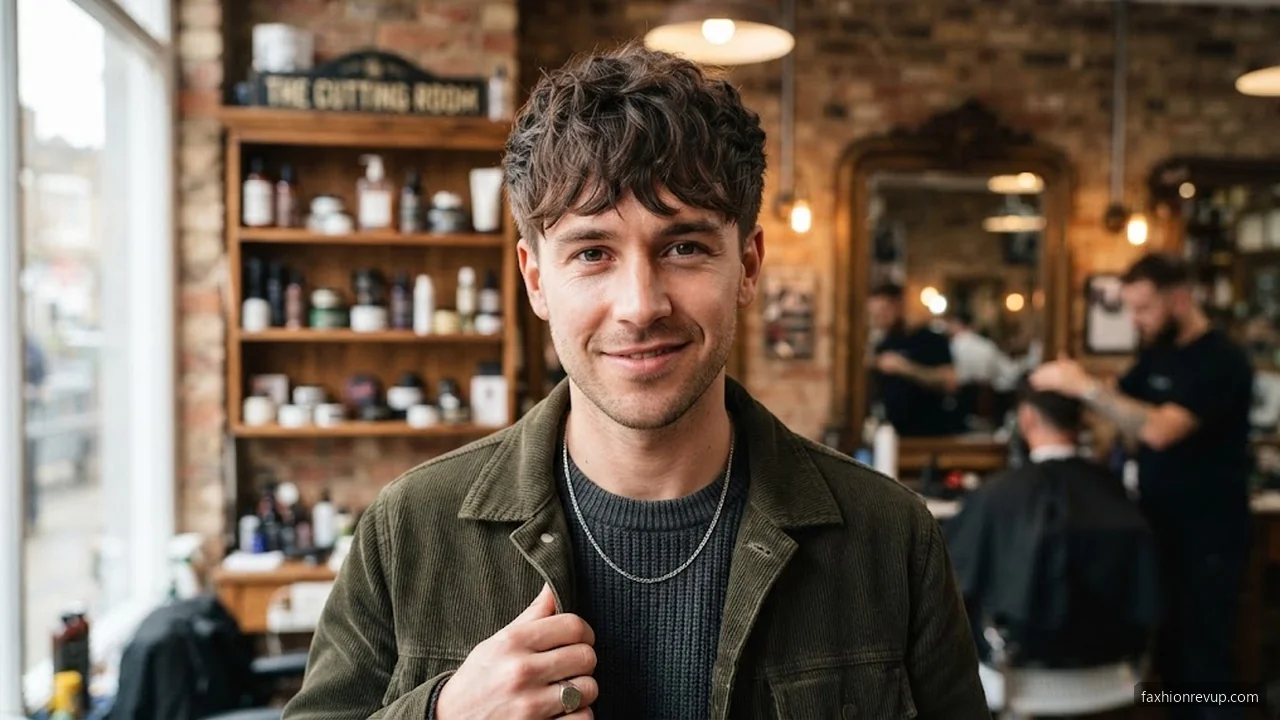
Messy mod hair sits around two and a half inches on top with a soft taper. Sides drop to a #3, which keeps the outline tidy without looking sharp. Oval and oblong faces wear it well, because the loose top adds softness.
Ask your barber for a messy mod with dry-cut ends and a natural neckline. Work matte clay into dry hair, then break the fringe with your fingertips. A trim every five weeks keeps the mess looking chosen rather than grown out.
Curly Mod

A curly mod keeps three inches on top so the coils hang instead of lifting. Sides take a #3, because tight sides next to curls make the head look wider. Oval and square faces suit it best, and round faces should keep more height.
Ask for a curly mod with dry-cut layers and a fringe that reaches the brows. Curl cream on soaking-wet hair defines the pattern and controls frizz. Book a trim every six to eight weeks, since curls hide grown-out lines.
Wavy Mod

Wavy mod hair uses three inches on top with a #2 taper at the sides. Round faces gain vertical height here, so the width across the cheeks shrinks. Heart faces also suit it, since the fringe covers a broad forehead nicely.
Tell your barber to keep weight in the fringe and thin the sides lightly. Sea salt spray plus a blow-dry with a round brush builds the wave. Plan on a trim every six weeks to stop the ends from splitting.
Mod for Straight Hair
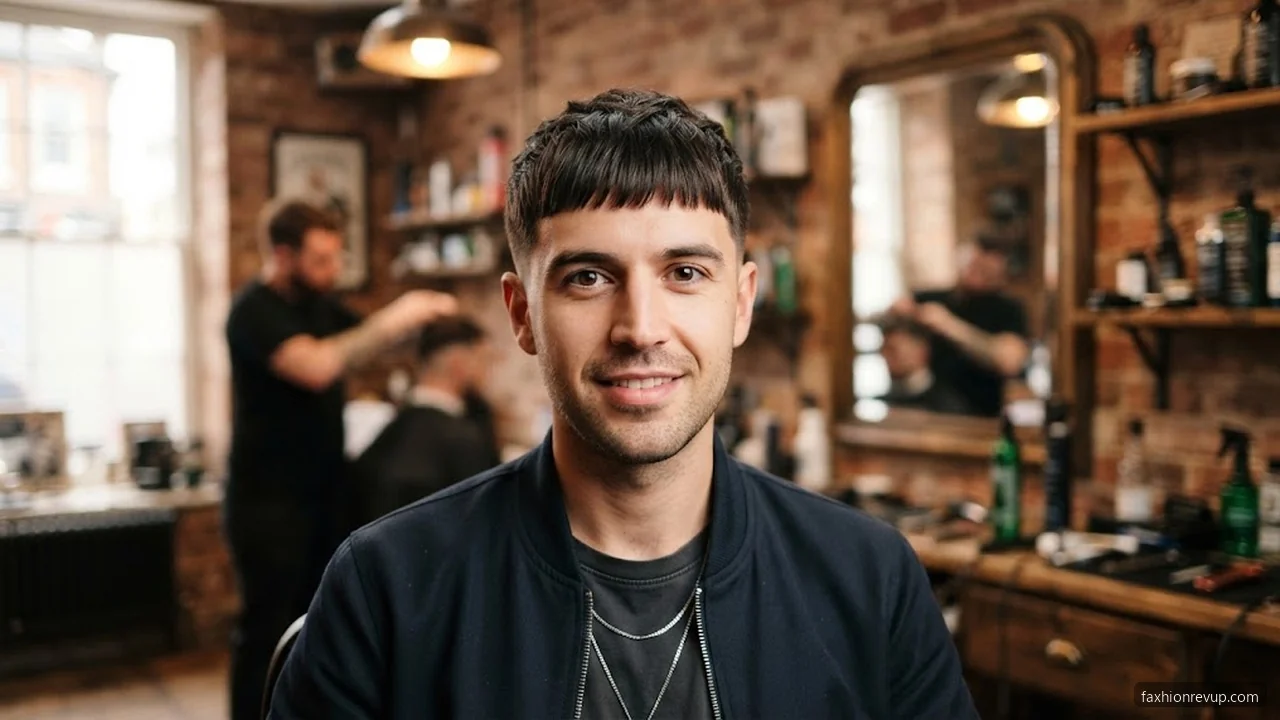
Straight hair shows every line, so a mod cut needs sharp scissor work. Two and a half inches on top with a #3 taper keeps the shape crisp. Diamond and triangle faces suit it, since blunt weight above the ears adds fullness.
Ask for blunt ends on top, and a taper that leaves the sideburns square. Sea salt spray adds grip, which straight hair otherwise lacks completely. A trim every four weeks stops blunt lines from turning ragged at the edges.
Long Mod

A long mod cut leaves five to six inches on top and covers the ears. Sides stay at a #4 taper, so the length above has something to sit on. Square and triangle faces handle the weight, because the jaw stays visible.
Tell your barber to layer the top so the fringe does not hang flat. A small amount of styling paste keeps the length in place without shine. This version needs a trim every eight weeks, mostly to tidy the neckline.
Medium Mod
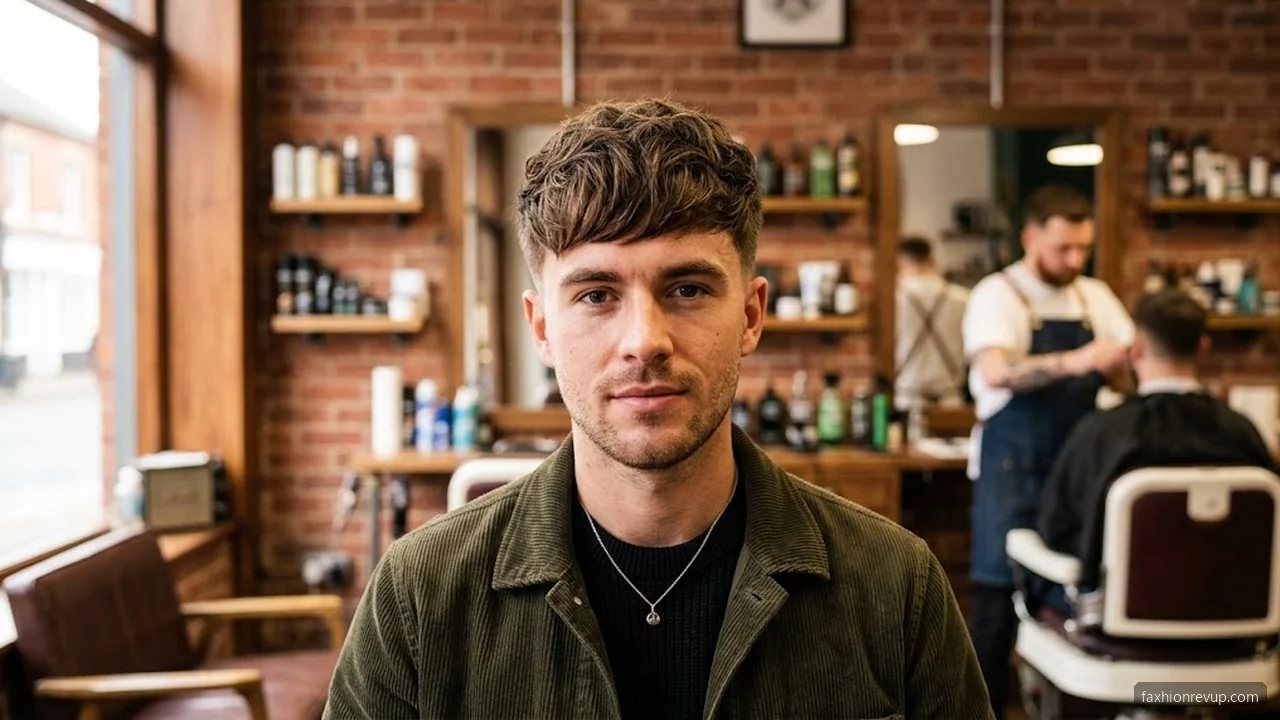
Medium mod hair runs three to four inches on top with a #3 tapered side. Oval and round faces both gain from the height, since it stretches the face. This length suits most textures, and it needs less styling than longer versions.
Ask for a medium mod with a soft fringe and a taper above the ear. Blow-dry the top upward, then smooth the fringe forward with paste. Book every six weeks, because this length tips into shaggy without trims.
Fluffy Mod

Fluffy mod hair uses layers and a blow-dry to build volume at the crown. The top sits at four inches, and the sides drop to a #3 taper. Heart and diamond faces suit the softness, because the fringe covers the forehead.
Ask your barber for a fluffy mod with rounded layers and a full fringe. Mousse on damp roots, then a round brush, gives the lift you want. Trim every five weeks to keep the layers from collapsing into a wedge.
Shaggy Mod
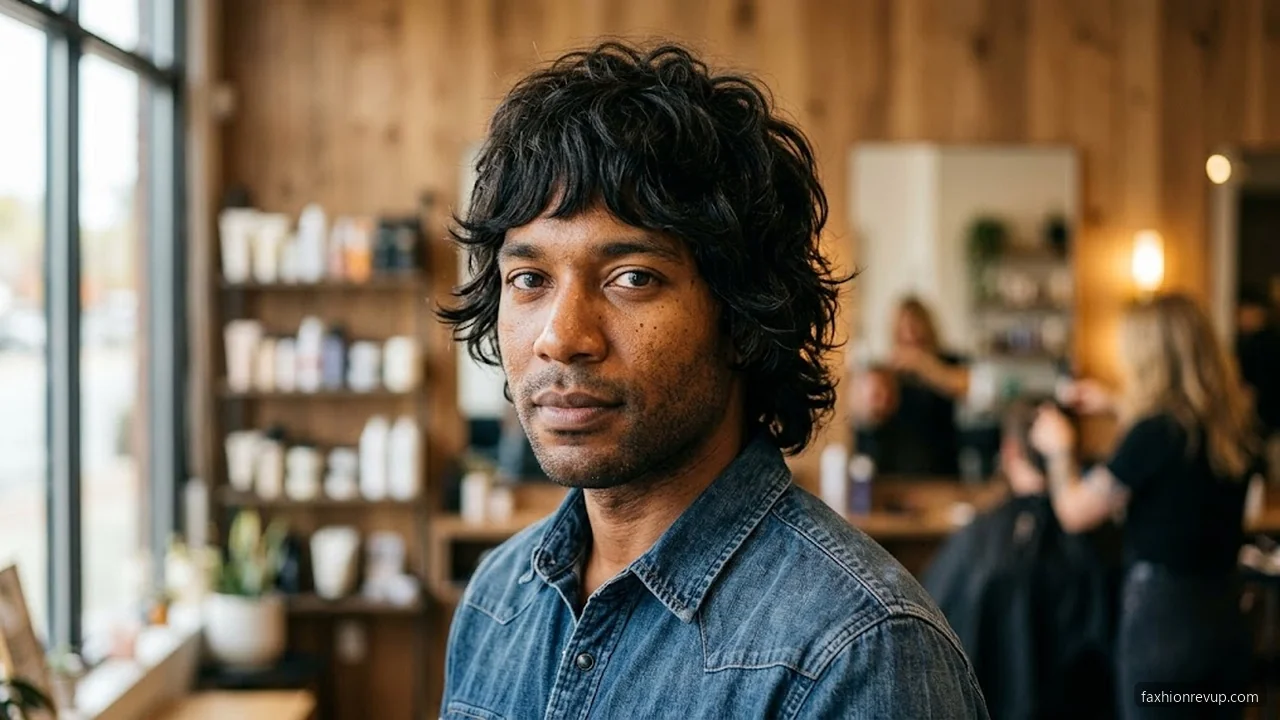
A shaggy mod mixes mod lines with heavy layering through the top and fringe. Four inches on top, a #2 taper, and sliced ends make the difference. Oblong and square faces wear it well, since the layers add width at the sides.
Tell your barber to slide-cut the layers, so the ends stay soft and loose. Styling paste on damp hair, air dried, gives the best loose finish. A trim every seven weeks keeps the layers from clumping into one shape.
Mod Mullet
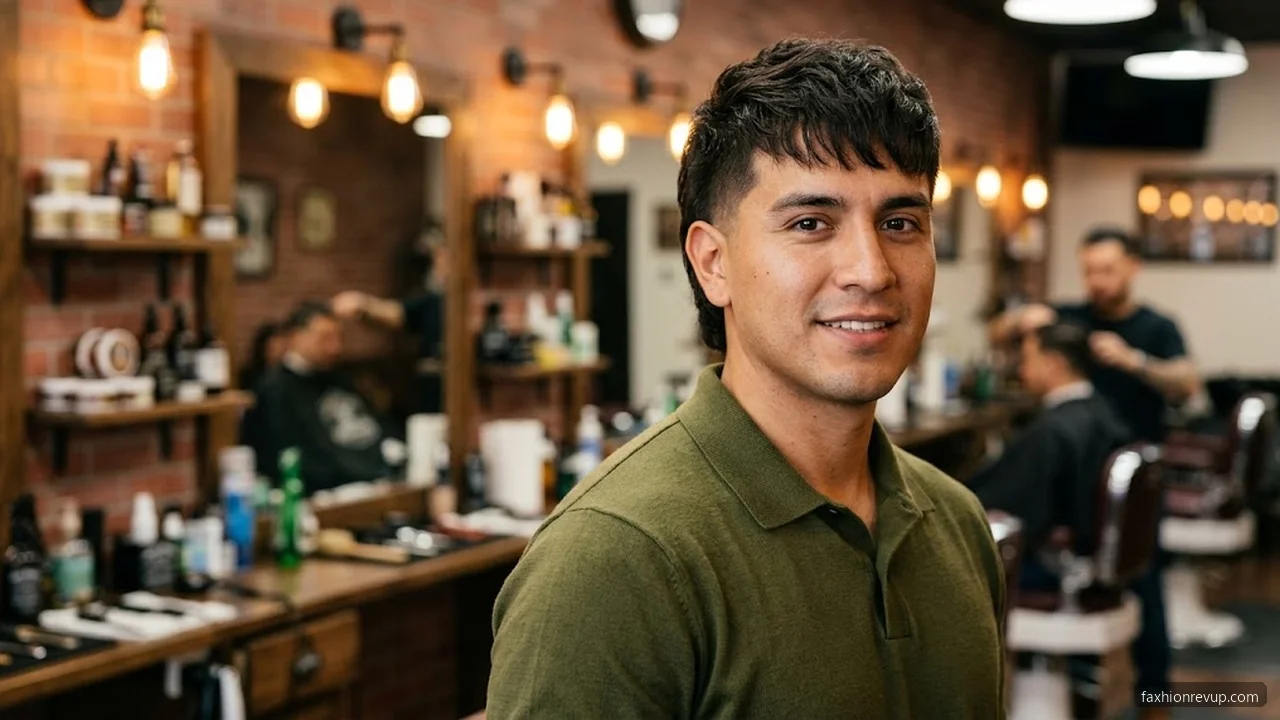
A mod mullet keeps the fringe sharp and lets the back grow past the nape. Sides take a #1.5 taper, while the back stays long and textured. Oval and round faces suit it, because the tight sides stop the head looking wide.
Ask for a mod mullet with short sides and a soft, layered back. Styling paste shapes the top, and the same paste softens the back edges. Book every four weeks, since the taper grows out before the back does.
Mod Wolf Cut
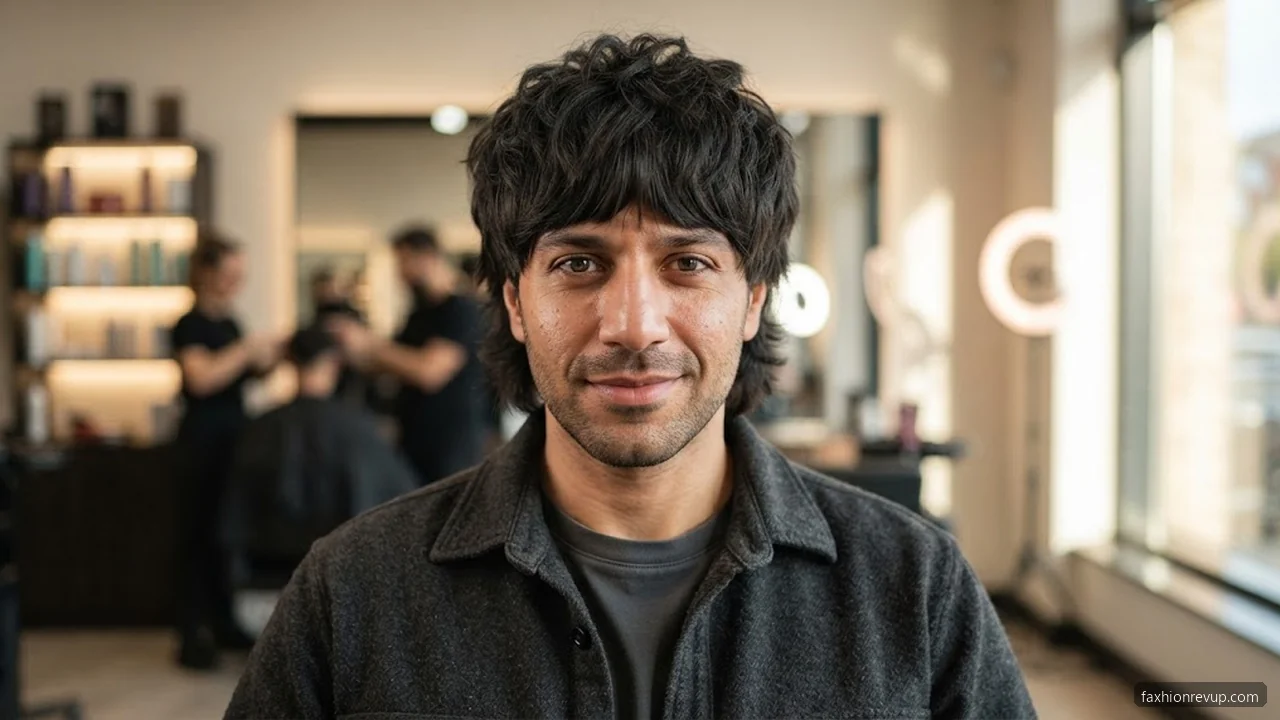
A mod wolf cut carries shorter layers at the crown and longer sides. The top sits at three inches, and the back reaches the collar. Round faces gain lift from the crown, and diamond faces keep fullness at the temples.
Ask for a wolf cut with mod lines and a fringe that splits in the middle. Sea salt spray plus a diffuser builds the lift that this cut needs. Trim every six to eight weeks to keep the layers from growing into a mullet.
Mod Quiff with Reference Photos
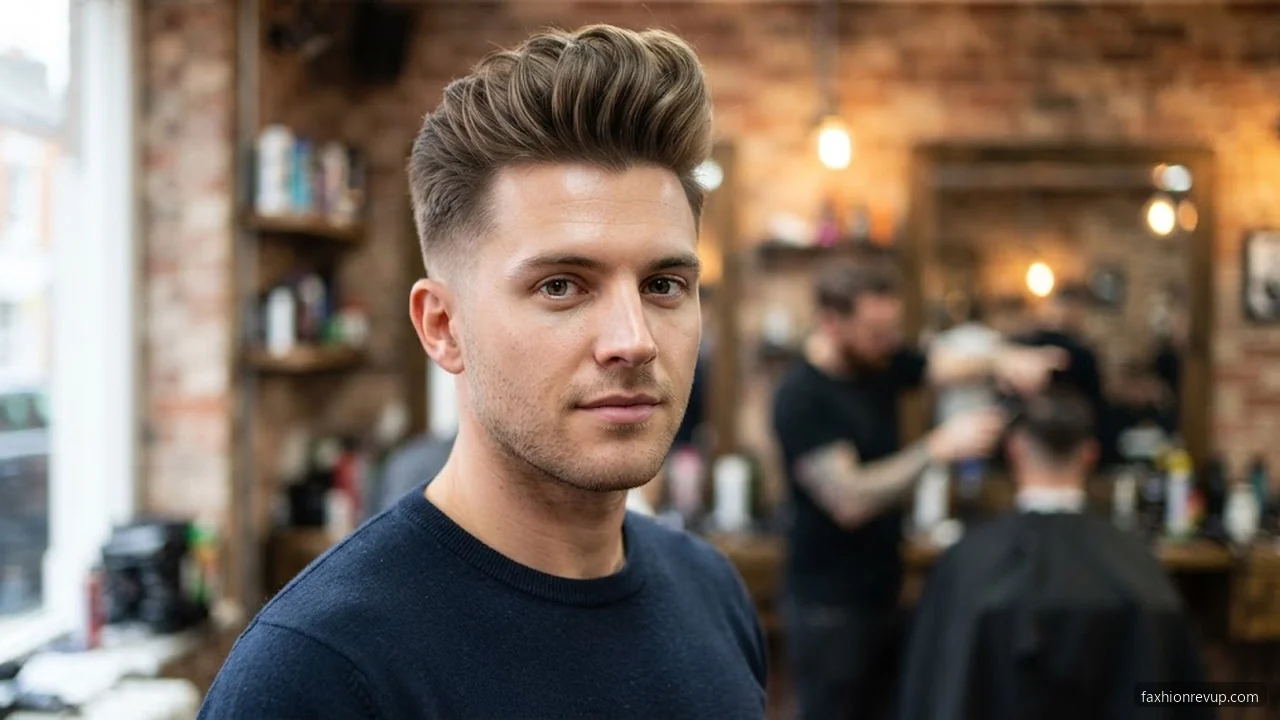
A quiff mod lifts the fringe up and back instead of letting it fall flat. The top runs about three inches, and the sides sit at a #2 taper. Round faces gain the height they need, and square faces like the broken texture on top.
Bring two photos, one from the front and one from the side. Ask for a three-inch top with a #2 taper, then blow-dry the front upward. A round brush and a blow-dryer lift the front before you add any product. Matte clay sets the height, and a trim every four weeks keeps the front sharp.
Mop Top with Reference Photos

A mop top keeps four to five inches on top with a fringe that covers the brows. The sides stay at a #4 taper, so the shape looks round rather than sharp. Heart faces wear it well, since the fringe narrows a wide forehead, and diamond faces suit forehead fullness.
Show your barber two photos, one with the fringe down and one pushed aside. Ask for a four-inch top, a #4 taper, and blunt ends across the fringe. Thick straight hair suits it best, and mousse at the roots adds the round volume. Trim every five weeks, because the blunt fringe grows past the brows fast.
Mod French Crop

A mod French crop pairs a short blunt fringe with sides cut close at a #1.5. The top holds about an inch and a half, so the front sits heavy and flat. Triangle and round faces gain from the height, which stretches a wide jaw or full cheeks.
Ask your barber for a #1.5 mid taper and a fringe cut straight across. Work a pea-sized amount of matte clay into dry hair, pushing the front down. Straight thick hair holds the line, while very curly hair fights the flat fringe. Book a trim every three weeks, since short crops show regrowth very quickly.
Mod Bowl Cut
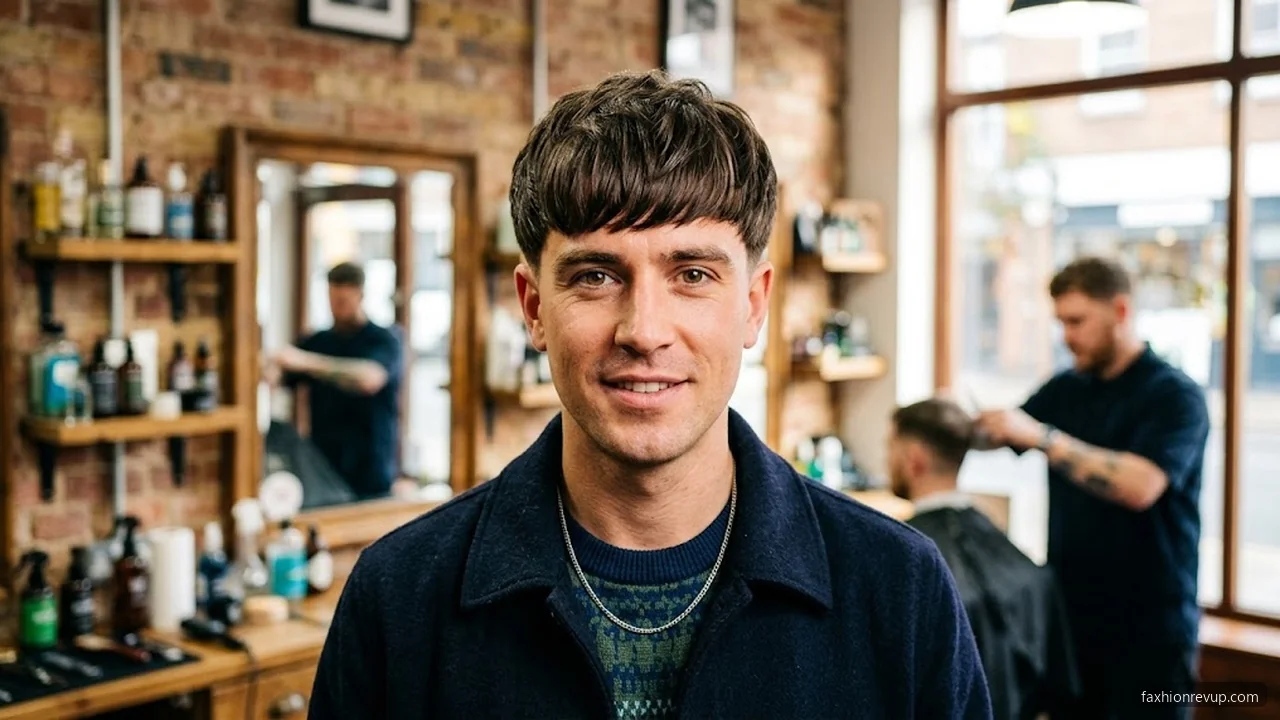
A bowl cut leaves the sides at a #5 with a three-inch top. The top reaches three inches, and the fringe sits level with the eyebrows. Oblong faces gain width from the sides, while heart faces hide a wide forehead.
Tell your barber you want a soft bowl, not a hard line above the ears. Mousse on damp hair, worked from the crown down, keeps the shape rounded. Round faces should skip this one, because the sides add width they do not need. Trim every six weeks, since the shape only reads at full length.
Side-Swept Mod
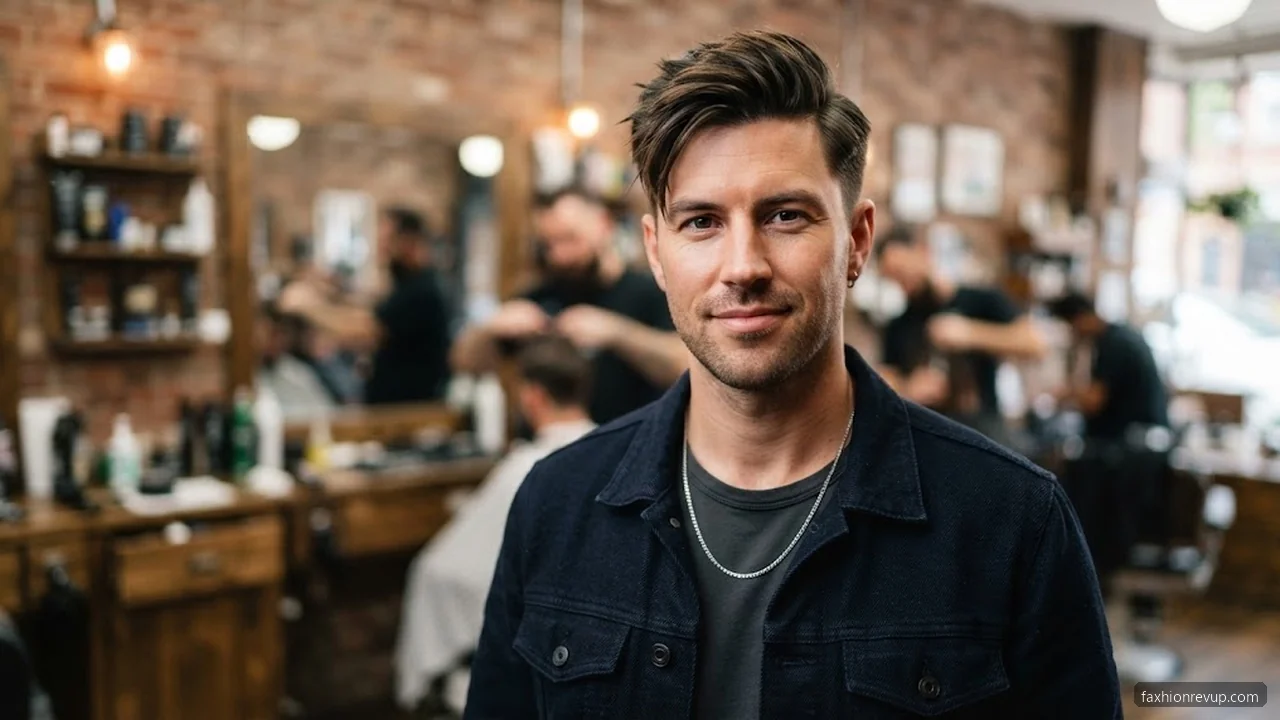
A side-swept mod sends the fringe across the forehead instead of straight down. The top runs three inches with a deep part on one side. Oval and heart faces suit it, because the sweep softens a broad brow without extra height.
Ask for a #2 taper on the sides and a fringe left long enough to sweep. A dime-sized amount of pomade gives the shine that this style needs. Fine or medium straight hair sweeps best, and wavy hair needs a blow-dry first. Trim every five weeks, because the swept fringe loses its line as it grows.
Mod Flow
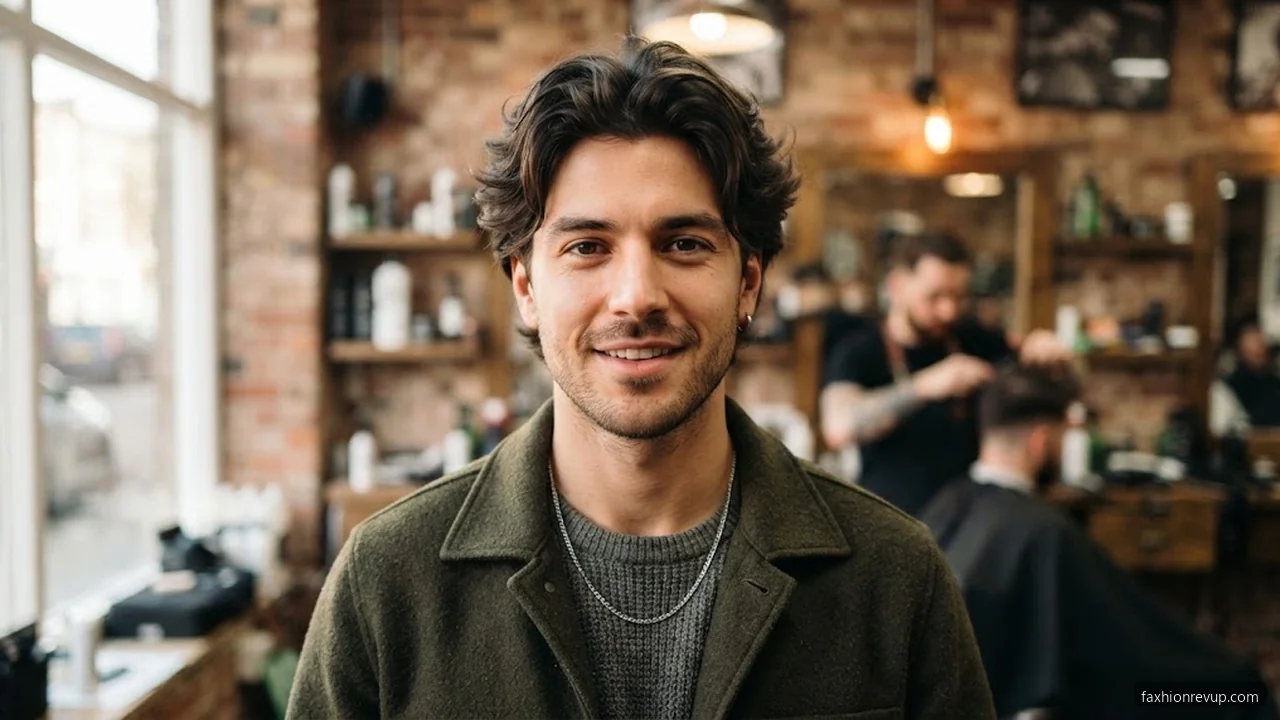
A mod flow lets the back and sides grow into one soft, connected shape. The top sits at four inches, and the sides stay long at a #4. Square and diamond faces carry the weight, since fullness at the temples balances their angles.
Ask your barber for scissor-over-comb sides and a layered top with no hard lines. Three or four sprays of sea salt spray give the flow its loose movement. Wavy hair from 2A to 2C works best, and straight hair needs a diffuser. Trim every eight weeks, mostly to tidy the neckline and the split ends.
Mod with Low Taper
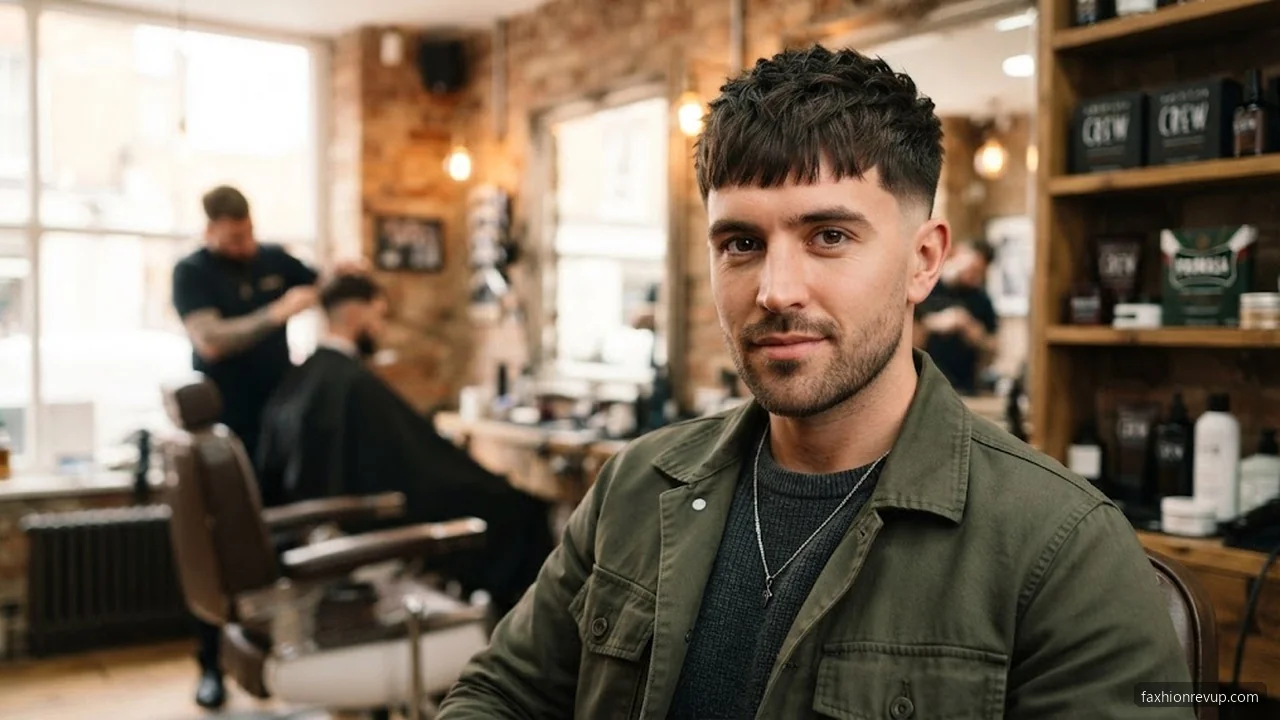
A low taper starts just above the ear and the neckline, so the sides keep weight. The top runs three inches, and the sides sit at a #2 above that taper. Square and triangle faces suit it, because the jaw stays visible under the soft edges.
Tell your barber to taper the sideburns and nape, and leave the sides square. A pea-sized amount of matte paste holds the top without any shine. Straight or wavy hair both work, and fine hair suits the light weight here. Book every three to four weeks, since tapers lose their edge before fades do.
Blonde Mod

Blonde hair shows clipper marks less than dark hair, so a soft #2 taper reads smooth. The top stays at three inches, cut with scissors to keep the ends light. Pale shades also hide the blend line where the taper meets the top.
Oval and diamond faces wear it easily, since the colour adds no extra weight. Ask for a #2 taper, a three-inch top, and a warm toner every six weeks. Sea salt spray keeps blonde hair from looking flat, and light paste adds grip. Trim every five weeks, and book a colour refresh at the same time.
Thick Mod with Waves
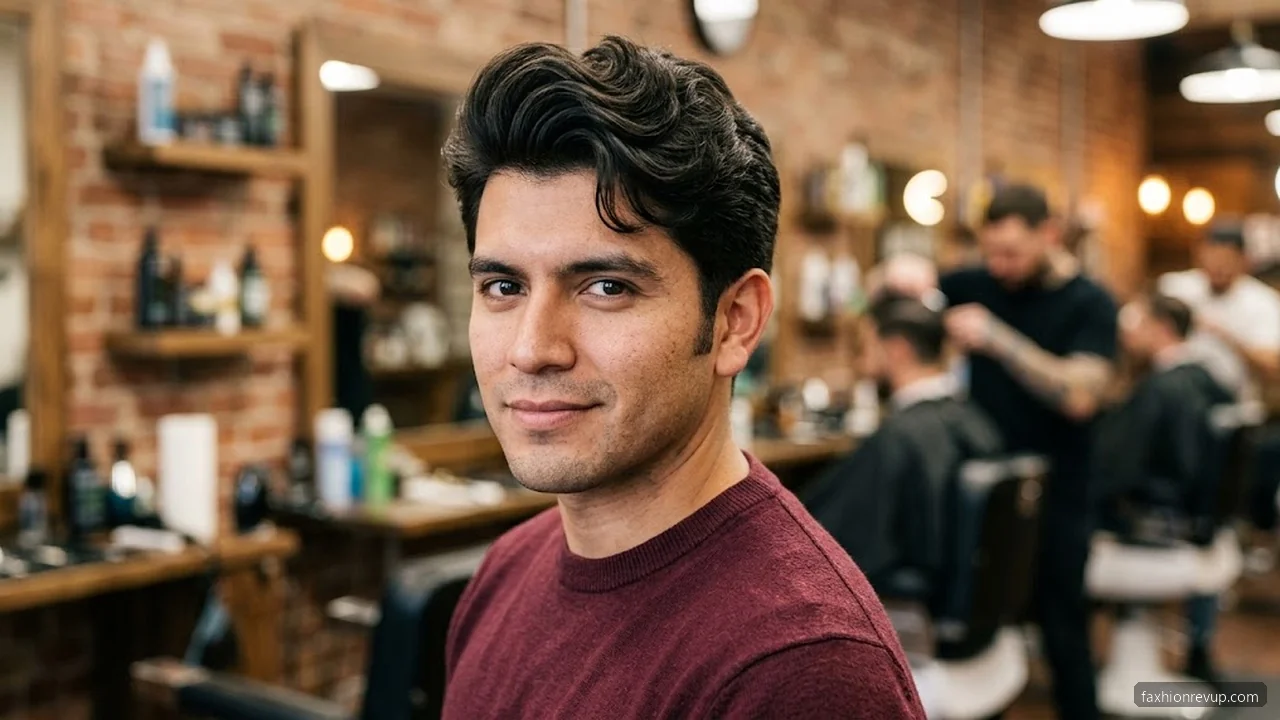
Thick hair with waves carries more weight, so the mod shape needs thinning at the crown. The top runs three and a half inches, and the sides taper at a #1.5. Oblong and square faces suit it, because the wave adds width where they need it.
Ask your barber to thin the crown and leave the mid-lengths full and heavy. A curl cream through damp waves defines them and keeps frizz away. Waves from 2B to 2C hold this shape best, and a light paste finishes the ends. Trim every five weeks, since thick hair loses shape as it grows out.
Spiky Mod
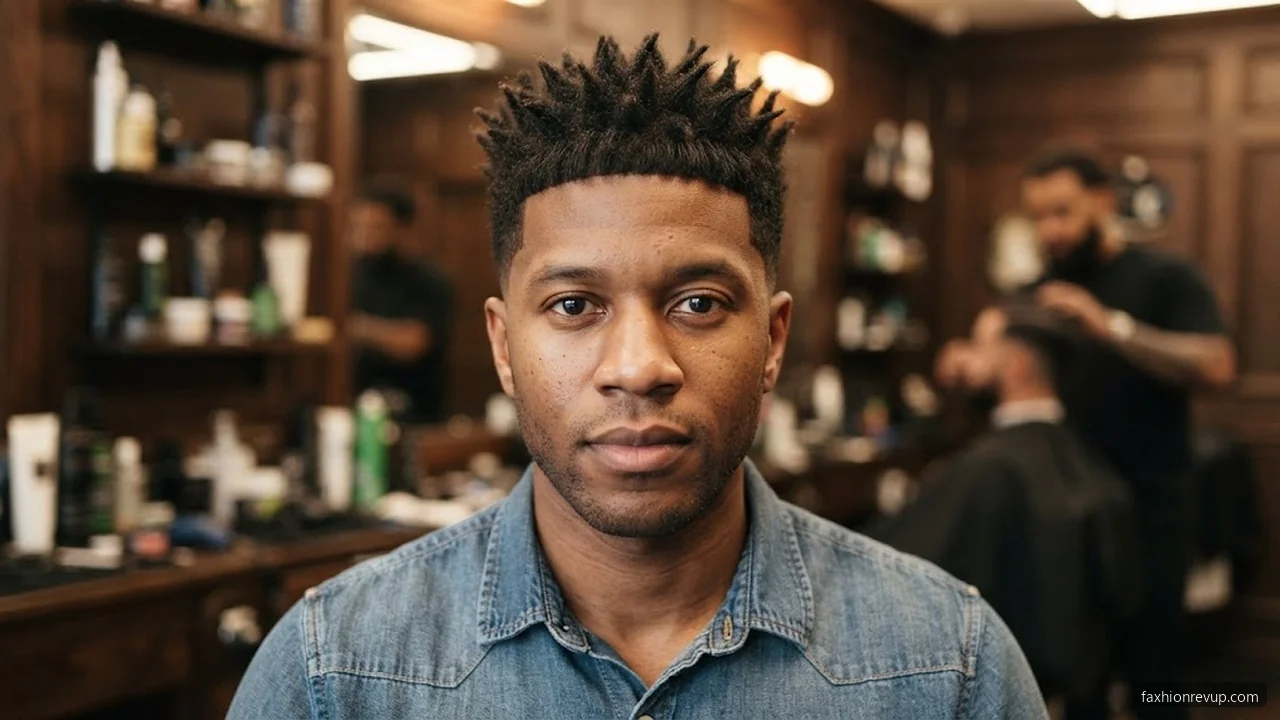
A spiky mod keeps the mod outline but lifts the top into short, sharp points. The top holds two inches, and the sides taper close at a #1. Round faces gain height from the spikes, and square faces soften their angles with the texture.
Ask for a #1 taper with a two-inch top cut into pointy, broken ends. Matte clay gives the grip that holds each spike through the day. Thick straight hair spikes best, while fine hair needs a firm-hold paste instead. Book every three weeks, because a #1 taper loses its edge quickly.
Textured Messy Mod with Beard

A textured messy mod pairs a broken, piecey top with a beard that adds weight below. The top sits at two and a half inches, and the sides taper at a #2. Heart and square faces suit the pairing, since a beard fills a narrow chin.
Ask for a #2 taper, a two-inch top, and a beard lined up to match the sides. Matte clay roughs up the top, and beard oil keeps the jaw looking neat. Medium-density hair with a light wave works best, and straight hair needs texture spray. Trim the hair every four weeks and the beard every two or three.
Korean Mod

A Korean mod softens the mod outline with a longer fringe and softer sides. The top reaches four inches, and the sides drop only to a #4. Oval and heart faces wear it well, since the long fringe covers the forehead without any lift.
Ask for a four-inch top, scissor-cut sides, and a fringe left past the brows. A small drop of light pomade gives a soft sheen without stiffness. Straight, thick hair suits it best, and wavy hair needs a flat-iron pass. Trim every six weeks to keep the fringe from splitting at the ends.
Mod for Fine/Thin Hair

Fine hair needs blunt lines instead of heavy layers, because layers thin the ends. The top stays at two and a half inches, and the sides taper at a #2. Round and oval faces suit this shorter read, since the tight sides make the top look fuller.
Tell your barber to keep the top blunt and skip the thinning shears entirely. Four or five sprays of sea salt spray at the roots build lasting volume. A pea-sized amount of matte clay finishes the ends without clumping them. Trim every four weeks, since fine hair shows a grown-out outline fast.
Edgy Short Mod

An edgy short mod adds a shaved part line to the clean mod outline. The top sits at two inches, and the sides take a #0.5 with a hard line. Square faces suit the sharpness, because the tight sides show off strong bones.
Ask for a #0.5 taper, a two-inch top, and a part line shaved with a razor. Matte clay pushed forward keeps the short top looking rough on purpose. Dark thick hair shows the shaved line best, while light hair needs a wider line. Book every three weeks, since the part closes up as it grows.
Mod with Curtain Fringe
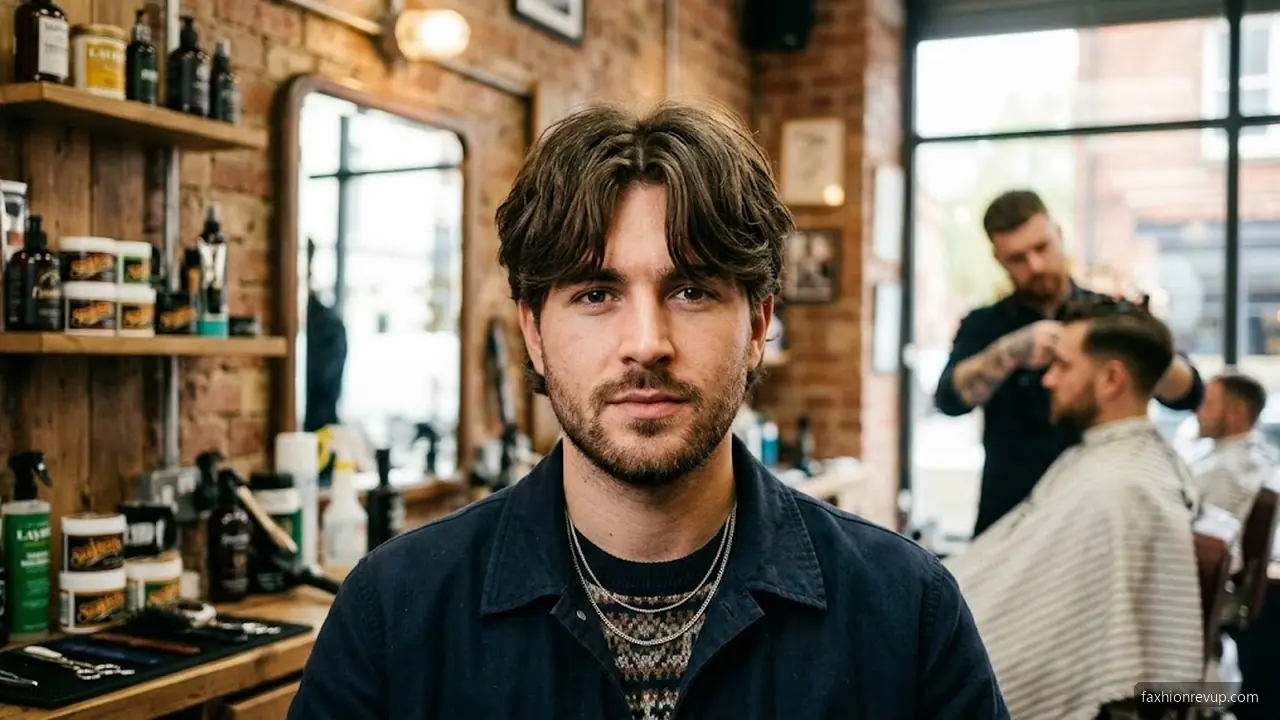
A curtain fringe splits at the middle and falls to both sides of the face. The top runs four inches, and the sides stay soft at a #3. Oblong and diamond faces suit it, since the split fringe adds width at the forehead.
Ask for a centre part with a four-inch top and a soft #3 taper. Six sprays of sea salt spray set the two halves as they dry. Wavy hair from 2A to 2B holds the curtain best, and straight hair needs a blow-dry. Trim every six weeks, since split fringes grow uneven on each side.
Mod with Mid Fade
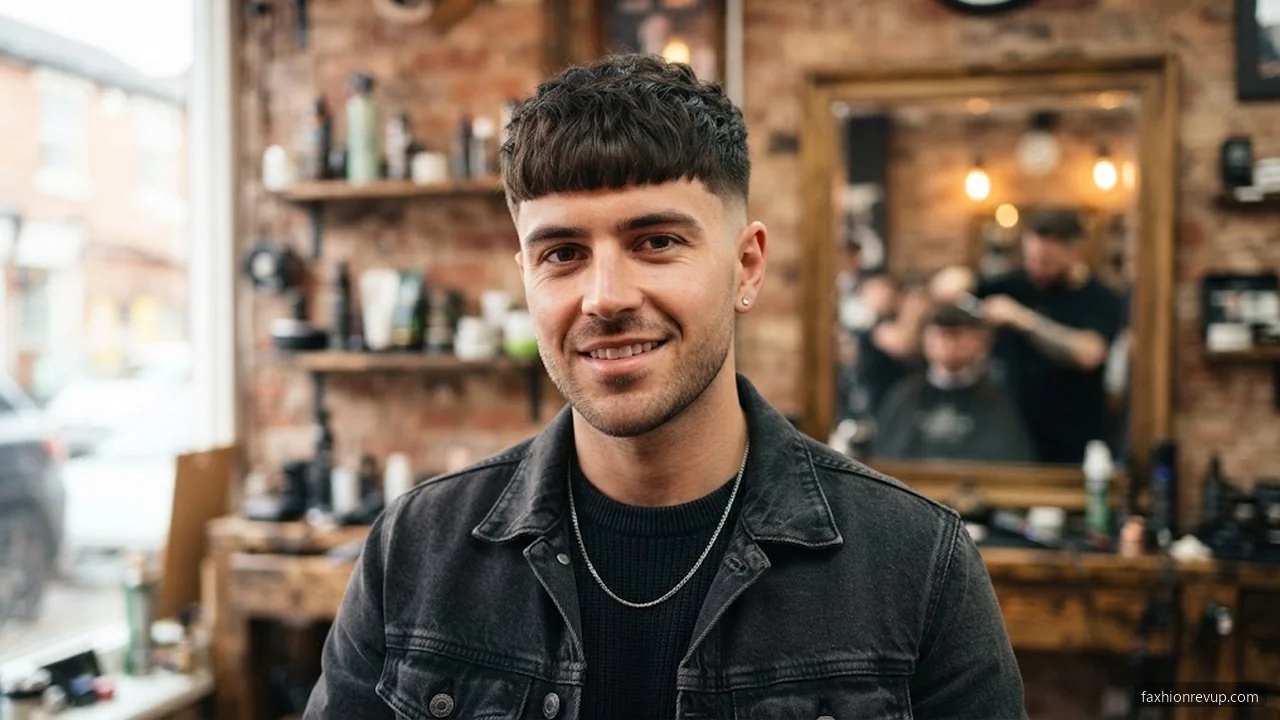
A mid fade starts at the temple line and blends the sides down to a #0.5 at the bottom. The top keeps three inches, which balances the very tight sides below. Round and square faces gain from the contrast, since the narrow sides slim a wide face.
Tell your barber you want a mid fade with a three-inch top left alone. Dark thick hair shows every blend line, so ask for a slow, gradual blend. Matte clay with a pea-sized amount keeps the top textured and matte. Book every three weeks, since the fade grows out faster than the top.
Who Should Skip a Mod Haircut?
A tight #0 skin fade on the sides fights the mod shape, because the top needs weight below. Men who want a wash-and-go cut should pick a crew cut instead. If you swim daily, chlorine strips the fringe and leaves it dry. Very fine hair with a receding hairline also struggles here.
Cowlicks at the crown push the top sideways and ruin the fringe line. Men with very oily scalps see the fringe turn stringy by midday. A heavy square jaw on a round face wants height, not more width. Skip the mod if you cannot book a trim every six weeks.
Growth patterns decide more than face shape here, so check your crown first. Hair that grows forward at the hairline makes the fringe heavy and flat. A double crown splits the top and leaves a gap down the middle. Those men look better with a short textured crop than a mod.
Anyone who hates styling should avoid the longer versions of this cut. The fringe needs a blow-dry or at least a spray and a scrunch. Men in strict uniform jobs may find the length clashes with a dress code. Ask your employer before you commit to a fringe past the brows.
Which Face Shape Works Best with a Mod Cut?
Balance matters more than length when you pick a mod style. A wide face needs height on top and tighter sides, which slims the cheeks. A long face wants fullness at the sides or a fringe that cuts the length. Use the table below to match your shape to a version that works. See American Academy of Dermatology hair care guidelines for more.
| Face Shape | Best Mod Cut | Why It Works |
|---|---|---|
| Round | Modern Textured Mod with a low taper | Height on top and tight sides slim full cheeks. |
| Square | Side-Swept Mod with a #2 taper | The sweep softens a broad brow and a strong jaw. |
| Oblong | Mod with Curtain Fringe | The split fringe adds width to a face that runs long. |
| Heart | Classic 60s Mod | A blunt brow-level fringe narrows a wide forehead. |
| Diamond | Mod Flow | Soft weight at the temples balances wide cheekbones. |
| Triangle | Mod Quiff | Lift on top draws the eye up from a wider jaw. |
How Long Does Your Hair Need to Be for a Mod Cut?
You need at least two inches on top to cut a real fringe, so start there. Sides can be short already, since they get tapered on the day. If your hair sits at one inch all over, grow it for about two months first. Hair grows about half an inch a month, so plan on two months of waiting. See Healthline hair health and wellness resources for more.
Curly and coily hair needs more length than straight hair to show the shape. Curls from 3C and coils from 4A should reach four inches stretched before the cut. Fine hair can start shorter, because weight pulls the fringe down flat. Bring a photo to your barber so the length check happens before the clippers.
How Do You Ask Your Barber for a Mod Haircut?
Book a barber who cuts scissor work often, not just clipper fades. Say you want a mod cut with a long fringe and tapered sides. Give the top length in inches and the sides in a guard number. Then show a photo from the front and one from the side.
Tell them the fringe should sit at the brow, not above it. Ask for square sideburns instead of pointed ones, which keeps the outline sharp. Mention if you want a part line, and which side it falls on. A good barber will repeat it back before starting.
If you want a taper instead of a fade, say that word clearly. A taper keeps length at the sideburns and nape, while a fade goes short. Ask how the back should finish, square or rounded at the neckline. Confirm the upkeep interval before you leave the chair.
How Do You Style a Mod Cut at Home?
Start on damp hair with a rough dry, pushing the fringe forward as you go. Three or four sprays of sea salt spray at the roots build lift. Wait ten seconds, then scrunch the top with your fingers. Finish with matte clay worked through the ends only.
For a slicker mod look, swap the clay for a dime-sized amount of pomade. Comb the fringe into place while the pomade is still soft. Air dry for a loose finish, or use a diffuser for waves. Wash the product out at night so the scalp stays clean.
What Are the Most Common Mistakes with a Mod Cut?
Asking for a #2 all over kills the shape, because the top needs scissor work. Clipper guards only cut up to one inch, so a three-inch top is never a guard. Men who ask for a number on top end up with a buzz cut instead.
Over-layering the top thins the ends, which makes the fringe look weak. Barbers who thin fine hair with shears remove the weight it needs. Ask for blunt ends instead, and keep the layers above the brow line. Thick hair can take layers, while fine hair should stay blunt.
Skipping trims for three months turns a sharp fringe into a shaggy mop. The sides also grow out first, so the taper disappears before the top. Book the touch-up at the same time as the cut, not later.
Using too much clay weighs the fringe down and leaves a greasy look. A pea-sized amount is enough for the whole top on most hair. Heavy pomade also flattens texture, so save it for a slicker finish. Product goes on the ends, never straight onto the roots.
What Is the Difference Between a Mod Cut and Similar Styles?
Several cuts look close to a mod style in photos, so the difference lives in the details. Length on top, the taper, and the fringe line separate them. The table below sets out what changes and who each one suits.
| Style | Key Difference | Best For |
|---|---|---|
| Mod cut | Long scissor-cut top with a brow-level fringe and tapered sides | Straight and wavy hair that holds a heavy fringe. |
| Bowl cut | One even length all round with no taper at the sides | Thick hair and oblong faces wanting extra width. |
| French crop | Short blunt fringe with a mid taper at the sides | Men who want a low-upkeep, short fringe. |
| Quiff | Front lifted up and back instead of falling forward | Round faces needing height on top. |
| Mullet | Short sides with a long back past the nape | Men wanting length at the back, not the fringe. |
Each of these cuts can borrow mod details without becoming a mod cut. A French crop with a longer fringe starts to read as a mod crop. A quiff with a blunt front edge moves toward the 60s look. Pick the version whose upkeep you can actually keep.
How Often Should You Trim a Mod Haircut?
Growth sets the schedule, and the top grows about half an inch a month. The sides and fringe show the change first, since they sit close. Short mods need the most visits, while long versions can stretch.
A trim keeps the outline, while a full restyle takes longer and costs more. Book your next visit before you leave, so the date holds. Bring the same photo back if you want the same shape.
- Short mods: Book every three weeks, because a #1 taper loses its edge fast.
- Medium mods: Six weeks suits a three-inch top, but fine hair shows regrowth sooner.
- Long mods: Wait eight weeks at most, and ask for a neckline tidy between visits.
Best Hair Types and Textures for a Mod Cut
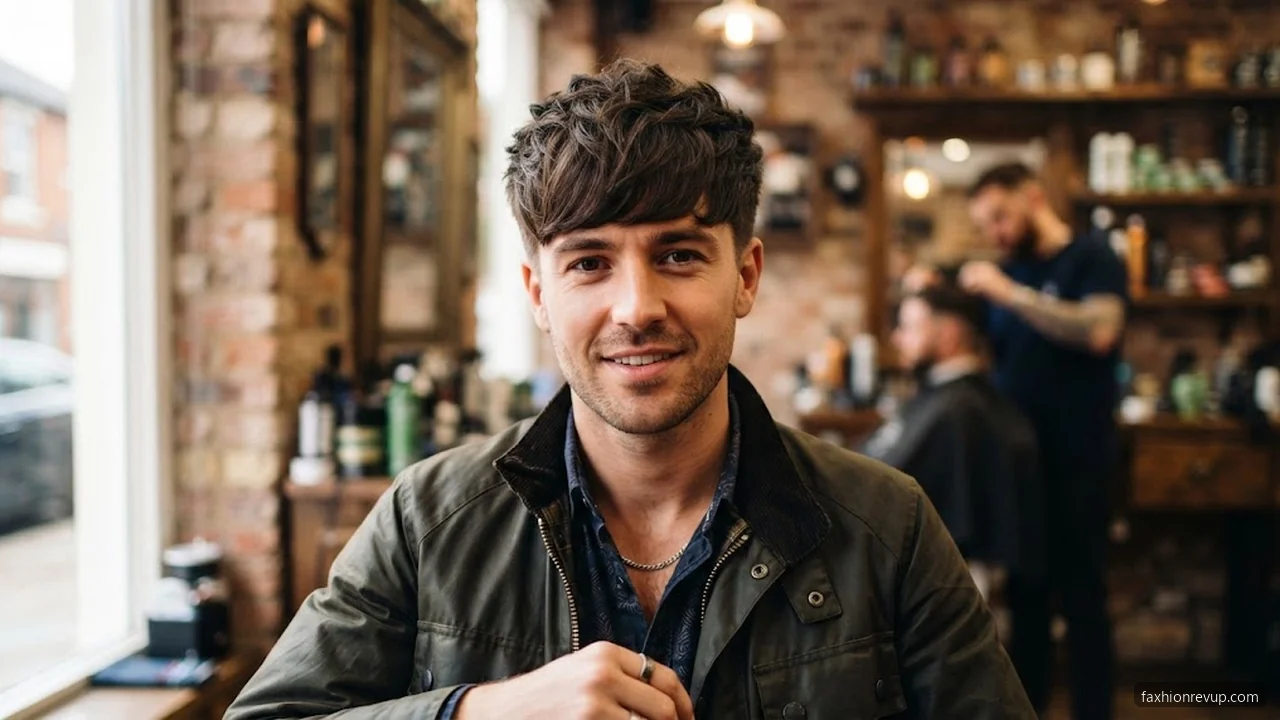
Straight, thick hair gives the sharpest lines, because the fringe stays where you put it. Waves from 2A to 2C add movement, which suits the softer versions. Curls from 3A upward need extra length so the shape still reads.
Fine hair works when the top stays blunt and the sides stay tight. Coils from 4A to 4C suit a longer mod with dry-cut layers. Very coarse hair holds any shape but needs regular thinning at the crown. Density decides the product more than the curl pattern does.
Frequently Asked Questions
What are the best Mod Haircut Ideas for Men?
The best versions start with a three-inch scissor-cut top and a #2 taper. Add a brow-level fringe if your hair is straight or wavy. Round faces gain height from a quiff, while long faces suit a curtain fringe. Curls need about four inches of length to show the same shape.
Can a mod cut have a fade?
Yes, and a low or mid fade blends the sides without touching the top. A #0.5 at the bottom of a mid fade gives a clean finish. Skin fades work too, but they need a touch-up every two or three weeks. Keep three inches on top so the fringe still carries weight.
Is a mod cut good for professional settings?
A neat mod with a soft fringe and a taper reads smart in most offices. Keep the fringe above the brow and the sideburns trimmed for a sharper look. Long, shaggy versions may clash with a formal dress code at some firms. Check your workplace rules before you commit to a longer fringe.
Did the Beatles invent the mod haircut?
The cut came from 1960s London barbers who mixed French and Italian styling. The Beatles made a mop top famous, and it sits close to this cut. Their version kept more even length all round without a taper. The mod fringe was cut blunt and tapered at the sides instead.
Can you pair a mod cut with a beard?
A beard balances a mod fringe, especially on heart and square faces. Keep the beard lined up so the jaw edges match the taper above. Short stubble suits a tight taper, while a fuller beard pairs with a #3 side. Trim the beard every two or three weeks to hold the shape.
Does a mod cut work for men over 40?
Yes, as long as the top keeps enough length and the sides stay neat. A short version with a #2 taper looks sharper than a shaggy fringe. Grey hair hides blend lines, so a soft taper reads smooth. Keep the fringe above the brow if your hairline is receding.
How does a mod cut grow out?
The fringe reaches your eyes first, usually within five or six weeks. The taper on the sides softens into a shaggy line by week eight. Length on top can be pushed aside while it grows out. Most men get a tidy-up trim rather than a full restyle.
What is the easiest mod cut to maintain?
A short mod with a #3 taper needs the least work each day. Two sprays of sea salt spray and a quick finger-scrunch finish it. Trim every three weeks, since short sides show regrowth quickly. Longer versions need a blow-dry, which adds ten minutes to your morning.
What hair types suit a mod cut best?
Straight, medium-density hair suits it best because the fringe holds a clean line. Waves from 2A to 2C give the softer versions movement and bounce. Curls from 3A to 3C work with layers and extra length on top. Coils from 4A to 4C need four inches or more to show the shape.
How do I ask my barber for a mod cut?
Say you want a mod cut with a long fringe and tapered sides. Give the top length in inches and the sides as a guard number. Show one photo from the front and one from the side. Ask them to confirm the length before the clippers start.
Conclusion
Book a mod cut if you want a sharp outline with a heavy fringe. Start with a three-inch top and a #2 taper for an easy first try. Round faces should add height with a quiff, while long faces suit a fringe. Straight and wavy hair take the shape with the least fuss.
In the chair, say you want a brow-level fringe and square sideburns. Bring two photos and confirm the top length before the clippers touch your hair. Book your next trim in three to four weeks, depending on your taper. Mod Haircut Ideas for Men reward the men who keep that schedule.
Peter Johnson has spent over 10 years behind the chair as a licensed barber and hairstylist, working with men’s grooming brands across the US. He writes for faxhionrevup.com to bring practical, tested haircut advice to everyday readers. Peter stays current with trends through hands-on client work and industry training, ensuring every guide reflects real barbering expertise.