Low Fade Haircuts: 28 Fresh Styles Men Can’t Stop Wearing in 2026

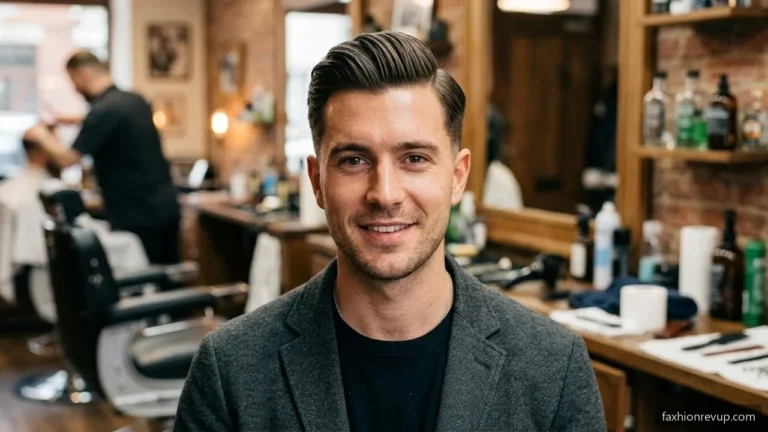
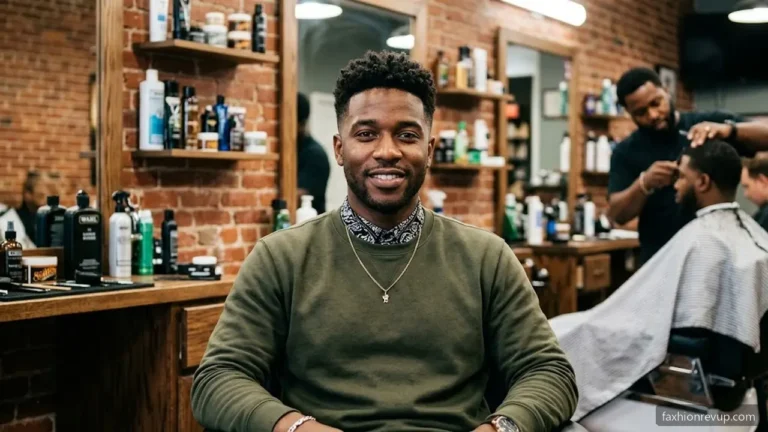
Low Fade Haircuts keep the sides tight above your ear and neckline. Suit most men who want a clean shape. The blend begins just above the ear and rises through an inch of hair. Length on top stays longer, so you keep movement for a quiff or crop. Your barber finishes the outline with a trimmer for a sharp edge.
Oval, square and heart faces wear this cut best, because tight sides keep the shape balanced. Your barber usually takes the sides down with a #1 or #2 guard, blending up. A skin version drops to a #0 or foil shaver for a sharper contrast. Budget a touch-up every two to three weeks, because the lower line grows fast.
Quick Answer
Low Fade Haircuts start just above the ear and keep the top longer than the sides. They suit oval, square and heart faces, and most hair types from straight to curly. Guards run from #0 for a skin fade up to #3 on the sides. Plan a touch-up every two to three weeks.
What Is a Low Fade Haircut?
A low fade shortens the hair just above your ear and along the neckline. The blend climbs roughly an inch to an inch and a half up the head. Above that line, the sides keep visible length instead of disappearing into skin. Men ask for it because the shape looks tidy without a bald finish.
A mid fade starts at the temple line and a high fade near the parietal ridge. Because a low fade sits lower, it hides regrowth at the ear for longer. That lower start point also keeps more weight through the back of the head. Barbers blend it with clippers and finish the outline with a trimmer.
What Are the Best 28 Low Fade Haircuts for Men?
The styles below split by how tight you want the sides and how long you keep the top. Choose by your hair type first, because curl and density change how a blend reads. Face shape comes next, since height on top shifts the balance of your head. Upkeep decides the rest, so pick a fade you can maintain between visits.
Classic Low Fade
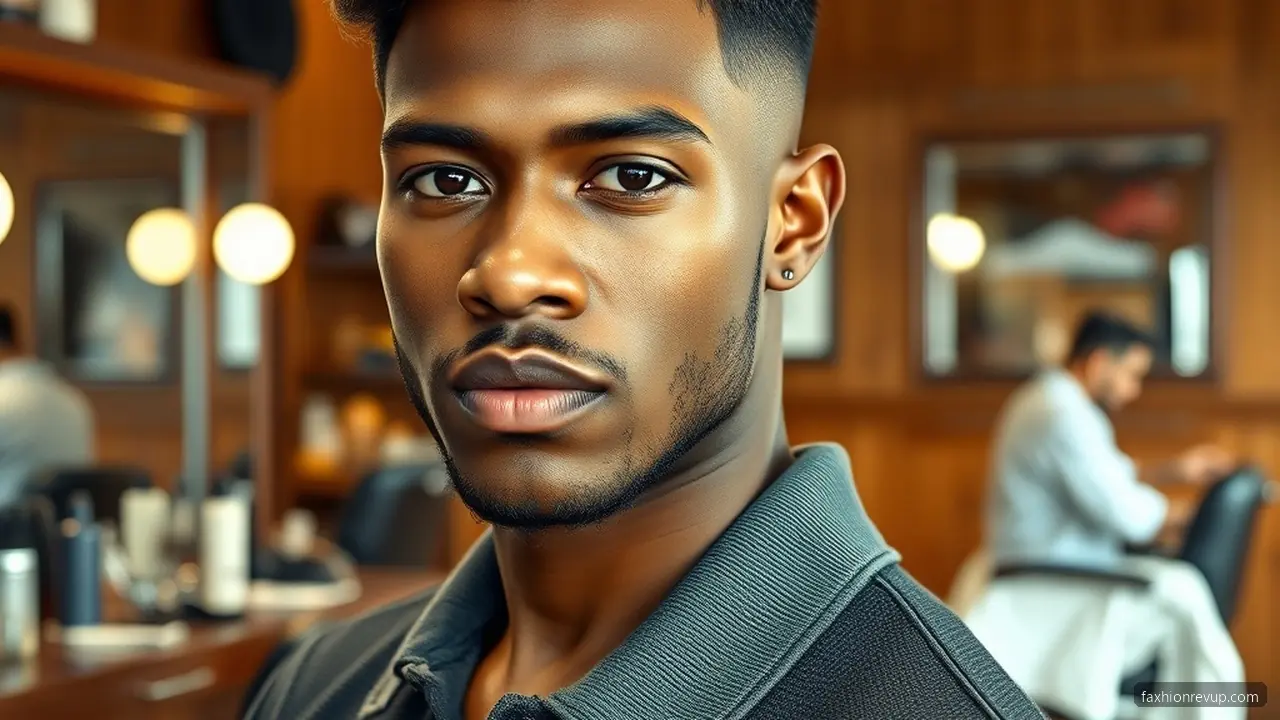
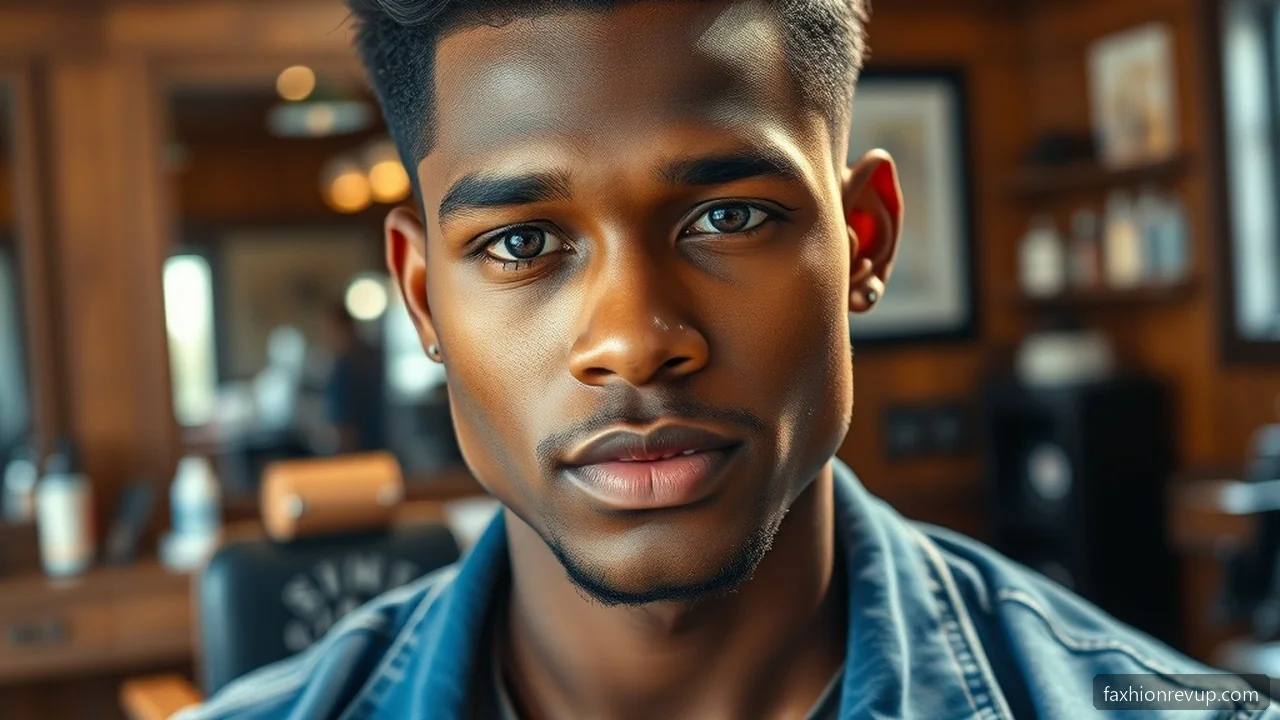
The classic version keeps two to three inches of scissor-cut length on top. From the front you see a soft, brushable fringe that sits just off the forehead. The sides step down through a #2 into a #1 and end clean at the ear. At the back, the blend follows the neckline instead of curving down behind it.
Oval and square faces carry this shape well, and straight or wavy hair holds it. Ask for a #2 on the sides blending into a #1, with a low fade height. A dime-sized amount of matte clay through damp hair builds light texture. Blow it dry upward for a minute, then push the top toward one side.
- Guard: A #2 on the sides takes hair to a quarter inch before it blends into a #1.
- Fade height: The blend starts just above the ear and stops below the temple line.
- Best face shape: Oval, square and heart faces look balanced, while oblong faces should keep more weight.
- Best hair type: Straight hair and 2A to 2C waves take the blend without leaving patchy lines.
Skin Fade
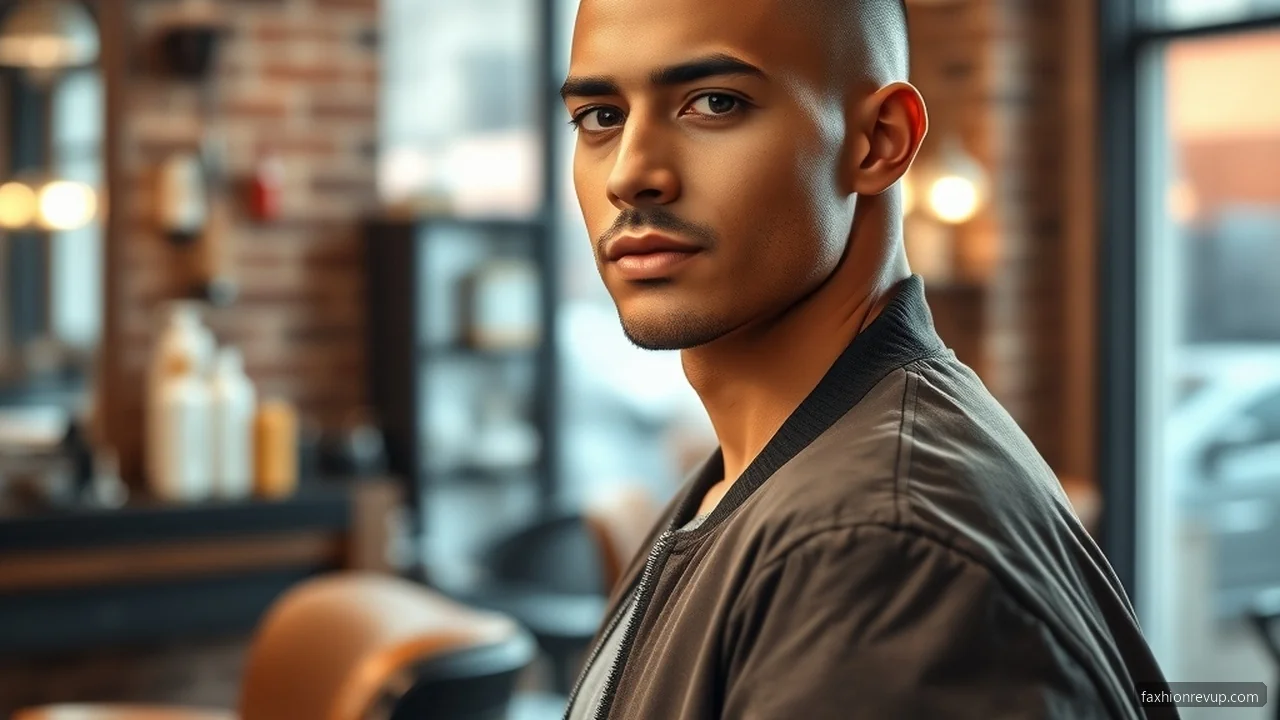
A skin fade takes the sides all the way down to bare skin at the bottom. Your barber closes the clippers to a #0 and then runs a foil shaver over the edges. The contrast between bare sides and the longer top is the whole point. At the back, the blend finishes in a clean line along the neck.
It flatters oval and diamond faces, because bare sides keep cheekbones visible. Thick, dark hair shows the sharpest line, while fine hair hides less regrowth. Keep two to three inches on top and style it with a light paste. A touch-up every two weeks keeps the skin line from looking untidy.
- Guard: The base runs at #0 with no guard, then a foil shaver clears the last stubble.
- Fade height: Low, with the bald line sitting just above the ear and no higher.
- Best face shape: Diamond and oval faces suit it, while round faces gain more from a mid fade.
- Best hair type: Thick or coarse hair shows the cleanest contrast, and 4A to 4C coils handle it well.
Taper Fade

A taper fade shortens only the sideburns and the nape, not the whole side. The hair above your ear keeps its length, so the shape stays soft rather than sharp. At the back, the taper follows the neckline and fades out toward the collar. This makes it the gentlest way to wear a low fade at work.
It suits oblong and triangle faces, which gain from the weight left at the sides. Fine hair and 2A to 2B waves keep their body instead of flattening. Ask for a #2 at the sideburn tapering to a #1 at the nape. A pea-sized amount of light cream smooths the sides without adding shine.
- Guard: A #2 at the sideburn tapering to a #1 at the nape, rest of side at #3.
- Fade height: It sits low by design, since only the sideburn and nape are shortened.
- Best face shape: Oblong and triangle faces suit it, while square faces look sharper with a full fade.
- Best hair type: Fine or medium hair with 2A to 2C waves keeps volume at the sides.
Drop Fade
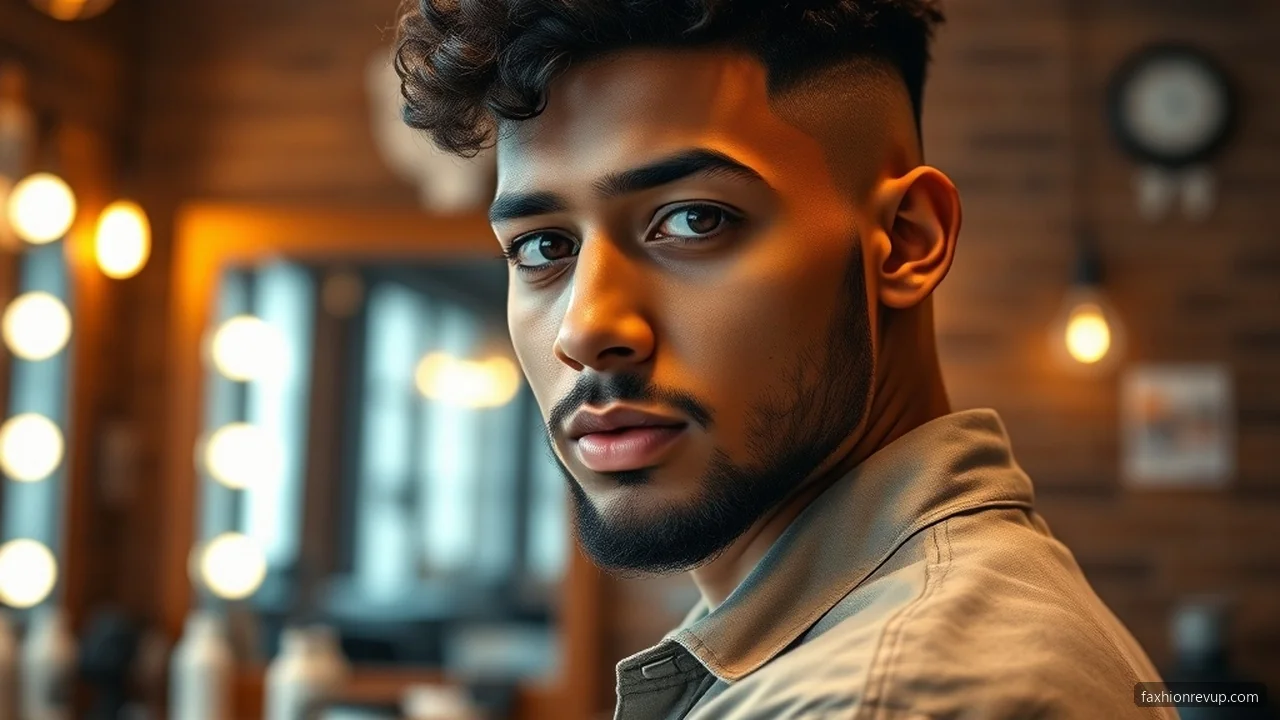
A drop fade curves down behind the ear instead of running straight across. Your barber follows the head shape and drops the line toward the nape. The back of the head ends up looking rounder, which fills a flat crown. From the side, the arc reads as a soft curve rather than a hard band.
It works on round and diamond faces, since the curve adds depth at the back. Medium to thick hair holds the shape, and 3A curls sit nicely above it. Ask for a low drop fade with a #1 at the bottom and a #2 above. Run a small amount of curl cream through the top while it is damp.
- Guard: A #1 at the base rising to a #2 before the blend meets the longer top.
- Fade height: Low, with the curve dropping below the ear toward the neckline.
- Best face shape: Round and diamond faces benefit most, while oblong faces should skip the extra back weight.
- Best hair type: Medium to thick hair with some natural bend holds the curve better than straight hair.
Temp Fade

A temp fade keeps the temple area tight while the rest of the side stays longer. It is a low fade that concentrates the shortest hair in front of the ear. The back keeps its weight, so the cut grows out evenly between visits. Men pick it when a full fade feels too sharp for their workplace.
- Guard: A #1 or #1.5 around the temples, with the side left at a #3 or longer.
- Fade height: Low and short, ending before the hairline reaches the top of the ear.
- Best face shape: Oval and heart faces suit it, while round faces need a tighter side to add length.
- Best hair type: Straight hair and loose 2B waves keep a tidy temple line without frizz.
Shadow Fade
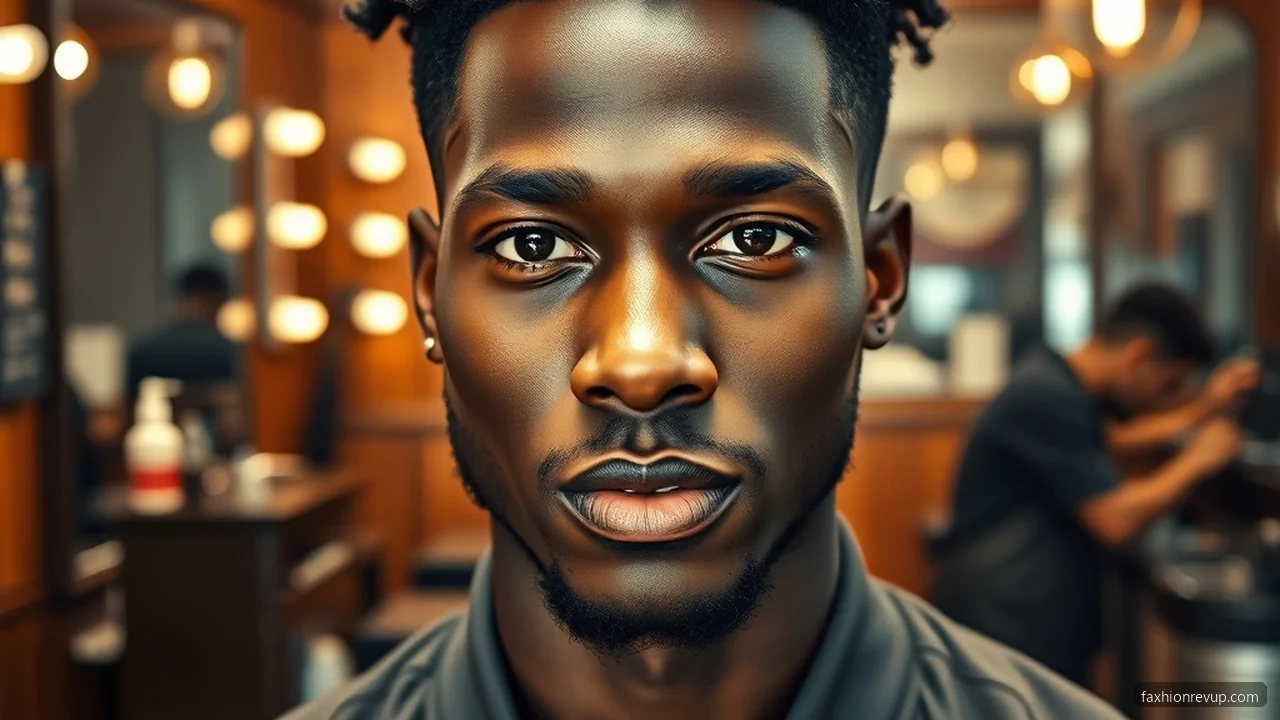
A shadow fade leaves a soft band of stubble between the skin and the longer hair. Your barber stops at a #0.5 instead of taking the clippers to bare skin. The result is a fade that looks softer and hides small regrowth. It suits men whose scalp shows through easily or who dislike a bald look.
- Guard: A #0.5 at the base leaves a sixteenth of an inch as a shadow.
- Fade height: Low, with the shadow band sitting above the ear and fading upward.
- Best face shape: Square and oval faces suit the softer edge, and round faces still get a slimming side.
- Best hair type: Fine or light-coloured hair shows fewer blend lines than dark, thick hair.
Burst Fade
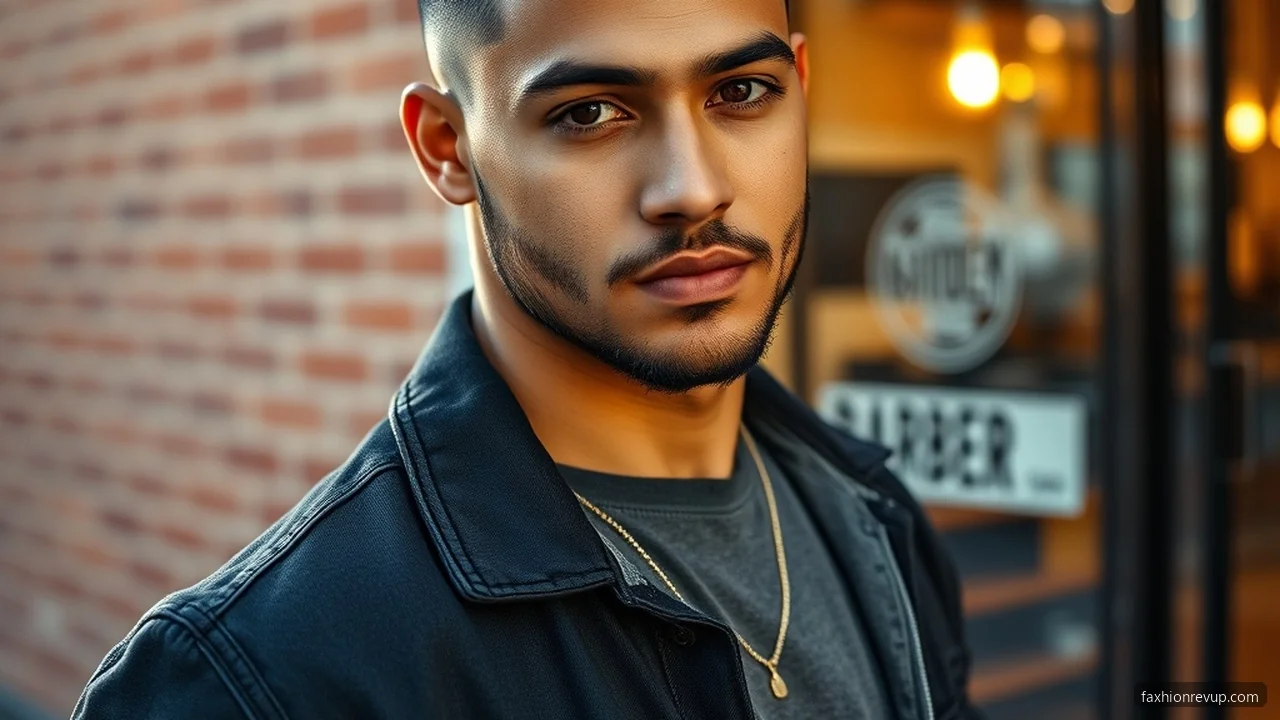
A burst fade arcs around the ear and leaves the back of the head longer. The line sweeps up and around, so the nape keeps its own length. It is the fade you see under mohawks and mullets, because the back stays free. Your barber works in a semicircle rather than a straight band across the head.
- Guard: A #1 around the ear, blending to a #2 before the hair behind it.
- Fade height: Low around the ear, with the curve rising slightly behind it.
- Best face shape: Oblong and diamond faces suit it, while round faces should keep the arc tight.
- Best hair type: Thick, curly hair from 3A to 4A balances the longer back section.
Curly Hair Fade
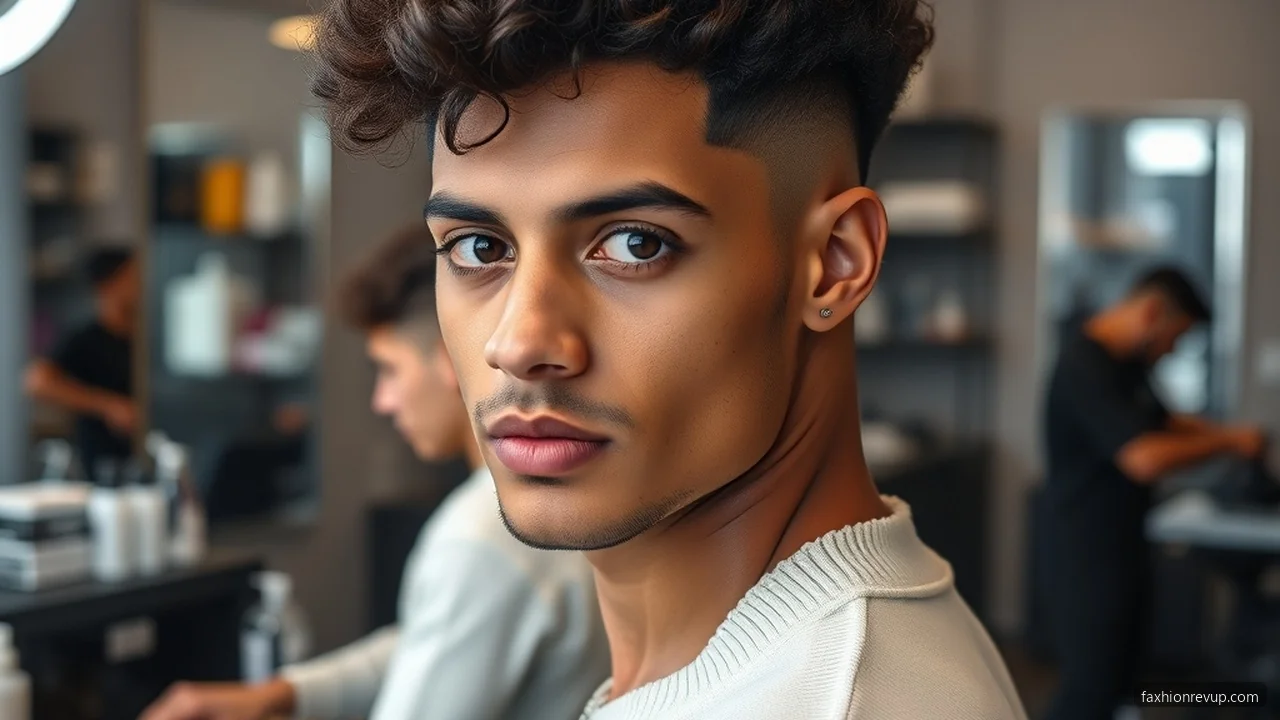
A low fade on curly hair keeps the sides short and the curls on top. Your barber cuts the top dry, because wet curls spring up and hide the real length. The fade follows the same low path, but the blend looks softer on coils. Keep the top around two to three inches so the curls have room to form.
- Guard: A #1 at the base blending to a #2, leaving the curls above untouched.
- Fade height: Low, so the coil pattern on top keeps its full shape.
- Best face shape: Square and oval faces suit it, while round faces should add height on top.
- Best hair type: 3A to 3C curls and 4A coils take a soft blend without losing definition.
Crew Cut Fade
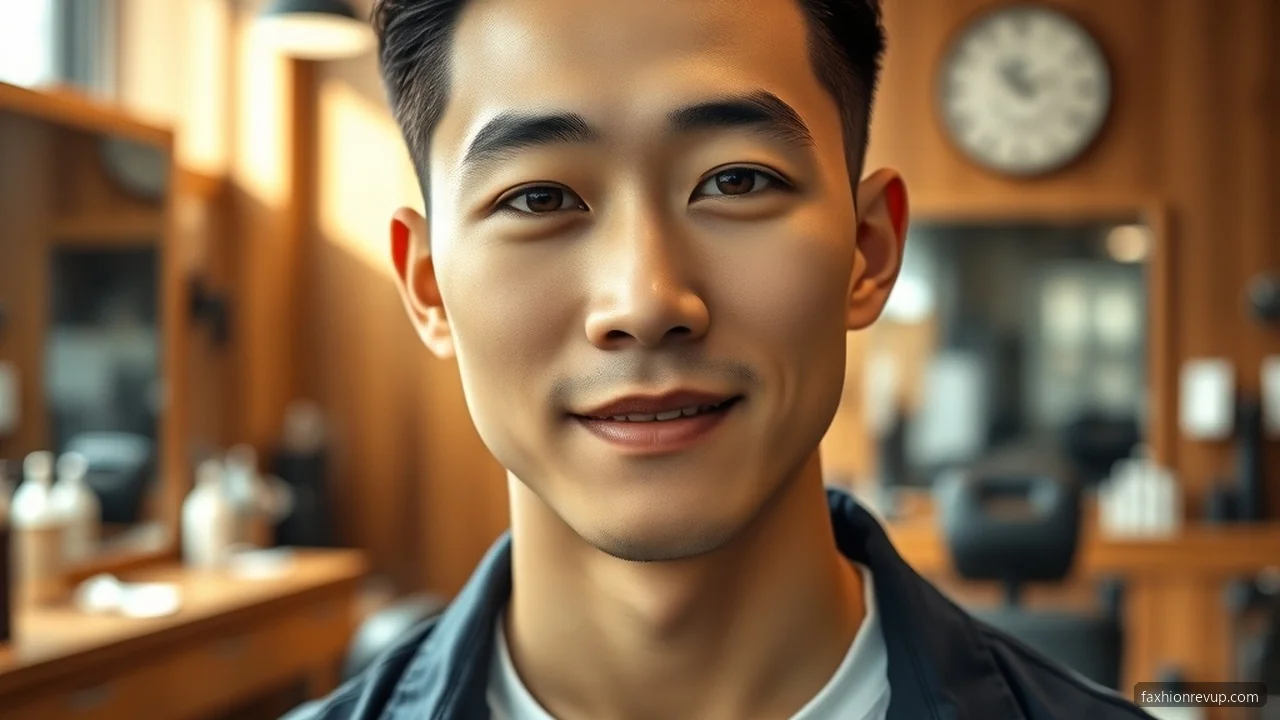
A crew cut fade pairs a short, graduated top with tight sides. The front sits slightly longer than the crown, which gives the shape its forward lift. Unlike a buzz cut, the top still carries enough length to brush flat. The low fade runs from the ear upward and stops before the temple.
- Guard: A #3 on top with a #1 at the sides, blended up from the ear.
- Fade height: Low, with the shortest hair sitting at the ear and rising quickly.
- Best face shape: Round and square faces suit it, while oblong faces should keep more length on top.
- Best hair type: Straight hair and 2A waves sit flat and show the graduation clearly.
Textured Crop Fade
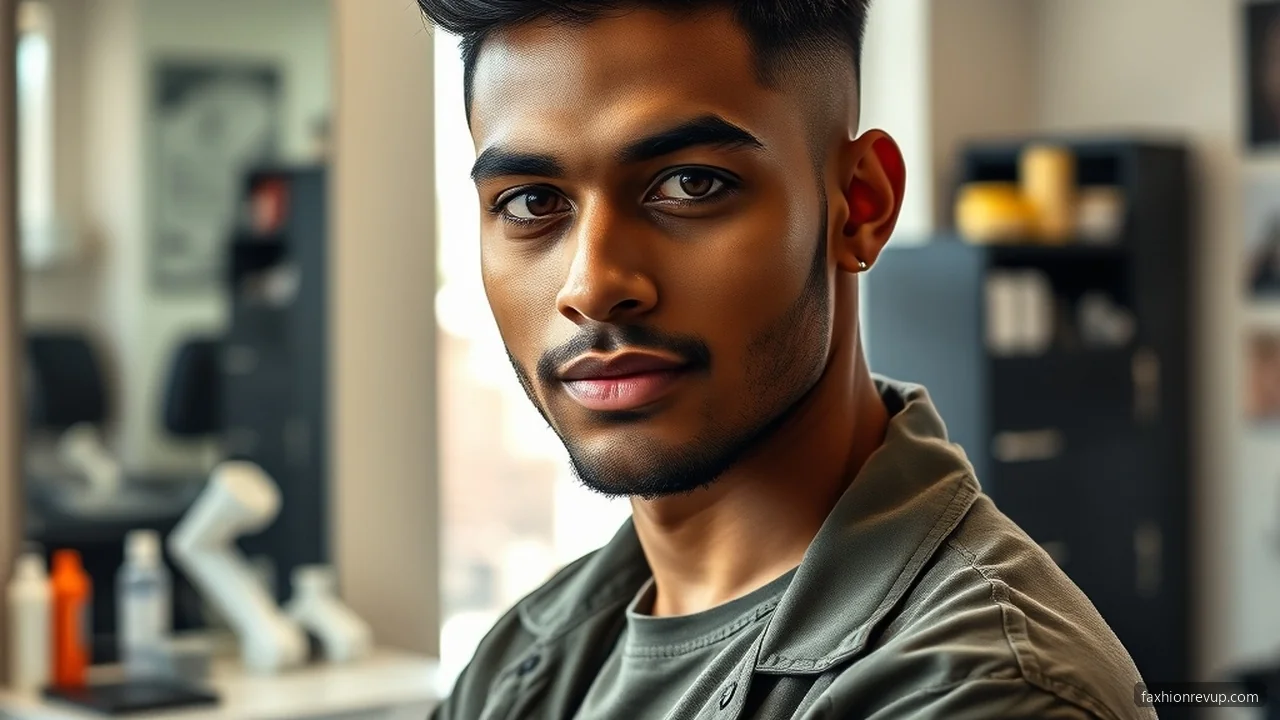
A textured crop keeps the fringe short and choppy across the forehead. Your barber point-cuts the top so the ends look broken up rather than blunt. The sides fade low, leaving two to three inches of texture above them. It is the easiest way to wear a fringe without looking flat or heavy.
- Guard: A #1.5 on the sides and scissors through the top for choppy texture.
- Fade height: Low, which keeps the sides tidy while the crop stays soft.
- Best face shape: Heart faces suit the fringe, which covers a wide forehead; diamond faces suit fullness at the temples.
- Best hair type: Straight to 2C wavy hair with medium density holds the choppy shape.
French Crop Fade

A French crop cuts the fringe in a straight line and keeps the top short. The sides fade low, and the front sits flat rather than lifted. It differs from a textured crop, which breaks the fringe into loose pieces. The finish looks sharp at the edges and casual across the top.
- Guard: A #1 on the sides with a #4 over the top for a flat, even finish.
- Fade height: Low, sitting close to the ear before the sides gain weight.
- Best face shape: Oval and heart faces carry the straight fringe, while oblong faces gain width from it.
- Best hair type: Straight, medium-density hair keeps the fringe line crisp and flat.
Pompadour Fade

Volume sweeps up and back from the forehead, so the front stands well above the crown. The sides stay short under a low fade, which keeps the tall top from looking heavy. Blow it dry with a round brush to build that lift before you add product. A dime-sized amount of pomade then holds the height with a light shine.
- Guard: A #1 on the sides, with scissors through the top leaving three inches of length.
- Fade height: The blend starts just above the ear and stays low, so the sides keep weight.
- Best face shape: Square and diamond faces suit the height, while round faces should tighten the sides.
- Best hair type: Thick straight hair with natural body holds the lift better than fine hair.
Quiff Fade

A quiff lifts at the front but stays shorter and messier than a pompadour. Your barber leaves the top textured, so the front stands up without looking stiff. The sides drop into a low fade that stops before the temple line. Sea salt spray adds grit, then a small amount of matte clay shapes the lift.
- Guard: A #1.5 on the sides with two and a half inches on top, cut with scissors.
- Fade height: Low and tight, ending roughly an inch above the ear on both sides.
- Best face shape: Triangle and diamond faces gain from the lift, while oblong faces should keep the quiff soft.
- Best hair type: Medium to thick hair with 2A to 2B waves holds the shape best.
Comb Over Fade

A comb over sweeps the top to one side and leaves a clear parting line. The low fade keeps the sides tight, so the sweep across the top stands out. Ask your barber to leave three or four inches up there for a proper drape. A pea-sized amount of pomade gives the shine and control this look needs.
- Guard: A #1 on the sides with scissors over the top for a soft, blendable edge.
- Fade height: Low, running from the ear to the nape without climbing past the temple.
- Best face shape: Heart faces suit the side sweep that softens a wide forehead; oblong faces gain width.
- Best hair type: Straight hair with medium density lies flat and takes the parting cleanly.
Fade with Beard

Pairing a low fade with a beard means two shapes have to meet at the sideburn. Your barber fades the hair down and blends the top of the beard into that same line. The beard stays fuller at the chin, which adds weight to a narrow jaw. Brush it every morning and trim stray hairs between visits at home.
- Guard: A #1 on the sides, with the beard trimmed to a quarter inch using a #2.
- Fade height: Low at the sides, so the fade and the beard meet just above the jaw.
- Best face shape: Round and heart faces gain from chin weight, while triangle faces should keep it short.
- Best hair type: Most hair types work, and coarse beard growth blends into the fade best.
Buzz Cut Fade
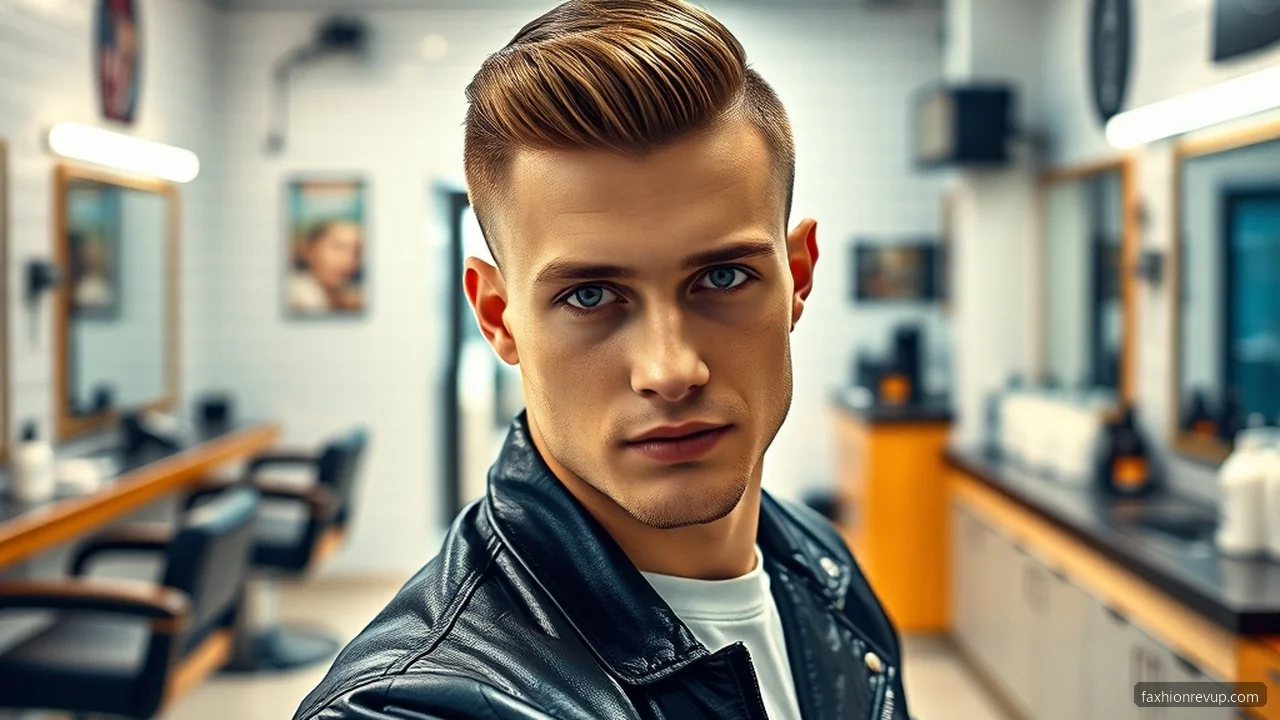
A buzz cut with a low fade leaves half an inch on top and shorter sides. Because the top is even, the fade line is the only contrast you get. The shape grows out evenly, so you can stretch visits a little longer. A tiny amount of light cream keeps the scalp from looking dry.
- Guard: A #4 over the top and a #1 on the sides, blended above the ear.
- Fade height: Low, with the shortest hair sitting at the ear and neckline.
- Best face shape: Square and oblong faces carry the short top, while round faces lose their balance.
- Best hair type: Fine to medium straight hair keeps an even finish without patchy spots.
Straight Hair Fade
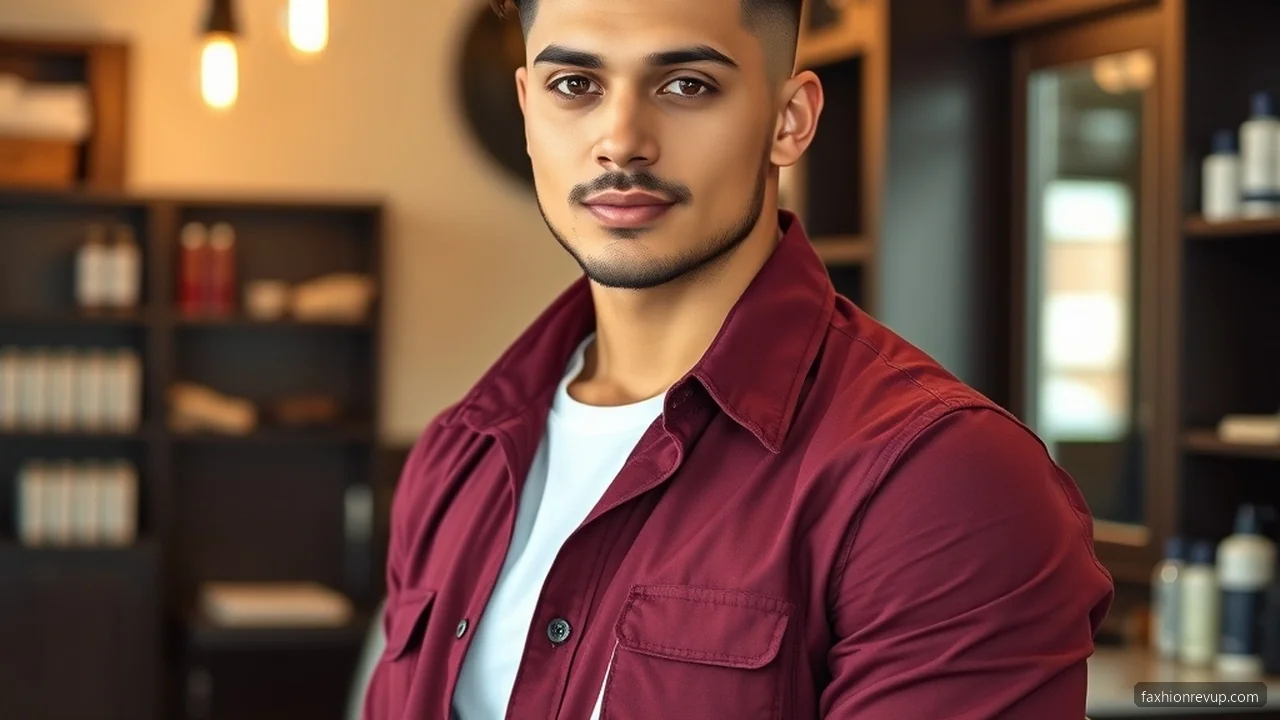
Straight hair shows every clipper line, which is why a low fade works so well on it. The blend sits close to the ear, so the sharpest transition stays hidden. Your barber can cut the top with scissors for two inches of soft movement. A small amount of matte paste keeps the front from falling flat.
- Guard: A #2 on the sides fading to a #1, with two inches cut by scissors on top.
- Fade height: Low, so the tightest part sits below the temple and above the ear.
- Best face shape: Round faces suit it, because the tight sides slim the width, while oblong faces need side fullness.
- Best hair type: Fine, straight hair takes the blend best and hides the clipper marks.
Mohawk Fade
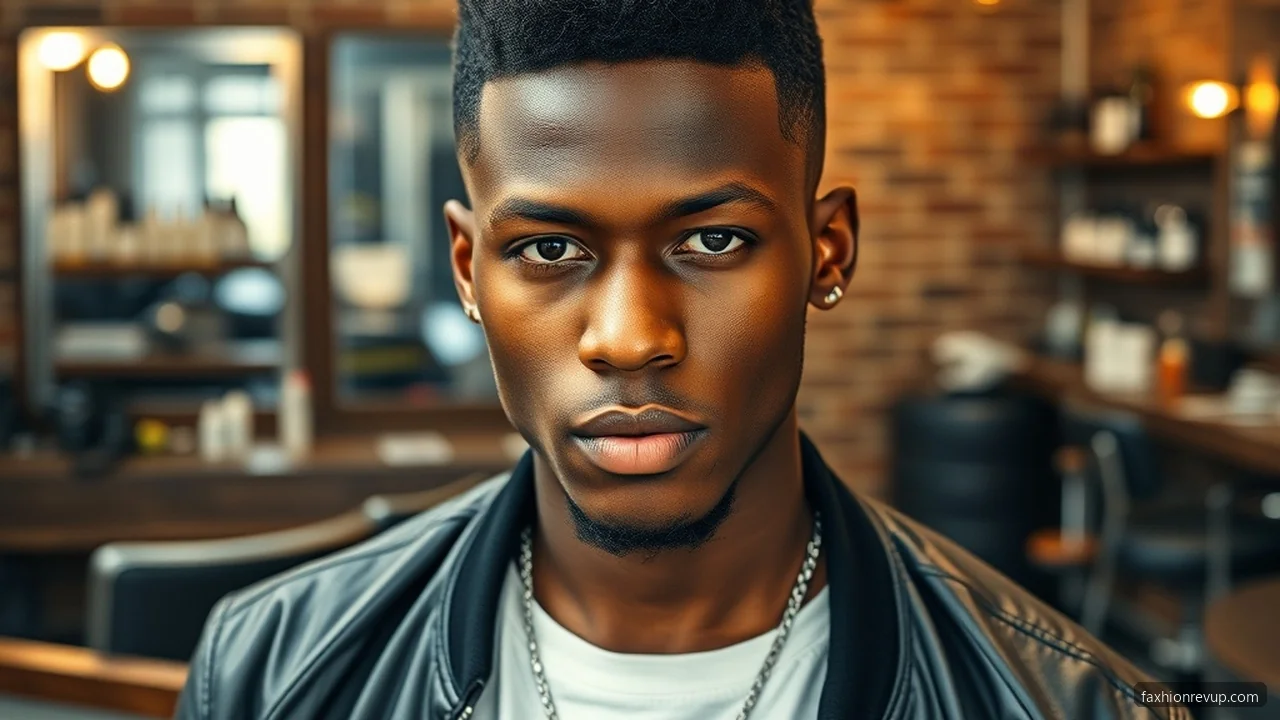
A mohawk with a low fade keeps a strip of length through the centre of the head. The sides go down to skin or a #0, which makes the strip stand out. Your barber leaves two inches on the strip and tapers it toward the back. A strong-hold paste or clay keeps the strip standing through the day.
- Guard: A #0 or a foil shaver on the sides, with the strip left long.
- Fade height: Skin at the base, rising low so the strip keeps its width.
- Best face shape: Square and triangle faces suit the height, while round faces should keep the sides tight.
- Best hair type: Thick hair from straight to 4A coils stands up better than fine hair.
Edgar Fade
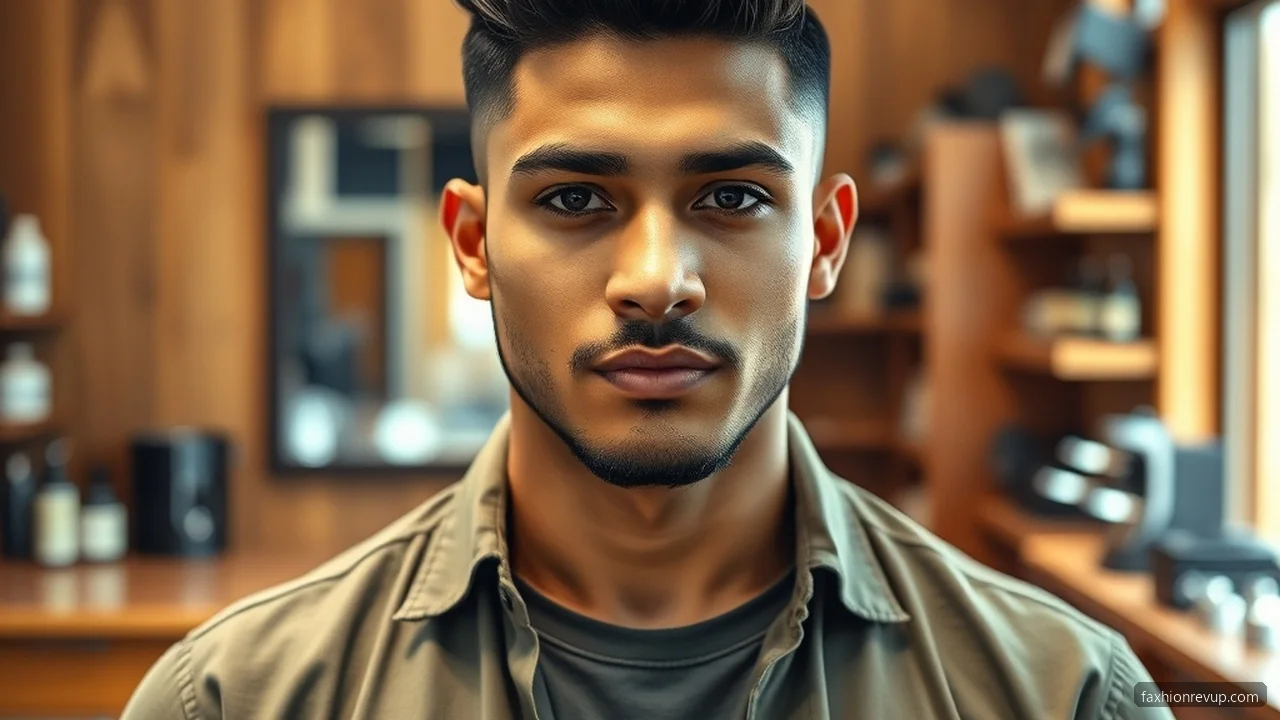
An Edgar cut keeps a blunt fringe that runs straight across the forehead. The top stays flat while the sides fade low, so the line at the front does the talking. Your barber cuts the fringe with scissors, never with clippers, for that hard edge. A dab of matte clay smooths the fringe and holds it down.
- Guard: A #1 on the sides, with the fringe cut by hand to an inch and a half.
- Fade height: Low, stopping under the temple so the fringe line stays the focus.
- Best face shape: Heart and diamond faces suit the blunt fringe, which covers the forehead.
- Best hair type: Thick, straight hair sits flat and keeps the fringe line sharp.
Blowout Fade

A blowout fade brushes coily hair up and out from the head for a round shape. The low fade on the sides contrasts with that volume on top. Your barber shapes the top with scissors, keeping three inches of length to work with. A curl cream or light mousse sets the shape after you blow it dry.
- Guard: A #0.5 at the base with a #1 above it, tapering up from the ear.
- Fade height: Low, which leaves enough side weight to support the rounded top.
- Best face shape: Round and diamond faces suit the added height, while oblong faces should skip it.
- Best hair type: 3C to 4A coils blow out best, since the pattern holds the round shape.
Mullet Fade
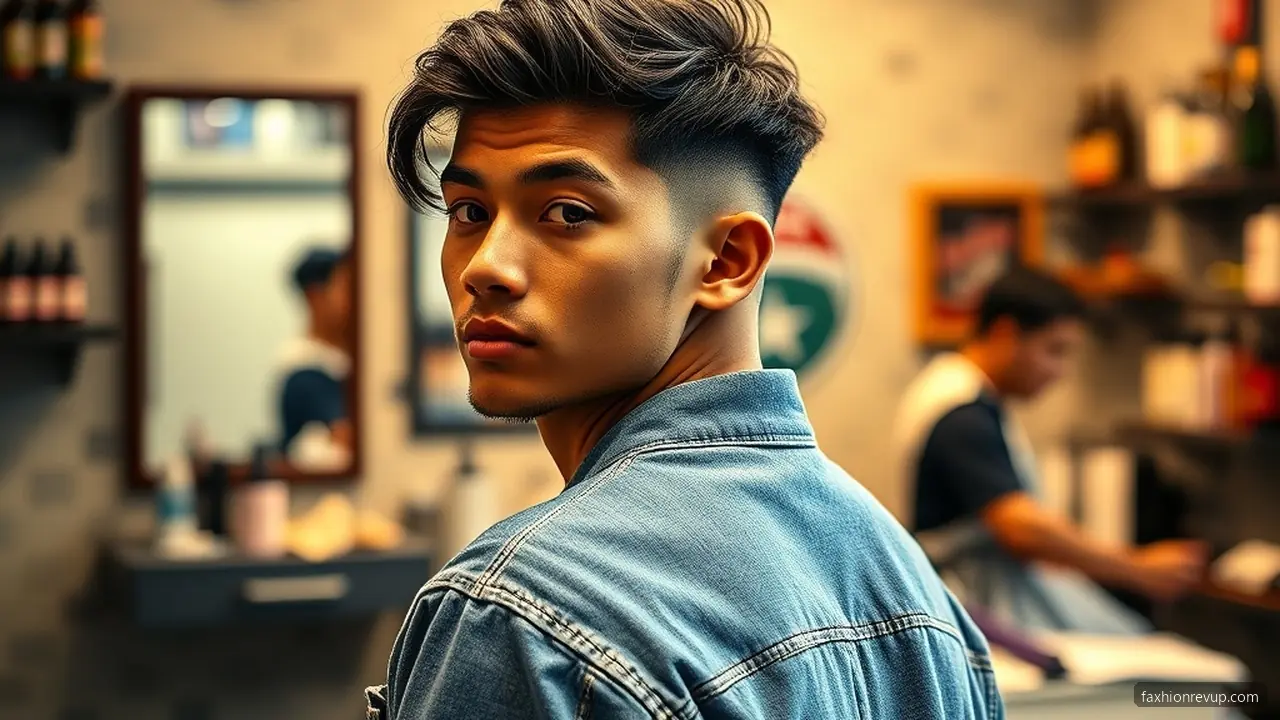
A mullet fade keeps length at the back of the neck while the sides stay tight. Unlike a burst fade, the sides run straight back instead of arcing around the ear. The front and top stay short, so the tail at the nape is the feature. A light cream or sea salt spray gives the back some texture.
- Guard: A #1 on the sides with three to four inches left at the nape.
- Fade height: Low around the ears, so the back keeps its length below them.
- Best face shape: Oblong and triangle faces suit the back length, while round faces should keep it short.
- Best hair type: Medium to thick 2A to 2C waves give the back section some shape.
Slick Back Fade
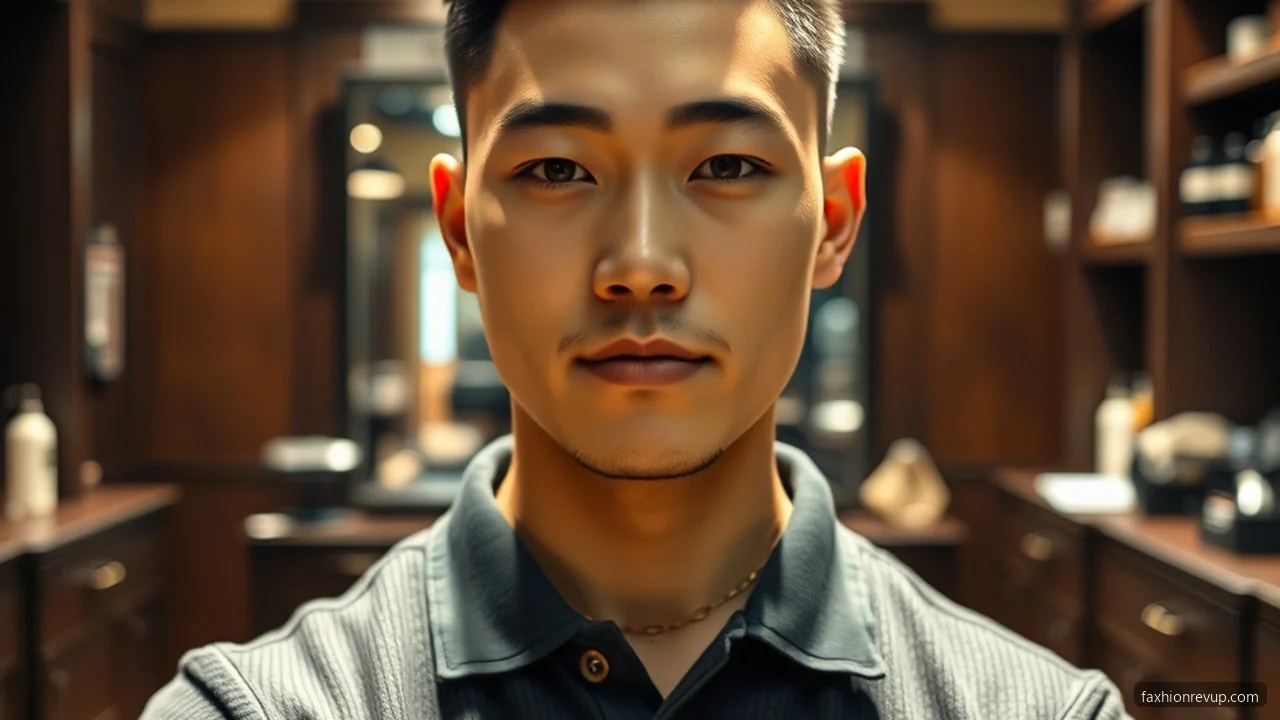
A slick back fade pulls the whole top backward with a comb, so the hairline shows. The low fade keeps the sides clean and stops the style looking heavy. Your barber leaves three to four inches on top so the hair has something to grip. A pomade with a firm hold keeps that direction all day without flaking.
- Guard: A #1.5 on the sides, which keeps the top-heavy shape in proportion.
- Fade height: Low, with the blend sitting at the ear and finishing at the neckline.
- Best face shape: Round and square faces suit the backward sweep, while heart faces should keep a fringe.
- Best hair type: Straight, medium-thick 2A hair holds the direction without falling apart.
Fade with Design

A design cut adds a shaved line or pattern into the faded section. The low fade gives your barber a clean canvas near the temple or the part. Simple lines and curves last longer than fine detail, which blurs within a week. Ask for a straight razor line if you want it to stay visible.
- Guard: A #1 at the base with a #2 above, plus a razor for the line.
- Fade height: Low, so the design sits below the temple where the sides stay short.
- Best face shape: Square and heart faces suit a side design, while diamond faces should keep the temples fuller.
- Best hair type: Dark, thick hair shows the shaved line best, while fine hair hides it.
Middle Part Fade
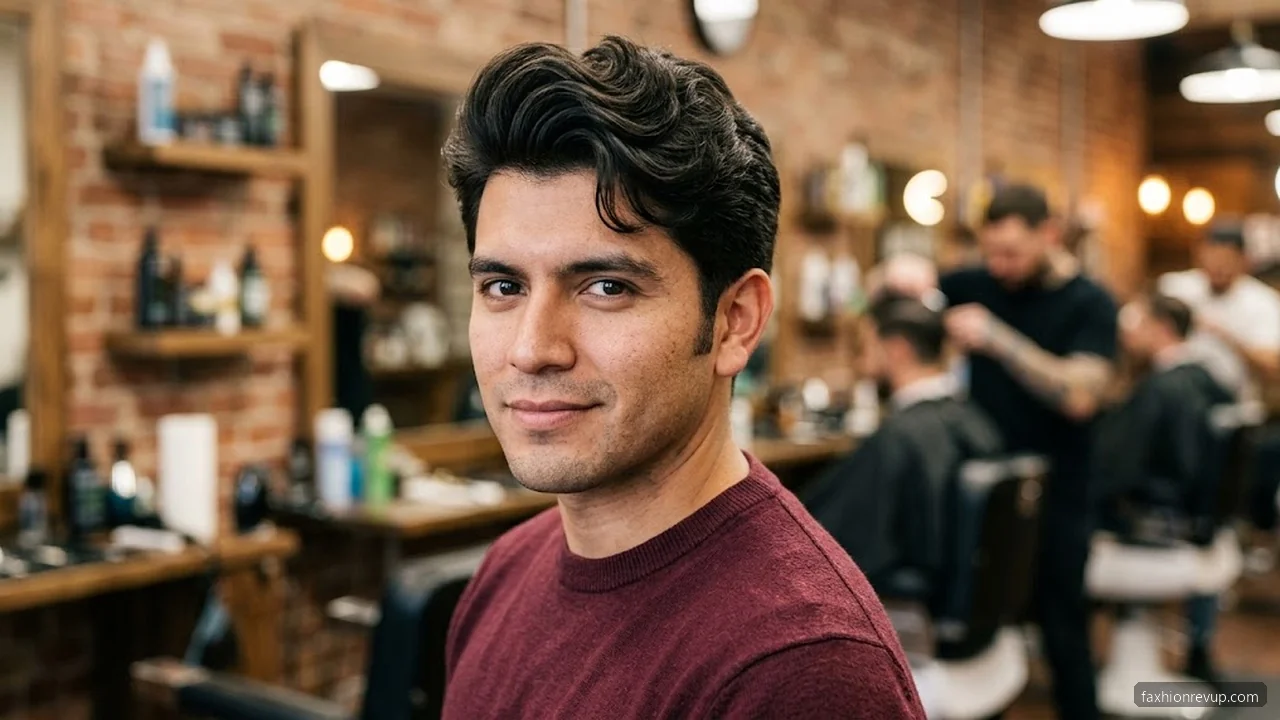
A middle part fade splits the top into two curtains that fall either side. The low fade keeps the sides short, so the length up top reads clearly. Your barber leaves four inches on top so the curtains hang without a gap. A light cream or paste keeps the part sitting flat against the head.
- Guard: A #2 on the sides fading down to a #1 at the neckline.
- Fade height: Low, ending near the top of the ear so the curtains keep their weight.
- Best face shape: Oblong and diamond faces suit the width across the forehead, while round faces should skip it.
- Best hair type: Straight to 2C wavy hair with medium density parts cleanly down the middle.
Man Bun Fade

A man bun fade pulls long hair back into a knot at the crown. The sides fade low, so the length above is the whole point of the cut. You need at least six inches on top before a bun holds properly. A pea-sized amount of light pomade smooths the hair as you pull it back.
- Guard: A #1 on the sides, with six to eight inches left through the top.
- Fade height: Low at the sides and back, which keeps the bun from looking top-heavy.
- Best face shape: Triangle and square faces suit the height, while oblong faces should keep the top loose.
- Best hair type: Long, thick 2A to 3A hair ties back without slipping during the day.
Hard Part Fade
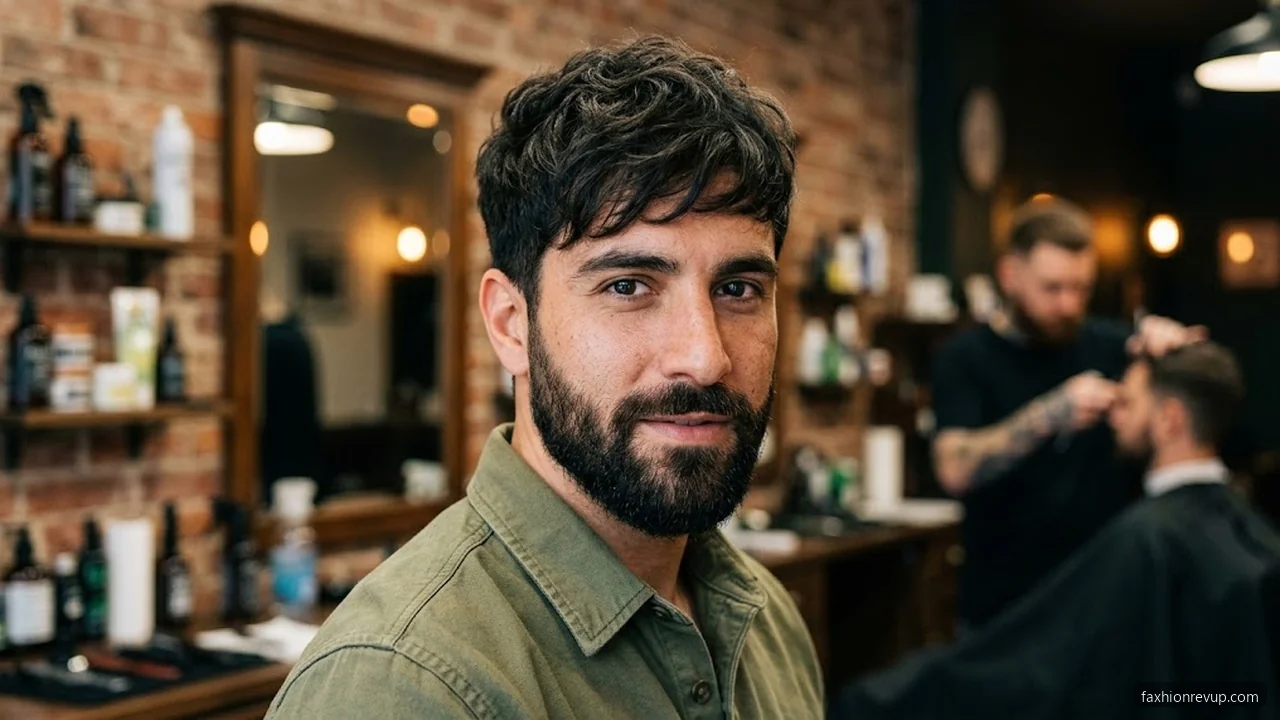
A hard part is a shaved line that separates the longer top from the faded side. Your barber cuts it with a straight razor, so the line stays sharp for about a week. It works best on straight hair that already falls to one side. Ask for a #1 on the sides and three inches on top at your natural part.
Square and round faces carry a hard part well, because the line adds a clear angle. The part shows regrowth quickly, so plan on a trim every two weeks. Between visits, comb the hair along the line so it keeps training to that side. Skip it if your hairline is thinning, since the line draws attention there.
Afro Fade
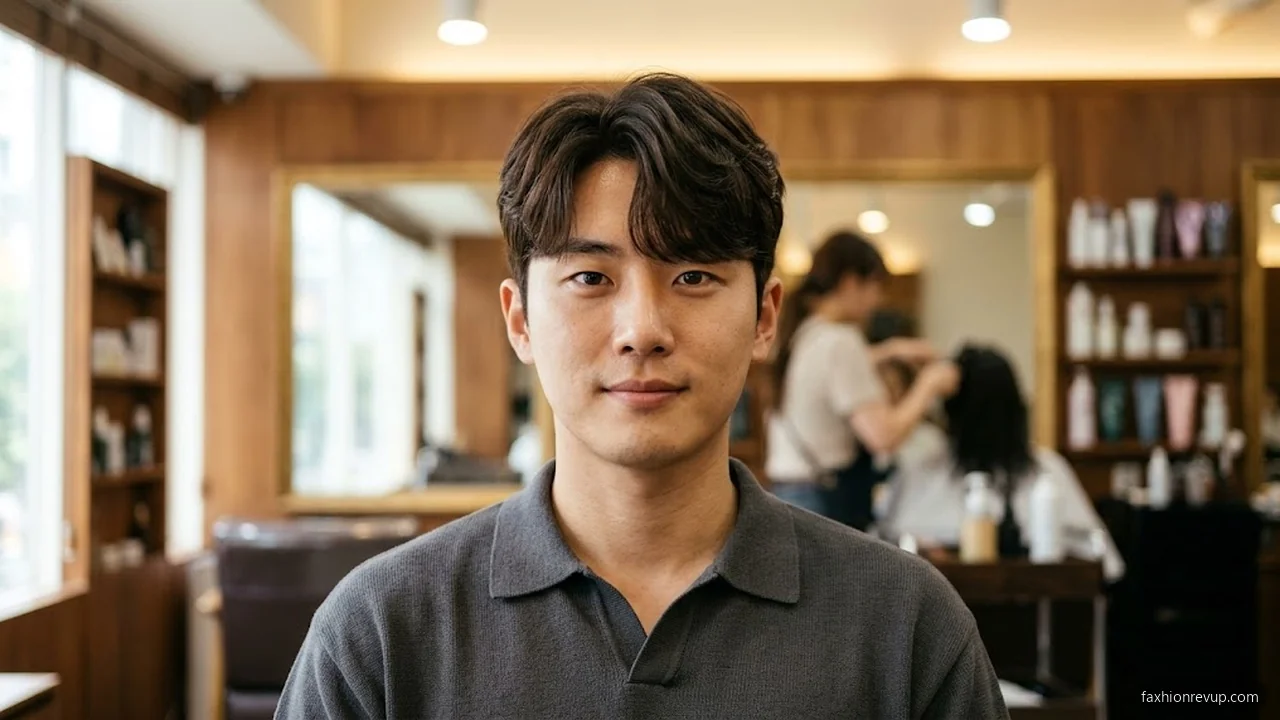
A low fade under an afro keeps the sides short and the coil pattern round on top. Your barber shapes the afro with scissors or a trimmer, following the natural curve. Three to four inches on top gives the shape room without losing its roundness. A leave-in curl cream keeps the coils defined and free of frizz.
4A to 4C coils suit this cut best, because the pattern holds a round shape on its own. Triangle faces gain from the width on top, which balances a wider jaw; diamond faces suit fullness at the temples. Ask your barber to keep the fade low and even, and never to push it past the temple. A trim every three to four weeks keeps the outline clean and even.
Waves Fade
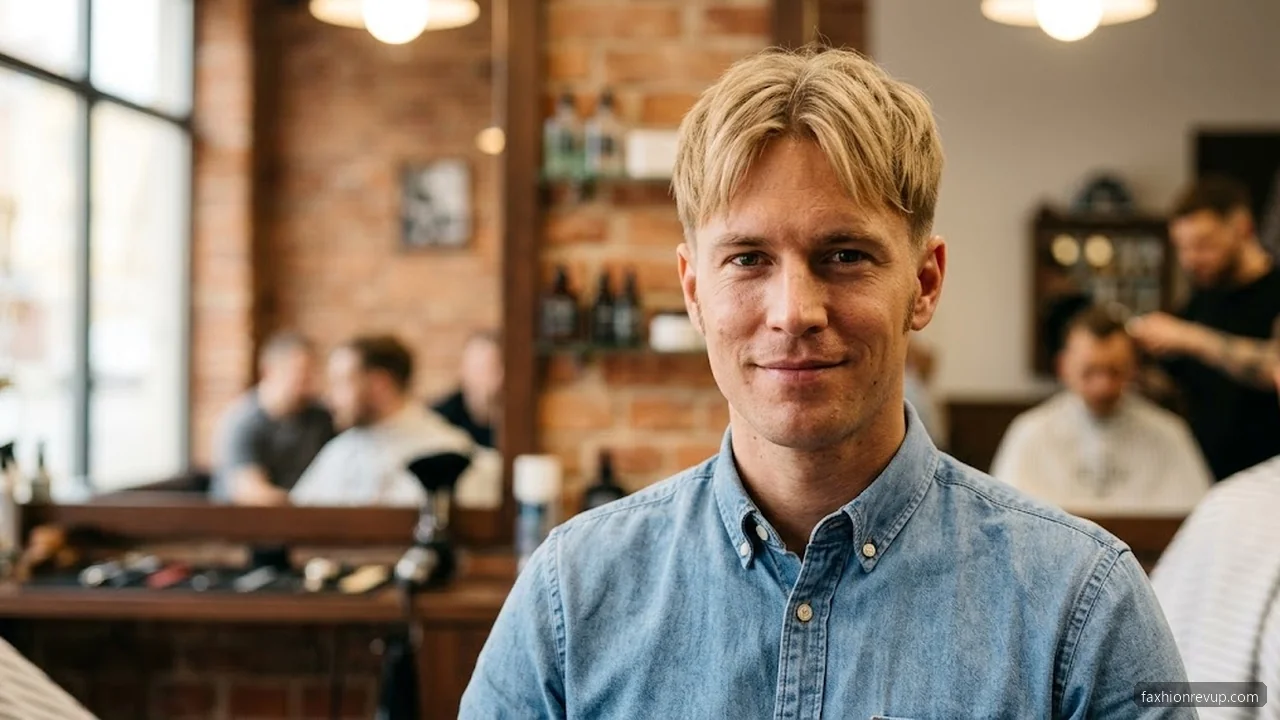
A waves fade pairs a low fade with brushed 360 waves on top. The short sides make the wave pattern on the crown stand out. Your barber leaves two to three inches on top, which is enough for the pattern to show. You need a soft brush and a wave cap to keep the lines forming.
Waves need 3C to 4B coils that are brushed daily in one direction. Round faces suit the tight sides, which give the head a longer line, while oblong faces need side fullness. Ask for a #1.5 on the sides and a low blend that stops above the ear. Brush for ten minutes a day and wear the cap at night.
How Does a Low Fade Compare to a Mid Fade?
A mid fade starts at the temple line, while a low fade begins just above the ear. That single difference decides how long the cut stays looking clean at home. The lower start hides regrowth around the ear for an extra week. A higher blend shows new growth sooner because the tightest hair sits higher on the head.
Low fades keep more weight through the sides and back of the head. Mid fades strip that weight away, so the sides look tighter overall. If your hair grows fast, the low version costs you fewer barber visits. Men with a longer face often prefer the fullness a low fade keeps at the sides.
| Feature | Low Fade | Mid Fade |
|---|---|---|
| Blend start | Just above the ear and neckline | At the temple line |
| Starting guard | A #1 at the base blending to a #2 | A #0.5 at the base blending to a #3 |
| Touch-up interval | Every two to three weeks | Every two weeks |
| Best face shapes | Oval, square, heart and diamond faces | Round faces that need tighter sides |
| Regrowth shows | Slowest around the ear and nape | Fastest right above the ear |
How Does a Low Fade Compare to a High Fade?
A high fade starts at the temple near the parietal ridge, well above the low line. That height leaves bare or very short hair across the whole side and back. The contrast with the top looks sharper, and marks show more on dark, thick hair. High fades need a touch-up every two to three weeks, and low fades need the same. See American Academy of Dermatology hair care guidelines for more.
What Is the Biggest Mistake Men Make with a Low Fade?
The most common error is asking for a low fade and a very short top in the same sentence. Those two requests pull against each other and leave a cut with no shape. Men also point at a photo without checking whether their hair type matches it. Bring your own hair type and face shape into the conversation before the clippers start. See Healthline hair health and wellness resources for more.
Frequently Asked Questions
How long does a low fade last?
A low fade looks sharp for about two weeks before the lower line softens. Hair grows roughly half an inch a month, which shows fastest around the ear. You can stretch it to three weeks if your hair is fine or light. After that, the blend between the sides and the top starts to blur.
Can curly hair get a low fade?
Yes, and curls often suit a low fade better than a high one. The lower line leaves weight at the sides, which supports the curl pattern above. Your barber should cut the top dry, because wet curls spring up and hide length. Ask for a #1.5 at the base with the curls left long on top.
What clipper guard is used for a low fade?
Most barbers start a low fade at a #1 on the sides, blending up to a #2. A skin version drops to a #0 and finishes with a foil shaver. The guard you get depends on the contrast you want against the top. Ask for the number so the cut starts where you expect.
Is a low fade good for thick hair?
Thick hair works well with a low fade, because the side weight stays balanced. Dark, thick hair also shows the sharpest blend lines, which some men like. Your barber may need to texturise the top so it moves instead of sitting flat. Book a touch-up every two to three weeks to keep the line crisp.
What are the best Low Fade Haircuts for men?
The classic low fade, the taper fade and the crew cut fade are the safest starting points. Each one keeps the sides tidy while leaving enough length on top to style. Pick a skin version if you want sharper contrast and a frequent trim. Curly and coily hair types suit the drop fade and the afro fade best.
How do I ask for a low fade at the barber?
Tell your barber: “Low fade, #1 sides blending to a #2. Three inches on top.” Bring two photos from the side and the back, not just the front. Say where the line should stop, since barbers read the word low differently. Mention your natural part or cowlick before the clippers start moving.
What face shape suits a low fade best?
A low fade begins just above the ear and neckline, so the sides keep weight near the temple. That low placement flatters square faces because the fuller sides balance a strong, angular jaw. Oval faces wear it just as easily, which is why it rarely looks wrong on them.
Oblong faces suit a low taper fade because the sides. Keep more length than a mid or high fade would leave. Diamond faces gain from the weight that a low fade holds at the temples, which softens wide cheekbones. Ask for a softer finish above the blend if a bald side feels like too much.
How often should I get a low fade touched up?
A skin version needs a touch-up every two to three weeks to keep the bald line clean. The softer shadow version lasts about three weeks before the edges soften. A low taper fade stretches to three or four weeks before it softens. Come in sooner before a wedding, since the neckline grows out first.
Can you get a low fade with a beard?
A low fade pairs well with a beard, and both should meet at the sideburn. Ask your barber to blend the beard top into the fade line, leaving no gap. Keep the beard fuller at the chin if your jaw is narrow. Trim stray hairs at home each week to keep the line neat.
Conclusion
Book Low Fade Haircuts if you want tidy sides that grow out without a hard line. Start with the classic version at a #2 fading to a #1, since it suits most hair. Round faces should move to a mid fade instead, which tightens the sides further. Everyone else can pick a style here and bring a photo along.
Tell your barber: “Low fade, #1 sides, three inches on top,” and mention your part. Ask where the line will stop before the clippers touch your hair. Book the next visit two to three weeks out for a skin version. Softer blends can wait three to four weeks without losing their shape.
Peter Johnson has spent over 10 years behind the chair as a licensed barber and hairstylist, working with men’s grooming brands across the US. He writes for faxhionrevup.com to bring practical, tested haircut advice to everyday readers. Peter stays current with trends through hands-on client work and industry training, ensuring every guide reflects real barbering expertise.