Korean Hairstyles for Men: 25 Cuts That Turn Heads in 2026

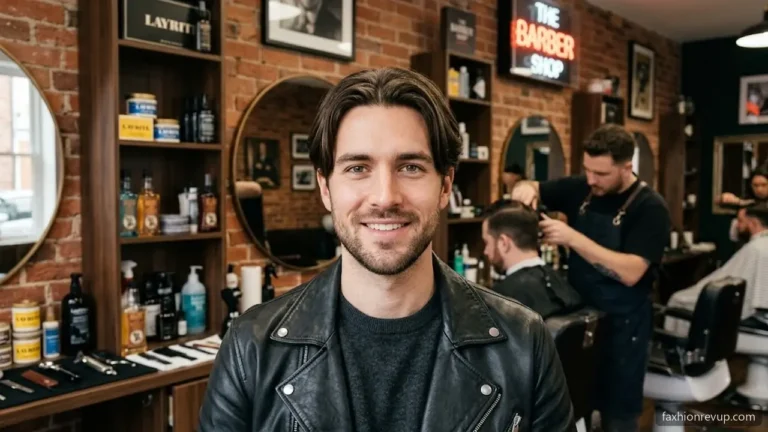
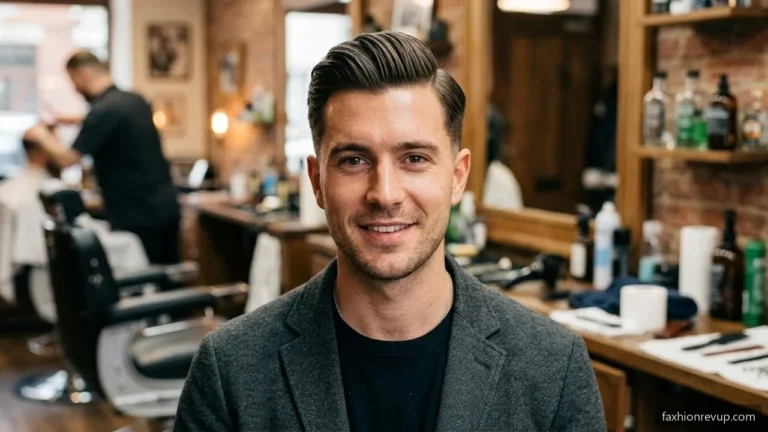
Korean Hairstyles for Men cover the soft, layered cuts Seoul barbershops made famous. The look leans on movement rather than stiffness, with airy tops and clean sides. A two block haircut keeps the top long and the sides short. Most versions finish with a fringe that falls forward, not back.
Oval and square faces wear most of these cuts, while round faces need height on top. Fine, straight hair holds a two block shape well, but 4C coils shrink as they dry. Sides usually run a #2 to #4 guard, while the top stays longer than one inch. Plan on a touch-up every three to four weeks to keep the shape sharp.
Quick Answer
Korean Hairstyles for Men are layered cuts with soft movement and longer tops. They suit oval, square and heart faces best, and work on straight, wavy or permed hair. Sides typically take a #2 to #4 guard, while tops stay longer than an inch. Ask for a two block, a comma fringe or a shadow perm to start.
How to Choose the Right Korean Hairstyle for Your Face Shape?
How your face reads depends on width at the cheekbones and length from hairline to chin. Pull your hair back and look straight into a mirror under flat light. Compare the widest point with the longest point before you pick a cut. That ratio decides whether you need height, side fullness or a fringe.
A round face has full cheeks and near-equal width and length. It needs height on top, so keep the sides tight with a #2 guard. A square face has a broad forehead and a strong, angular jaw, which most cuts flatter. Texture on top softens those angles without hiding the jawline.
An oblong face runs clearly longer than it is wide. Ask for a fringe, or keep fullness at the sides instead. A heart face shows a wide forehead and a narrow chin, which suits a side sweep. Medium length with a soft fringe balances the chin without adding height.
A diamond face is widest at the cheekbones, with a narrower forehead and chin. Add fullness at the forehead and temples, but skip very tight sides. A triangle face has a jaw wider than the forehead. Keep the upper sides fuller and avoid tight sides that widen the jaw.
Curl type matters as much as face shape for most cuts. Fine hair lifts easily, while thick straight hair holds a two block shape. Bring two photos that show your hair type honestly rather than a styled studio shot. Then ask the barber which version of that cut suits your growth pattern.
| Face Shape | Best Korean Styles | Why It Works |
|---|---|---|
| Round | High-taper two block, S-shaped fringe | Height on top and tight sides stop the face reading wide. |
| Square | Textured crop, side part, shadow perm | Soft texture on top balances a strong jaw while the sides stay neat. |
| Oval | Comma hair, curtain haircut, messy hair | Balanced proportions carry almost any top length or fringe shape. |
| Oblong | See-through bangs, side bangs, bowl cut | A fringe cuts visual length and side fullness adds width. |
| Heart | Side swept fringe, layered cut, flow cut | A sweep covers the wide forehead and balances a narrow chin. |
| Diamond | Textured fringe, wavy Korean perm, dandy cut | Fullness at the forehead and temples evens out wide cheekbones. |
| Triangle | Wolf cut, shaggy cut, long bangs | Volume on top and upper sides balances a jaw wider than the forehead. |
What Are the Best 25 Korean Hairstyles for Men in 2026?
The cuts ahead run from short and sharp to loose and shoulder length. Each one names the guard, the top length and the upkeep it really needs. Read the two or three that match your hair type first, then compare them side by side. Your barber can adapt any of them to the growth pattern you already have.
Two Block
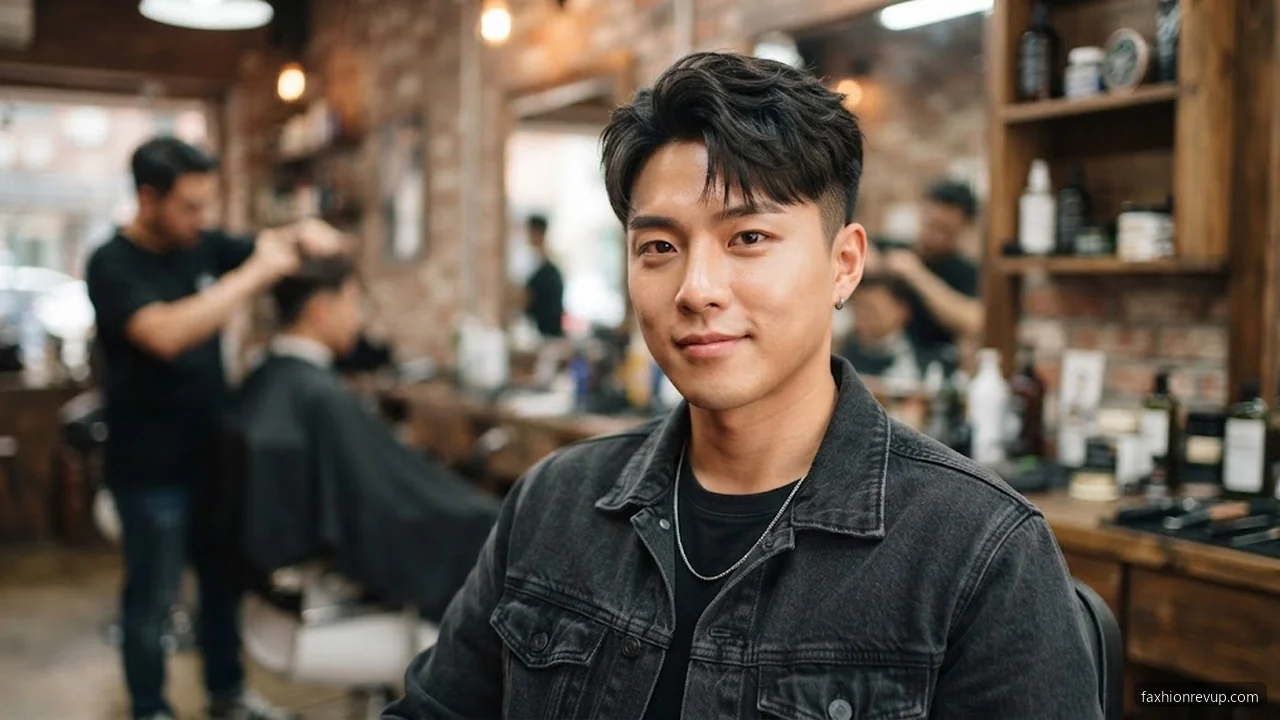
The sides are clipper-cut short while the top stays long and heavy, so a shelf sits above each temple. From the front the fringe drops soft and full over the forehead. At the back the nape stays close, which makes the long top look even heavier.
Straight and wavy hair from 1A to 2C holds this shape best, because the top must sit flat. Square and oval faces carry the weight well, while round faces look wider under a heavy shelf. Those readers should ask their barber for a high-taper two block instead.
Ask for a #3 on the sides with three to four inches left on top. Then say: “Keep the line above the temple sharp. Not blended.” Style it with a pea-sized amount of matte clay through damp hair. Blow the fringe forward so it dries with a soft bend instead of a hard edge.
The shelf collapses first, because the sides grow out about half an inch a month. Book a trim every four to five weeks to keep that contrast sharp. Thick hair often needs a down perm on the sides so they lie flat instead of lifting.
Caesar Cut
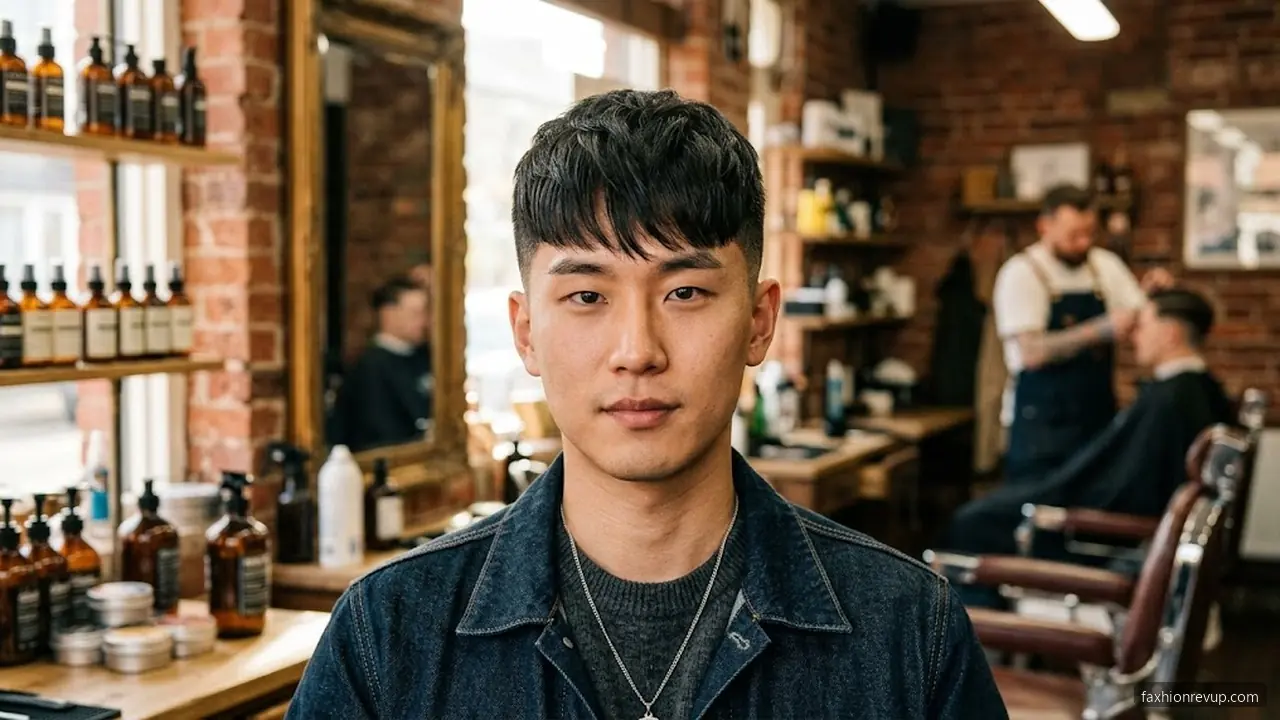
A Caesar cut keeps the top near one inch and cuts the fringe straight across the forehead. The sides run short with a #1 or #2 guard, blending into the top. From the back it reads as a neat, even shape that follows the head.
A straight fringe cuts the visual length of your face, so oblong and diamond faces gain balance from it. Fine to medium hair in the 1A to 2B range holds the crisp edge best. Round faces should skip it, because the flat top adds width without height.
Say: “A #1 on the sides, one inch on top. Fringe cut straight at the brow line.” Ask for soft. Point-cutting through the top so the edge does not look blunt. A dime-sized amount of matte paste, raked back to front, gives it grip without shine.
Because the top sits at one inch, this cut looks grown out faster than most. Come back every two to three weeks to keep the fringe above the eyebrows. Fine hair shows scalp quickly, so a #2 on the sides lasts longer than a #1.
Textured Crop
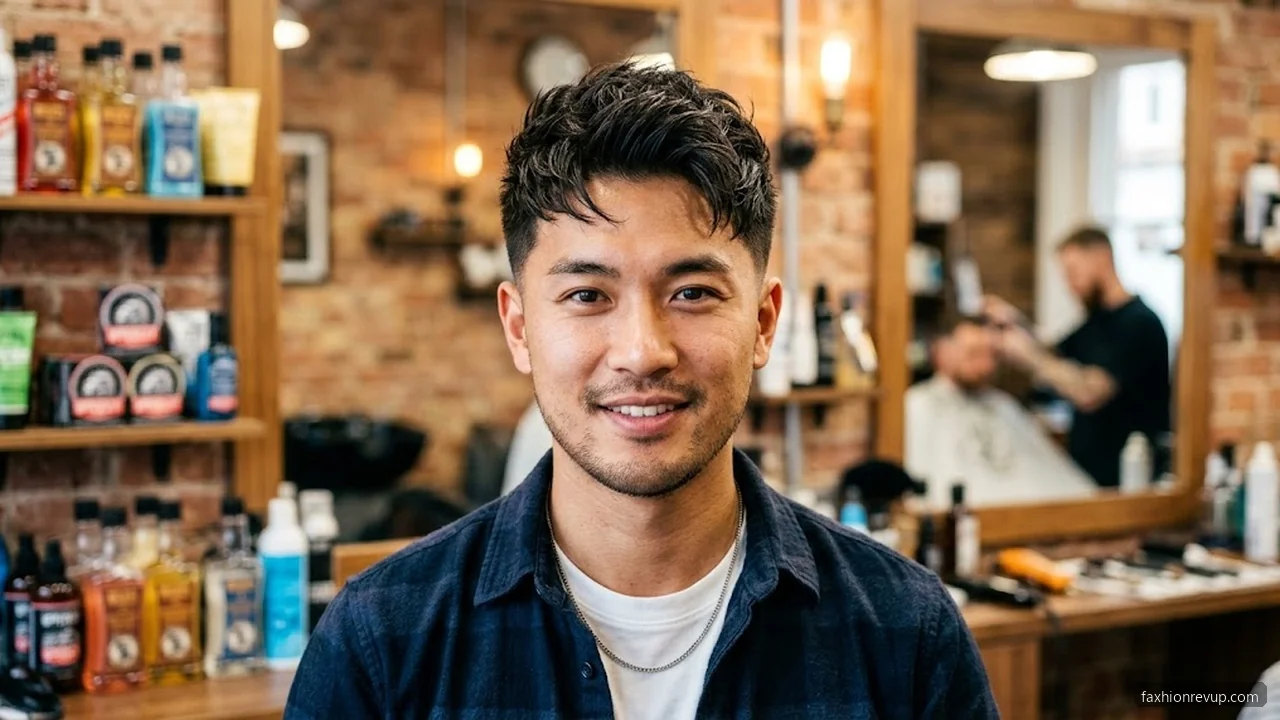
A textured crop leaves about two inches on top and chops it into choppy, uneven pieces. Its fringe sits forward over the forehead with a broken, piecey edge instead of a straight line. The sides take a #1.5 or #2 guard, so the shape stays close without going to skin.
Heart and square faces wear it well, because the fringe covers a wide forehead. The choppy texture also softens a strong jaw without hiding it. Wavy hair from 2A to 2B does most of the work on its own. Very coily hair needs a barber who cuts it dry, since coils spring up after washing.
Say: “A #1.5 on the sides, two inches on top. Point-cut the ends.” Show a photo taken in daylight so the texture is visible. Spray sea salt spray into damp hair, scrunch it with your fingers, then let it air dry.
The fringe grows out first and starts to look heavy after about three weeks. Book a trim every three to four weeks to keep the pieces sharp. A dry-texture spray between washes adds grip without making the hair look wet.
French Crop
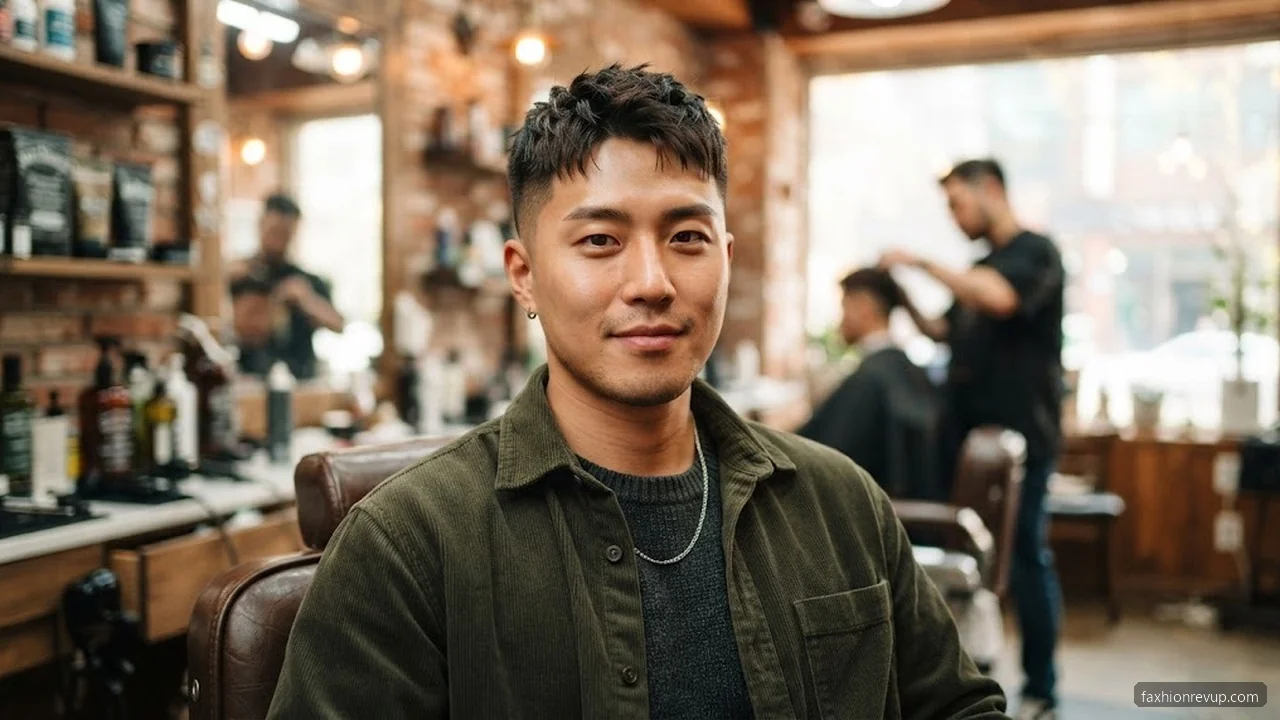
A French crop pairs a blunt fringe with a short, choppy top and sides that fade to a #0.5. The fringe line is heavier than a Caesar’s, sitting lower and straighter across the brow. From the side, the fade runs from a #0.5 at the ear to a #2.
Round and diamond faces get the most from it, because tight sides narrow the face. The choppy top adds a little height without adding bulk at the sides. Straight hair in the 1A to 1C range holds the blunt line cleanly. Thick hair takes longer to dry here, so ask for point-cutting to thin the top.
Tell your barber: “A #0.5 fade on the sides, two inches on top. Blunt fringe just above the eyebrows.” Show a photo from the side so the fade height is clear. Rub a small amount of texture paste through dry hair, then push the fringe down flat.
Regrowth shows at the ears within two weeks, because the fade starts at #0.5. Book every two to three weeks if you want the line to stay crisp. Between visits, a dry shampoo keeps the fringe from separating into greasy strands.
Buzz Cut
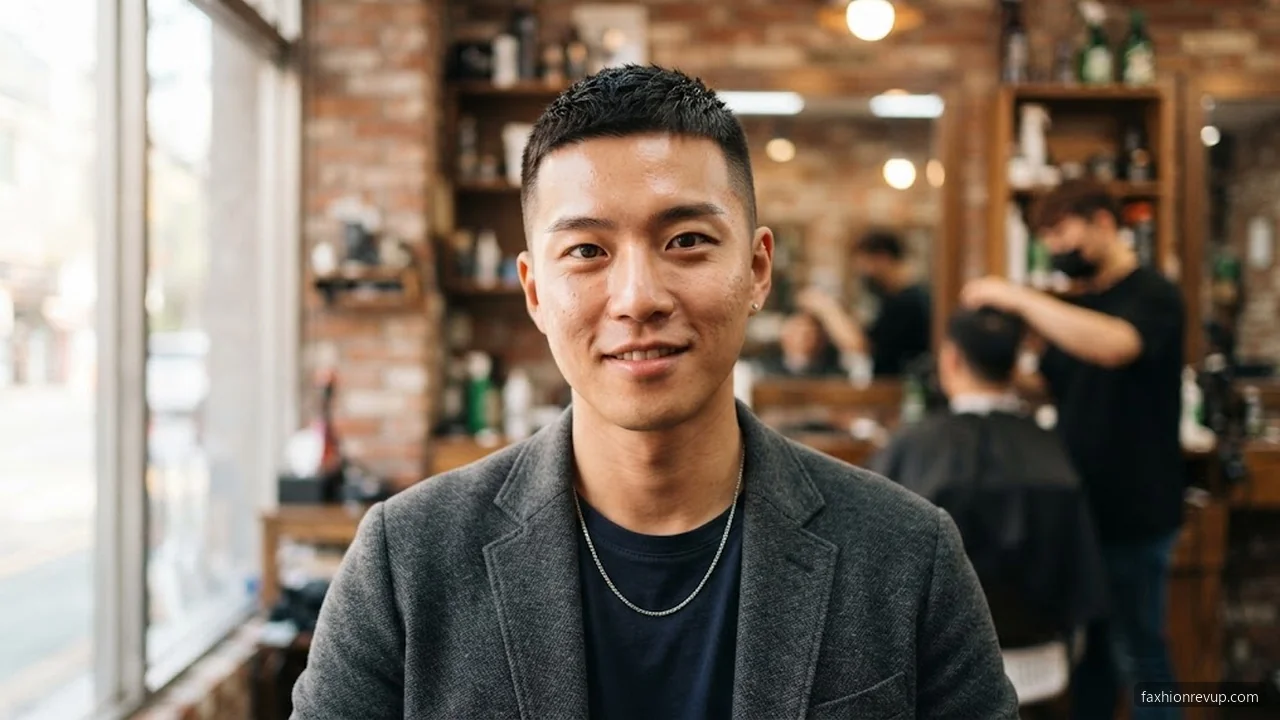
A buzz cut runs one length over the whole head, usually a #1 or #2 guard. There is no fringe, no part and no shelf, so the hairline and skull shape do all the talking. From the back it follows the occipital bone, which is why a good barber checks the crown first.
Square and oval faces carry the buzz best, since both have balanced proportions. Round faces lose the height they need, and triangle faces look wider at the jaw. Fine hair shows scalp through a #1, so a #2 suits it better.
Ask for: “A #2 all over. Squared off at the sideburns and a natural neckline.” Then ask. Your barber to check the crown under a mirror before finishing. There is nothing to style, so a light scalp moisturiser with SPF is the only daily step.
A buzz holds its shape for about two weeks before the sides lose their edge. Book every two to three weeks for the cleanest result, or every four for a softer grow-out. Adding a skin fade does not change that timing, since hair grows at the same rate everywhere.
Drop Fade
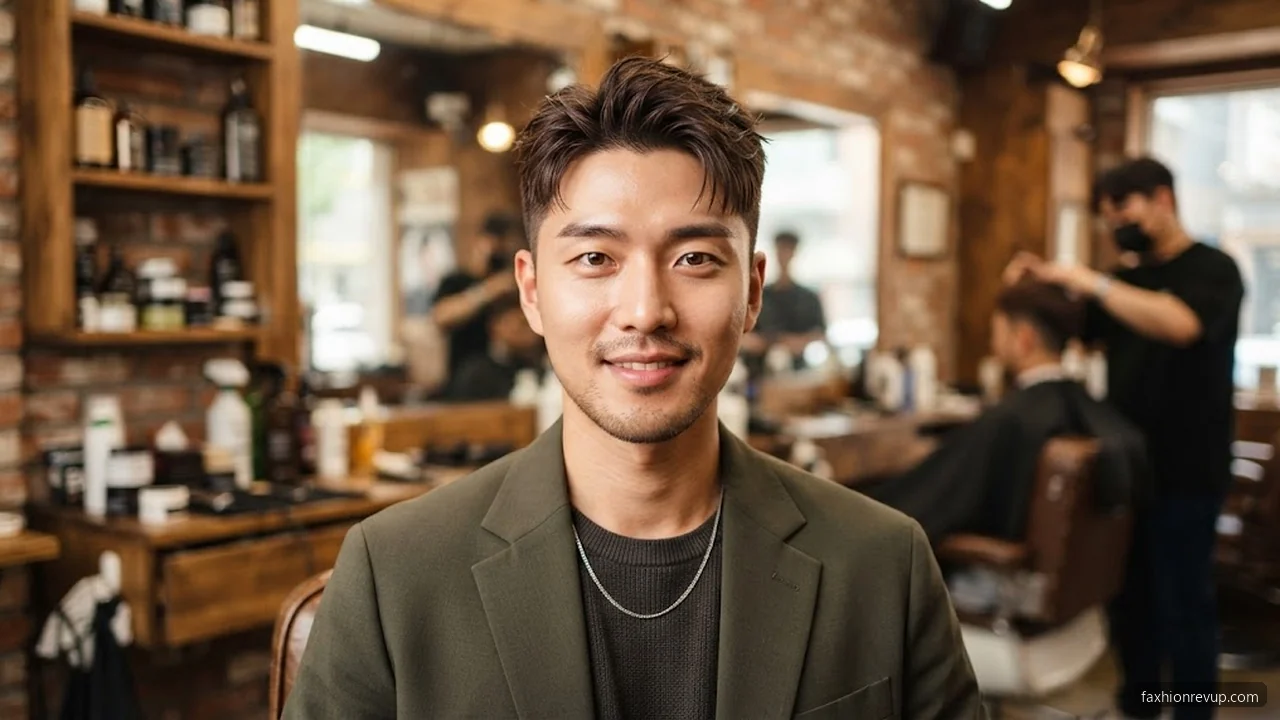
A drop fade curves down behind the ear instead of running straight across it, so the back keeps more length. The line falls toward the nape and rises again at the neckline, which gives the head a rounder silhouette. Two to three inches on top keeps the shape balanced.
Oblong and diamond faces benefit most, because the extra weight behind the ear adds width where those shapes need it. Straight and wavy hair from 1B to 2C blends cleanly through the curve. Round faces should choose a high-taper two block instead, since the drop adds bulk at the back.
Say: “A drop fade starting at a #1, keeping the back long. With two inches on top.” Ask for the curve to sit behind the ear, not through the middle of it. Book a touch-up every two to three weeks, then use curl cream to keep the top defined.
Taper Fade
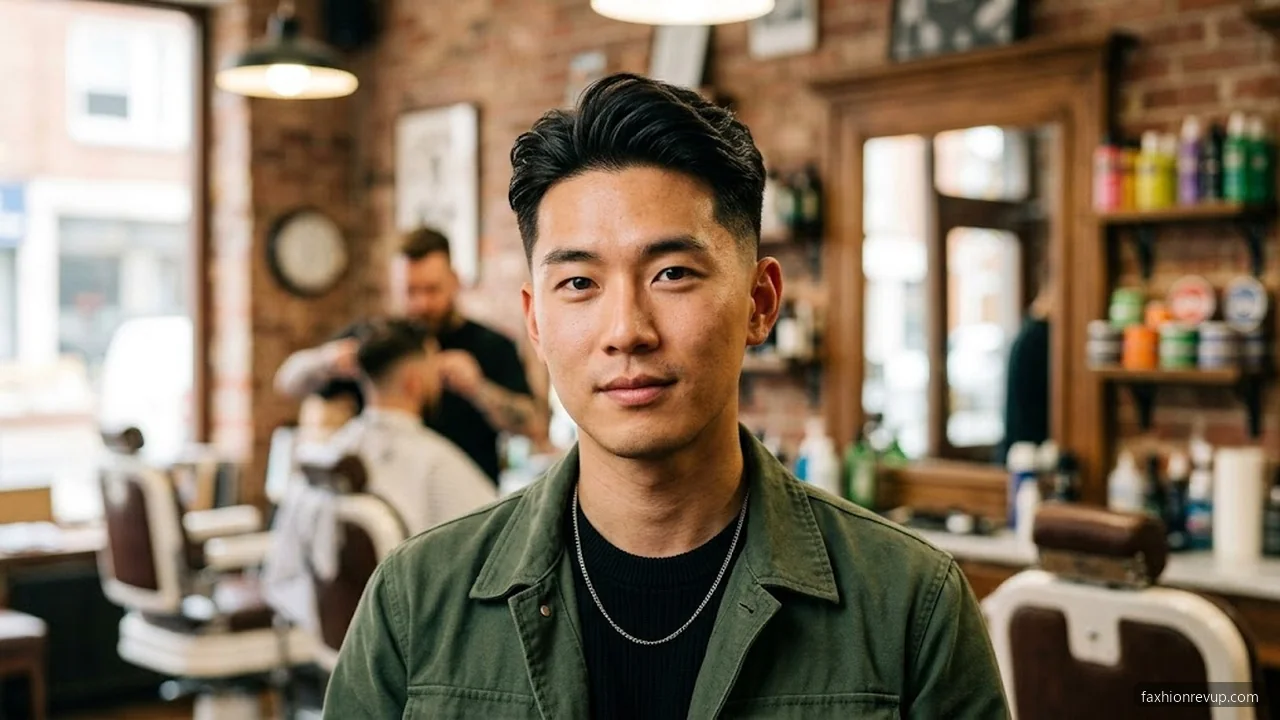
A taper fade only shortens the sideburns and the nape, so the rest of the sides keep their length. Nothing is blended up the head, which makes it the gentlest option here. A #1 at the sideburn fading to a #3 leaves visible hair behind the ear. The neckline stays natural at the back instead of squared off and hard.
Round and heart faces do well with a taper because it stays soft around the ears. Any hair type can wear one, from 1A straight through 4C coils. Ask for: “A taper on the sideburns and nape only. Nothing above the ear.” Come back every three to four weeks. This is longer than a full fade allows.
Korean Ivy League
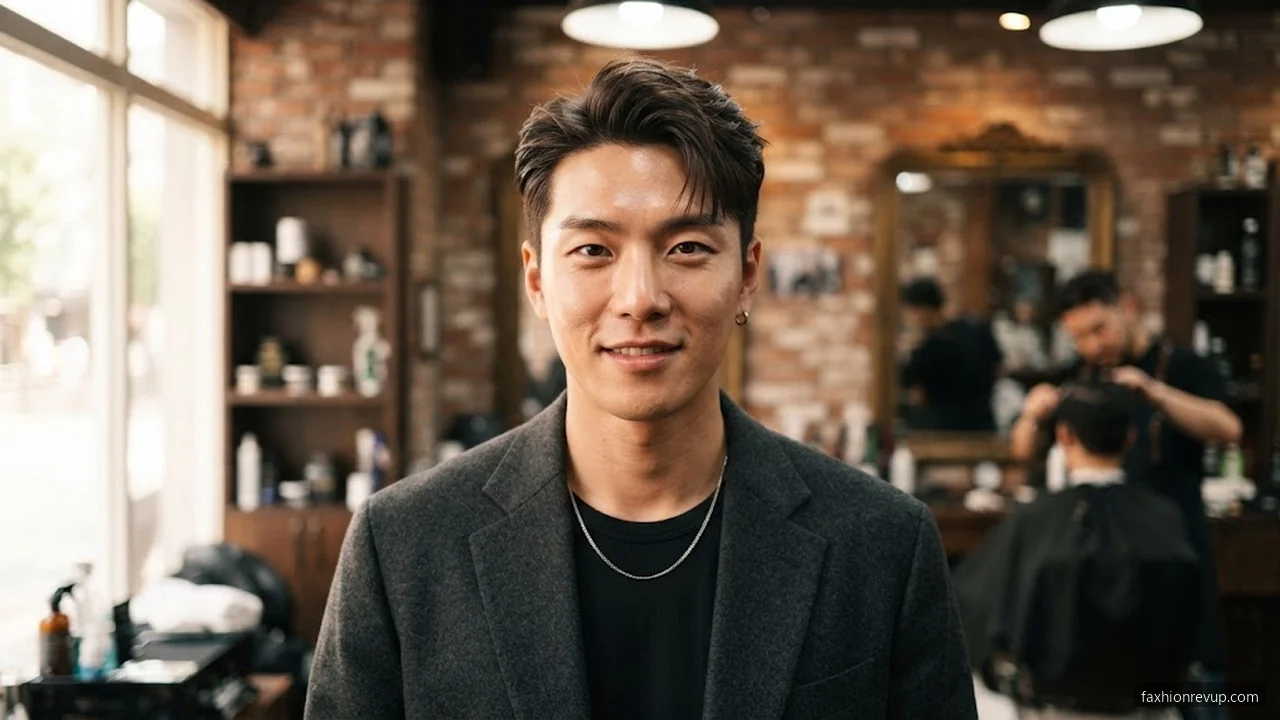
The Korean ivy league keeps the sides short and the top combed neatly to one side. Two to three inches on top allows a clean part without heavy weight. From the front the fringe sweeps across the brow at a slight angle. It reads sharper than a two block, because the sides and top blend together.
Heart and triangle faces suit it, since the swept top adds width at the forehead and the sides stay short. Straight and wavy hair from 1A to 2B takes the comb lines best. Work a dime-sized amount of pomade through damp hair, then comb it into place. Book a trim every four weeks, because the part loses its edge last.
Short Textured
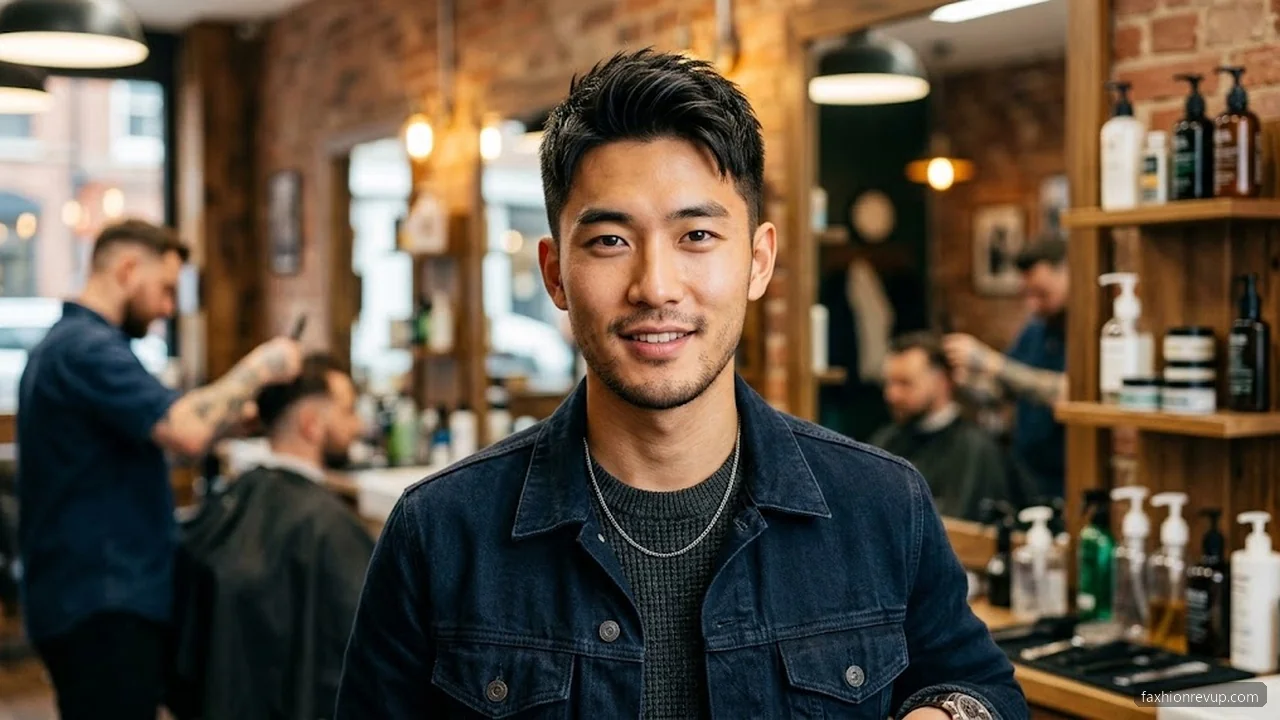
A short textured cut leaves roughly two inches on top, then chops it into soft pieces. The sides take a #2 guard, which keeps enough hair that the head does not look shaved. There is no fringe line, so the front blends into the top instead of sitting flat.
Round and triangle faces gain from the height on top and the fuller upper sides. Fine to medium hair in the 1B to 2A range shows the texture best. Scrunch a small amount of light mousse into damp hair and let it dry loose. Book a trim every three weeks to keep the sides from rounding out.
Comma Hair

The Korean comma hair sweeps the fringe into a soft curve over one eyebrow. From the side the ends bend inward, which gives the shape its comma name. Sides stay short with a #3 guard while the top holds three to four inches. It differs from a two block because the front is styled, not left flat.
Oval and heart faces wear it best because the curve balances a wide forehead. Straight and wavy hair from 1B to 2C holds the shape, but coily hair springs back. Blow the fringe with a round brush, then finish with a pea-sized amount of matte paste. Book a trim every four to five weeks to keep the comma crisp.
Curtain Haircut

The curtain haircut splits the fringe down the middle and lets both halves fall to the sides. It leaves three to four inches on top, so the middle parting stays visible. Sides are scissored to about an inch instead of clipped short. The shape frames the face like open curtains, which keeps the forehead partly covered.
Oval and heart faces suit it because the parted fringe softens a wide forehead. Wavy hair from 2A to 2C falls into the curtain shape with little effort. Use sea salt spray on damp hair and let it air dry for soft separation. Trim every five to six weeks, because scissored sides grow out slowly.
Middle Part

The middle parting runs straight down the crown and divides the hair into two even halves. Unlike the curtain, it describes the parting line rather than the fringe shape. Sides take a #2 guard, which keeps the head narrow beneath the part. The top sits at three inches, enough to fall flat on both sides.
Oval and square faces wear it well, since the centre line balances the jaw. Heart faces should skip it because a middle part widens the forehead. Straight and wavy hair from 1A to 2B holds the line without much product. Work a dime-sized amount of pomade through damp hair, then comb it into place. Book a trim every four weeks to keep the part sharp.
Side Part
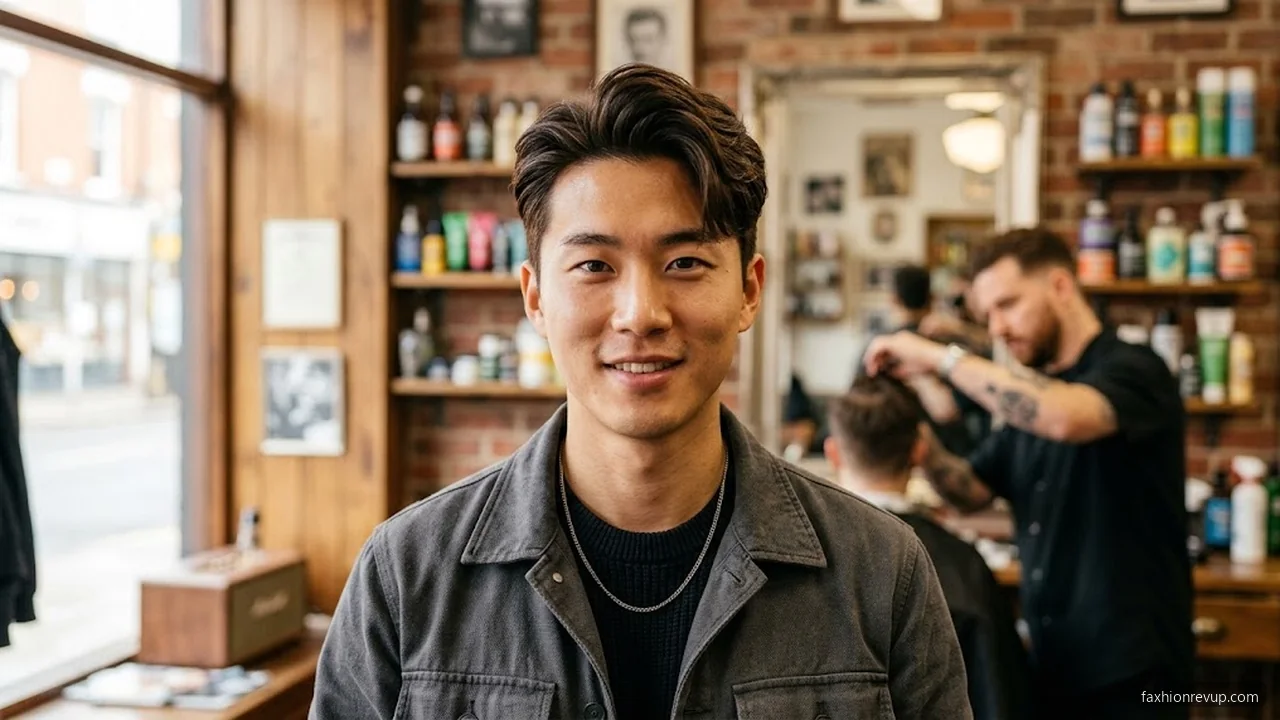
The Korean side part moves the parting off centre and sweeps the top to one side. It leaves two to three inches on top with a #2 guard on the sides. From the front the fringe crosses the brow at a slight angle instead of falling straight. The finish is smoother and neater than a messy crop.
Triangle and heart faces gain width at the forehead from the swept fringe. Round faces should keep the sides tighter, since a side part adds softness. Straight hair from 1A to 1C holds the part line best, so waves need a light hold. Comb a pea-sized amount of pomade across the top and trim every three to four weeks.
Dandy Cut

The dandy cut keeps soft, romantic layers that fall past the ears and over the forehead. Sides are scissored to roughly one inch instead of clipped, which keeps the shape soft. Four to five inches on top allows the fringe to sweep and curve. It reads longer and looser than the ivy league, with no hard lines anywhere.
Diamond and heart faces wear the dandy cut well, because soft layers fill narrow temples. Wavy hair from 2A to 2C shows the layers best, while fine straight hair can look limp. Work curl cream through damp hair and scrunch it to build soft definition. Book a trim every six weeks to keep the layers from growing heavy.
See-Through Bangs

See-through bangs fall wispy and light, so the forehead stays visible through the strands. They sit below the brow and break into thin pieces rather than a solid block. Sides take a #3 guard and the top holds about three inches. The fringe is cut with a point-cutting technique that removes weight without shortening the length.
Oblong and diamond faces benefit because a fringe shortens a long face. Round faces gain little from it, since wispy bangs add no height. Straight and wavy hair from 1A to 2B holds the light texture best. Mist a light mousse through damp bangs and dry them with a small round brush. Trim every three to four weeks to keep the pieces from closing up.
Textured Fringe

A textured fringe chops the front into uneven pieces that stand up and forward. It sits at two to three inches on top with a #2 guard on the sides. The chopped ends create volume at the front, which lifts the whole shape. It reads sharper and lighter than a blunt fringe cut straight across.
Round and triangle faces gain height at the front from the lifted texture. Square faces also wear it, since choppy ends soften a strong jaw. Wavy hair from 2A to 2B shows the texture best, so straight hair needs a product boost. Rub a pea-sized amount of matte clay through dry hair, then trim every three weeks.
S-Shaped Fringe
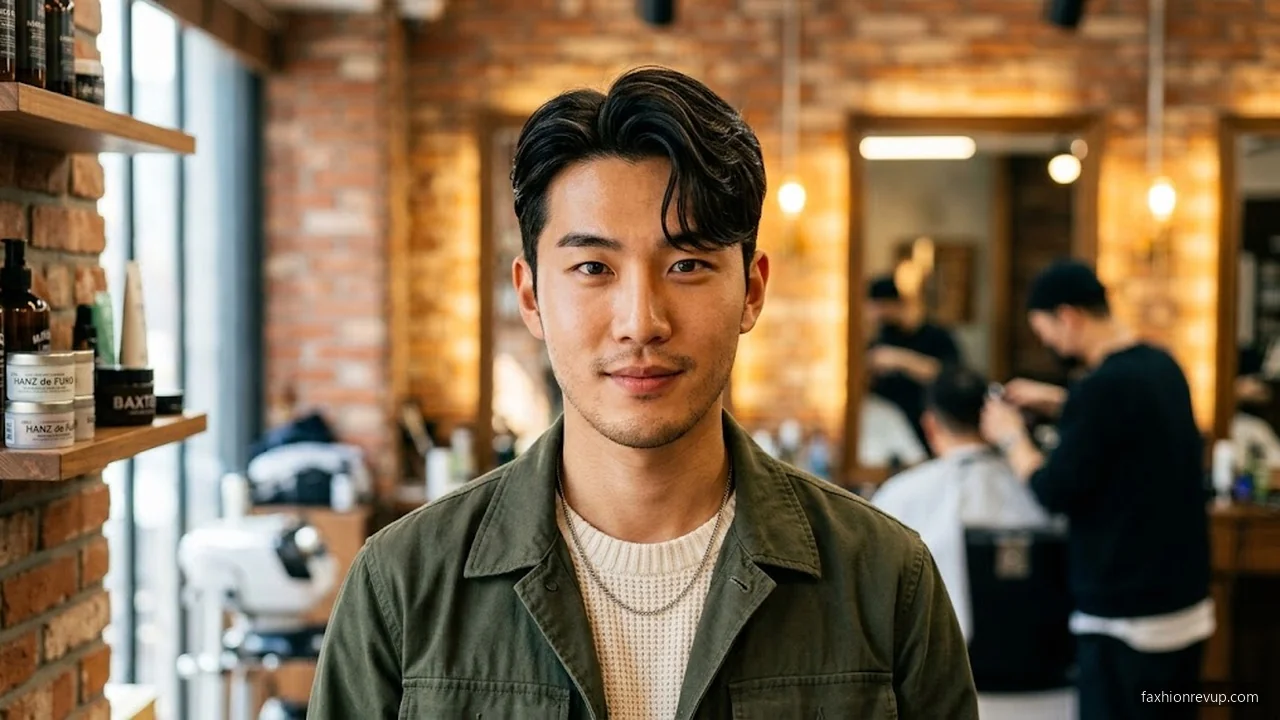
The S-shaped fringe curves through the front like a loose letter S. It sits at roughly four inches on top with a #2 guard on the sides. The bend starts near the hairline and rolls forward over the brow. This shape adds movement that a straight fringe cannot match. It works best when the hair has some natural body or a light perm.
Round and oval faces gain height and movement from the rolled curve. Wavy hair from 2A to 2C holds the S shape naturally, while straight hair needs a perm. Work a pea-sized amount of curl cream through damp hair and twist the fringe with your fingers. Book a trim every five weeks to keep the bend defined.
Side Swept Fringe
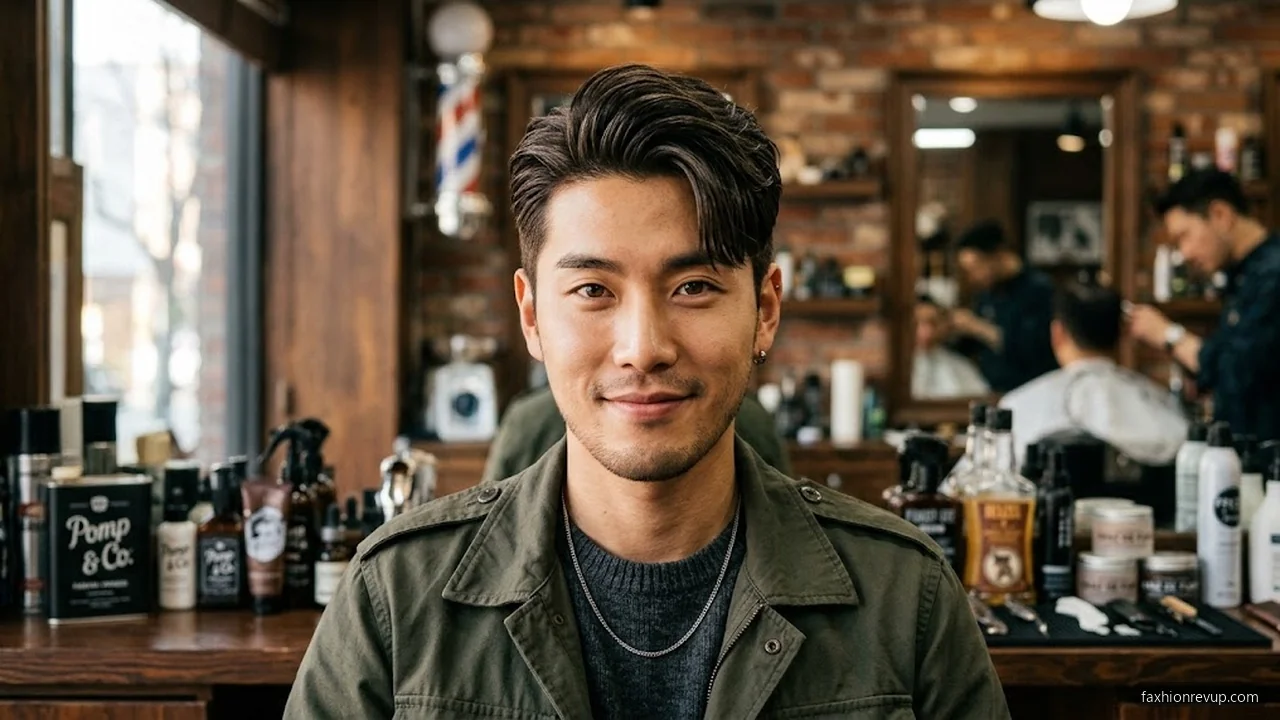
A side swept fringe pushes the front hair across the forehead toward one temple. It leaves about three inches on top with a #3 guard on the sides. The sweep starts at the parting and tapers as it crosses the brow. This shape keeps the forehead partly covered without a heavy block of hair.
Heart faces wear it well because the sweep covers a wide forehead, and triangle faces gain width. Round faces should ask for tighter sides instead, because the sweep adds softness. Straight and wavy hair from 1B to 2B takes the direction easily, so comb light gel through damp hair. Trim every four weeks, because the sweep falls flat once the sides grow.
Side Bangs
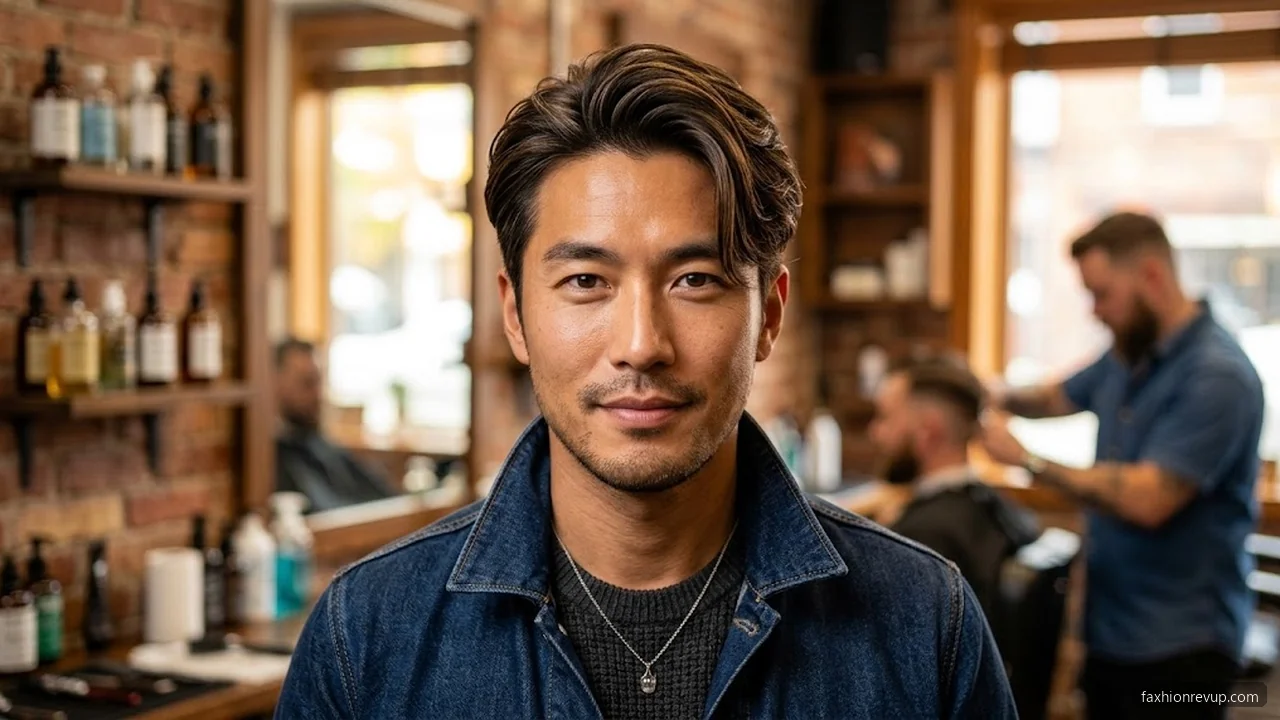
Side bangs are longer than a side swept fringe and fall past the eyebrow toward one side. They sit at four inches on top with the sides scissored to about an inch. The weight of the bang keeps it hanging low instead of flipping up. This shape hides the temples and softens the forehead line.
Oblong and diamond faces gain balance from bangs that cover the temples. Thick hair from 1B to 2B holds the weight, while fine hair needs a dry texture spray. Mist the spray through dry bangs and push them to one side with your fingers. Book a trim every five to six weeks to keep the length even.
Down Perm
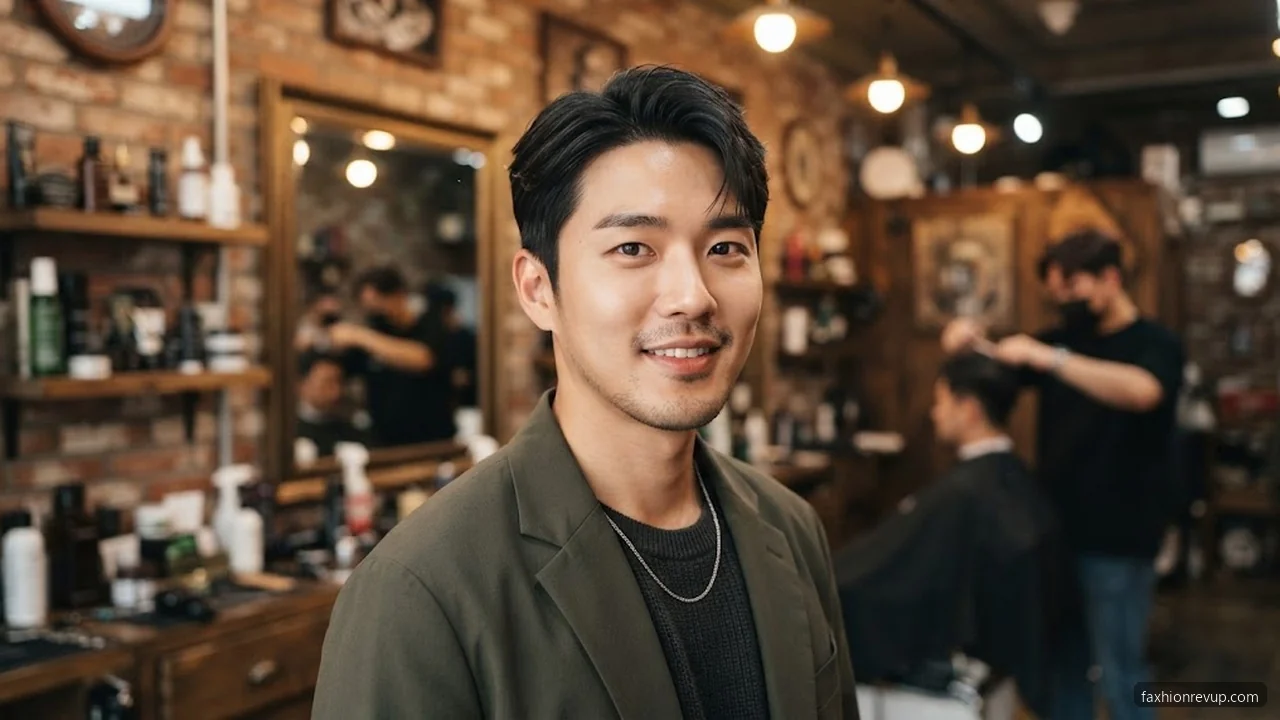
A down perm is a chemical service that relaxes the sides and back so they lie flat. It is not a cut, so it works alongside whatever shape you already wear. The solution softens the hair’s natural bend and stops it sticking out above the ears. Most sessions take under an hour and the effect lasts until new hair grows in.
Round and triangle faces benefit most, because flat sides narrow a wide jaw. Thick, straight hair from 1A to 2B gains the most from the treatment. A Korean haircut barber should test a small strand before treating the whole head. Repeat the down perm every six to eight weeks as the relaxed hair grows out.
Messy Hair

Messy hair keeps an undone finish that looks like you just rolled out of bed on purpose. It sits at three to four inches on top with a #3 guard on the sides. The strands fall in loose, broken pieces instead of neat lines. This cut hides a cowlick or an uneven hairline better than any slick style.
Oval and square faces wear the relaxed shape well, since the texture softens hard angles. Round faces should keep the sides tight, because loose sides add width. Wavy hair from 2A to 2C does most of the styling, so rub matte clay through dry hair. Book a trim every four to five weeks, since the shape needs regular weight removal.
Bowl Cut
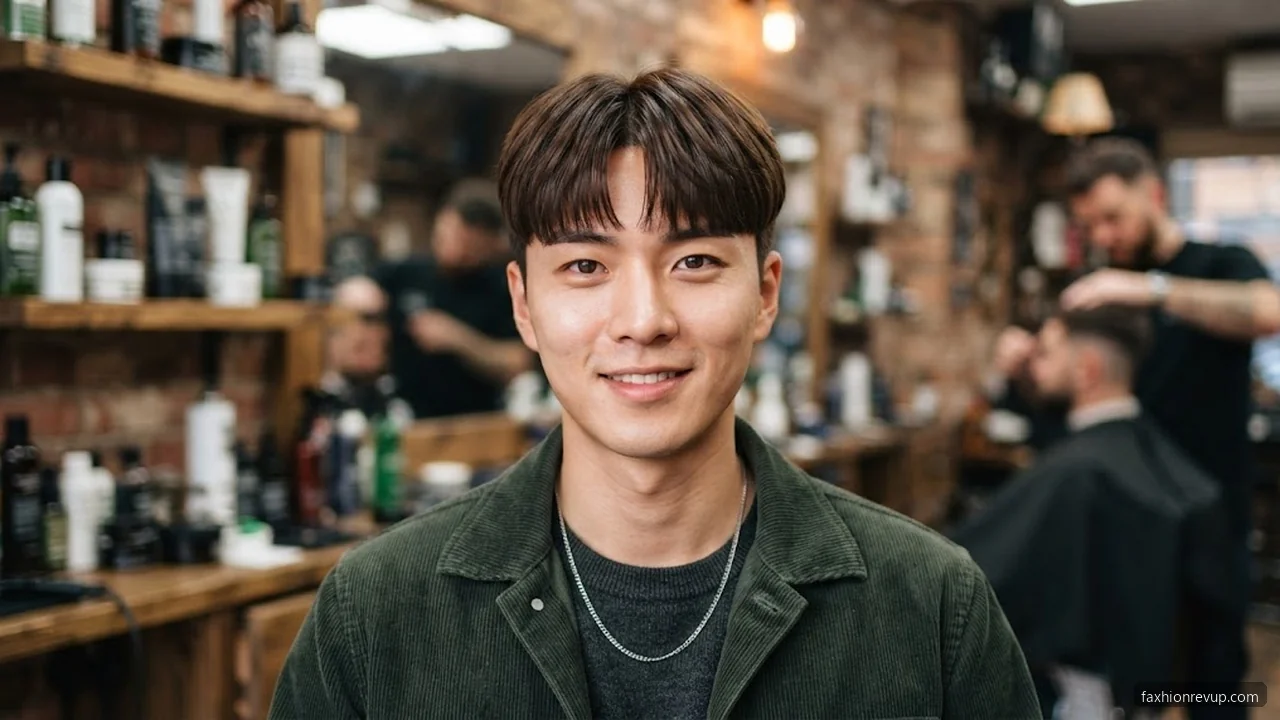
The modern bowl cut keeps a soft, rounded line that follows the head instead of a hard edge. It leaves two to three inches on top with a #3 guard on the sides. The fringe curves across the forehead in one smooth sweep. Point-cutting removes the blunt weight that made the old bowl cut look heavy.
Oblong and diamond faces gain from the fringe, which shortens a long face. Round faces should skip it, since the rounded line adds width. Straight and wavy hair from 1A to 2B holds the smooth curve best. Work a small amount of light mousse through damp hair before you dry it. Trim every three to four weeks to keep the curve above the brow.
Korean Undercut

The Korean undercut disconnects the sides from the top, so a hard line runs around the head. Sides go down to a #1 or #0.5, while the top keeps four inches of length. The top falls over the disconnect line instead of blending into it. This cut reads sharper and more graphic than a two block.
Square and round faces gain from the tight sides, which narrow the head. Triangle faces should skip it, since very tight sides widen the jaw. Rub a dime-sized amount of matte clay through damp hair and push the top back. Book a touch-up every two to three weeks, because the #1 sides grow out fast.
KPop Style

KPop style borrows from several cuts at once and adds volume, shine and a styled finish. It often pairs a two block base with a lifted fringe and soft waves through the top. Sides take a #2 guard, while the top holds three to four inches. The finish is glossy and deliberate, not matte or undone.
Oval and heart faces suit the lifted fringe, which adds height at the front. Round faces should keep the sides tight and skip extra volume at the sides. Work a small amount of light gel through damp hair and lift the fringe with a dryer. Refresh the style every three to four weeks with a trim.
Wolf Cut

The wolf cut layers short strands near the crown into longer ones at the back. It keeps four to five inches on top and lets the back reach the nape. Sides stay layered rather than clipped, so the shape moves with the head. The result reads shaggy and wild, like a mullet that grew out soft.
Triangle and diamond faces suit the volume on top and at the upper sides. Wavy hair from 2A to 2C shows the layers best, while straight hair needs a sea salt spray. Mist the spray through damp hair and scrunch it as it dries. Book a trim every six to eight weeks, since layered cuts grow out softly.
Korean Mullet

The Korean mullet keeps the sides short and lets the back fall long past the nape. It uses a #2 guard on the sides with four to five inches on top. The back runs longer still, often reaching the collar in soft layers. Unlike a wolf cut, the sides stay clipped and the back keeps a clear, separate length.
Oblong and triangle faces suit the length at the back, which balances a wider jaw. Straight and wavy hair from 1B to 2C holds the layered back best. Work a small amount of texture paste through dry hair and pull the back into soft points. Book a trim every five to six weeks to keep the sides and back distinct.
Shaggy Cut

Shaggy layers break the surface of this cut into uneven, moving pieces from crown to ends. Sides stay layered instead of clipped, so the shape keeps soft edges around the ears. Three to four inches on top gives the strands room to fall apart naturally. It differs from a wolf cut because the back stays short rather than long.
Triangle and diamond faces wear it well, because the volume sits at the upper sides and temples. Wavy hair from 2A to 2C does the work without help, while straight hair needs grit. Mist sea salt spray through damp hair and scrunch it with your hands. Book a trim every five weeks to keep the ends from growing heavy.
Layered Cut

Long layers run through the top, sides and back to remove weight and add movement. Sides are scissored to about an inch and a half, leaving soft length over the ears. Four to five inches on top lets each layer fall over the one below. The finish is softer and longer than a shaggy cut, with no chopped edges anywhere.
Heart and oblong faces suit the soft layers, which fill narrow temples and shorten a long face. Wavy to curly hair from 2B to 3A shows the layers best, since fine straight hair can fall flat. Work a pea-sized amount of curl cream through damp hair and let it dry loose. Trim every six to seven weeks, because layers lose their shape as they grow.
Flow Cut

The flow cut keeps the hair long enough to sweep back and to one side in one motion. Five to six inches on top gives the strands enough weight to move as a single sheet. Sides are scissored to two inches instead of clipped, so nothing breaks the flow. It reads softer than a slicked back style because the hair stays loose.
Square and oval faces carry the swept length well, since the motion follows the jaw line. Straight and wavy hair from 1B to 2B flows best, while coils need a relaxer to lie flat. Comb a dime-sized amount of light gel through damp hair and push it back. Book a trim every seven to eight weeks, since this style grows out slowly.
Long Bangs

Long bangs fall past the eyebrows and sometimes reach the eyes, covering the whole forehead. They sit at five inches on top with a #4 guard on the sides. The weight keeps the fringe hanging straight instead of curling away. This length covers a high hairline and a broad forehead in one sweep.
Oblong and heart faces gain the most, because the fringe shortens a long face and hides a wide forehead. Straight and wavy hair from 1A to 2A holds the heavy line best, while curls push it sideways. Spray a small amount of light mousse into damp bangs and comb them down. Trim every six weeks to keep the fringe above the eyes.
Bangs with Ponytail

This style ties the back into a small ponytail at the crown and leaves the bangs loose. It needs at least eight inches of total length, so it grows out of a longer cut. Sides are scissored to blend into the tie rather than clipped short. The look pairs a clean back with a soft frame around the face.
Oval and diamond faces suit the pulled-back shape, since it shows the cheekbones and jaw. Wavy hair from 2A to 2C holds the tie best, while very fine hair slips out. Smooth a small amount of light gel over the crown and gather the hair with your hands. Trim the bangs every five to six weeks and leave the length alone.
Slicked Back
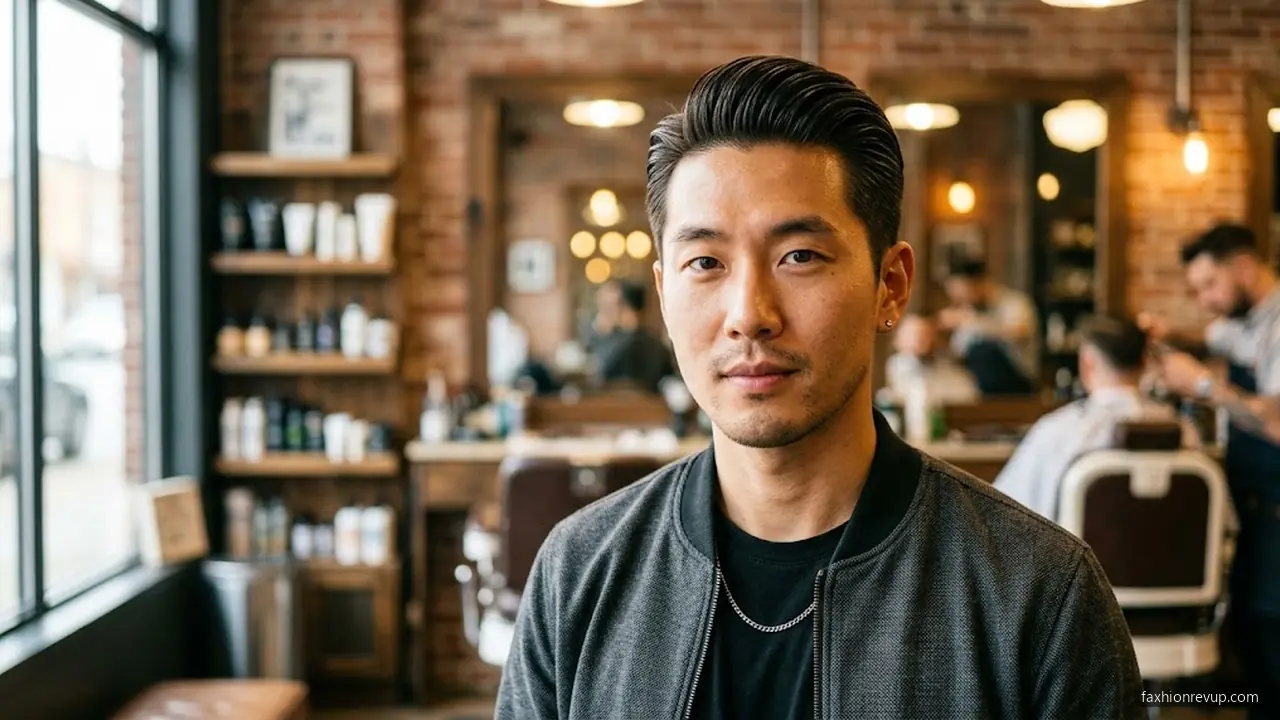
Slicked back hair leaves the forehead bare and lays the top flat against the head. Four inches on top and a #3 guard on the sides give it a clean base. The hair runs straight back from the hairline in one smooth sheet. It reads sharper than a flow cut because the product holds every strand in place.
Square and oval faces suit the exposed forehead, since both have balanced proportions. Straight hair from 1A to 2B slicks back cleanly, while coils and tight curls spring up. Work a dime-sized amount of pomade through damp hair and comb it straight back. Book a trim every three to four weeks, since the sides show growth first.
Wavy Korean Perm
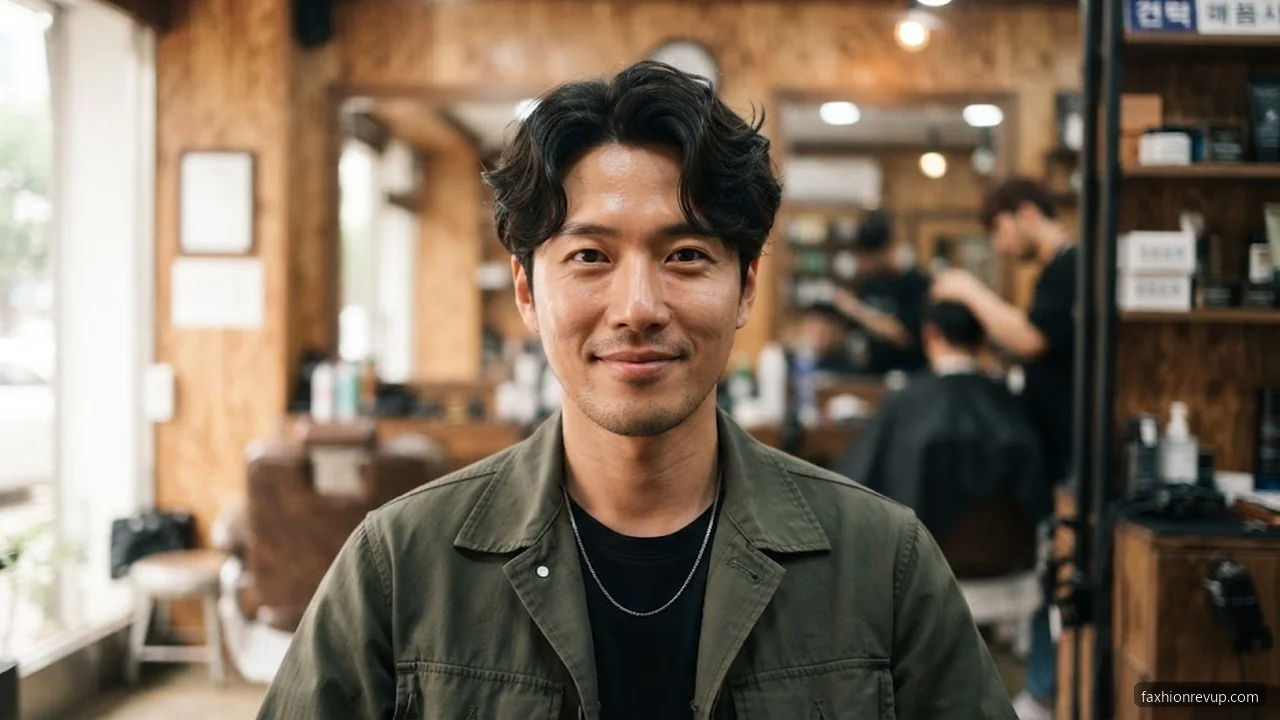
A wavy Korean perm uses medium rods to build loose waves through the top and sides. The result bends in soft S shapes rather than tight curls, which keeps the cut looking natural. Top length stays at four inches so the waves have room to form. Sides take a #3 guard, and the perm softens the line between sides and top.
Diamond and triangle faces gain movement and width at the temples from the waves. Fine hair from 1A to 2A takes the perm best, since it holds the new pattern well. Scrunch a pea-sized amount of curl cream into damp hair and let it air dry. Book a trim every six weeks and a fresh perm every three to four months.
Shadow Perm
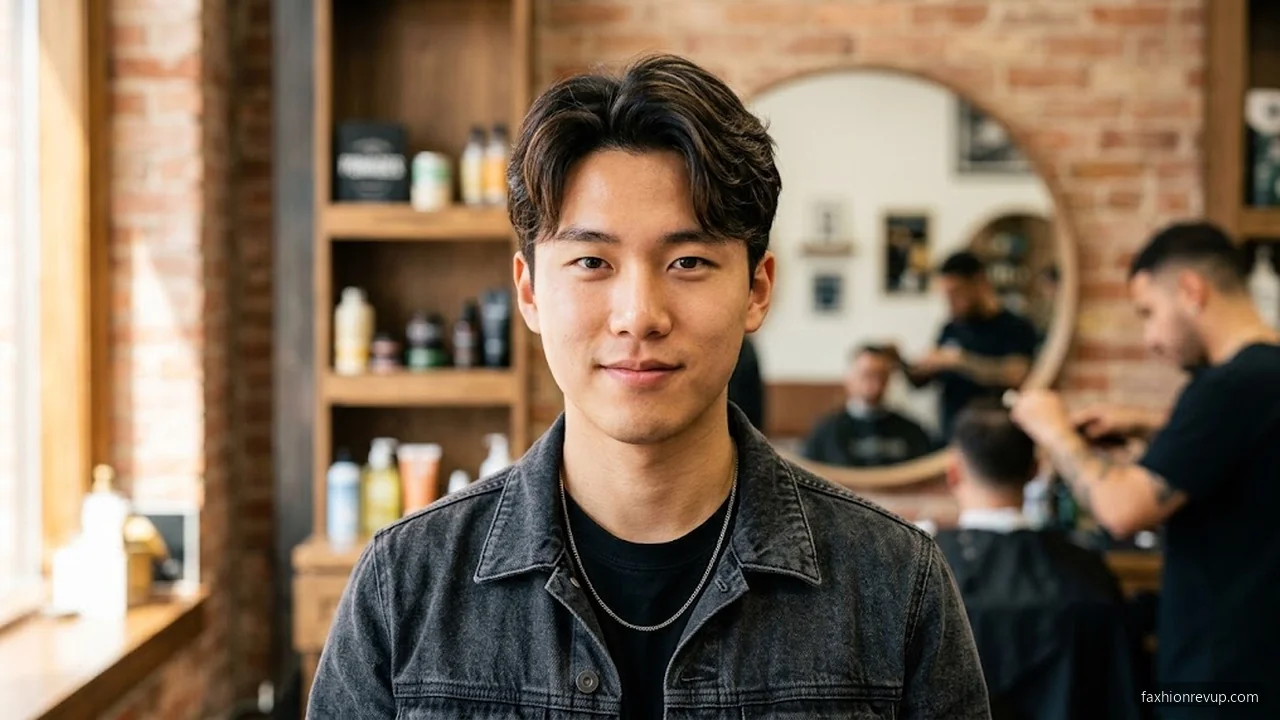
A shadow perm adds soft volume without visible curls, so the hair looks thicker rather than wavy. The solution lifts the roots and leaves the ends almost straight. It suits a two block base, where the flat sides need a slight bend to sit down. Three to four inches on top gives the perm enough length to work with.
Round and heart faces benefit most, because the root lift adds height without width. Fine, straight hair from 1A to 1C gains the most body from the treatment. Rub a small amount of light mousse into damp roots and dry them with a round brush. Repeat the perm every three months as the treated hair grows out.
Leaf Perm
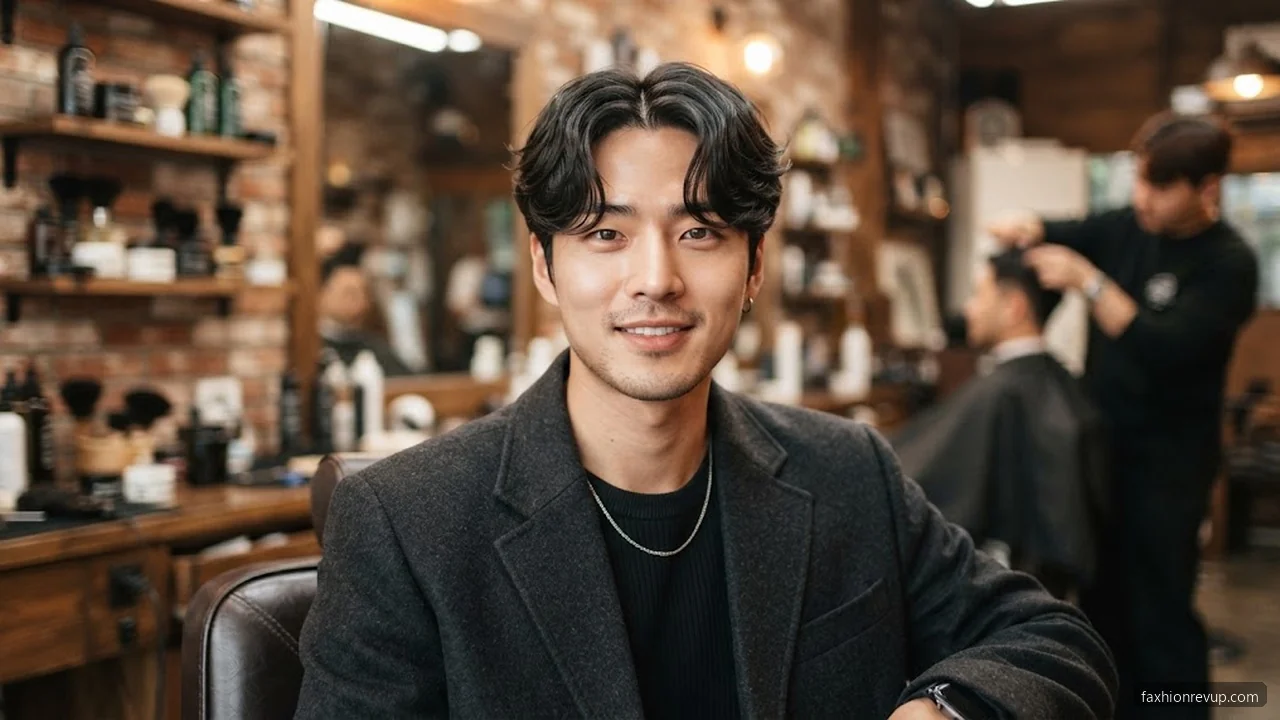
A leaf perm curls the ends into pointed, leaf-shaped pieces that fan across the fringe. Small rods near the front create the shape, while the top keeps a loose bend. Four inches on top and a #3 guard on the sides give the perm a base. The finish looks lighter than a full wavy perm because only the ends curl.
Oblong and diamond faces suit the fanned fringe, which adds width at the forehead and temples. Straight and wavy hair from 1B to 2B holds the leaf shape best after treatment. Mist sea salt spray through damp ends and twist them with your fingers. Trim every five weeks and refresh the perm every three months.
High-Taper Two Block
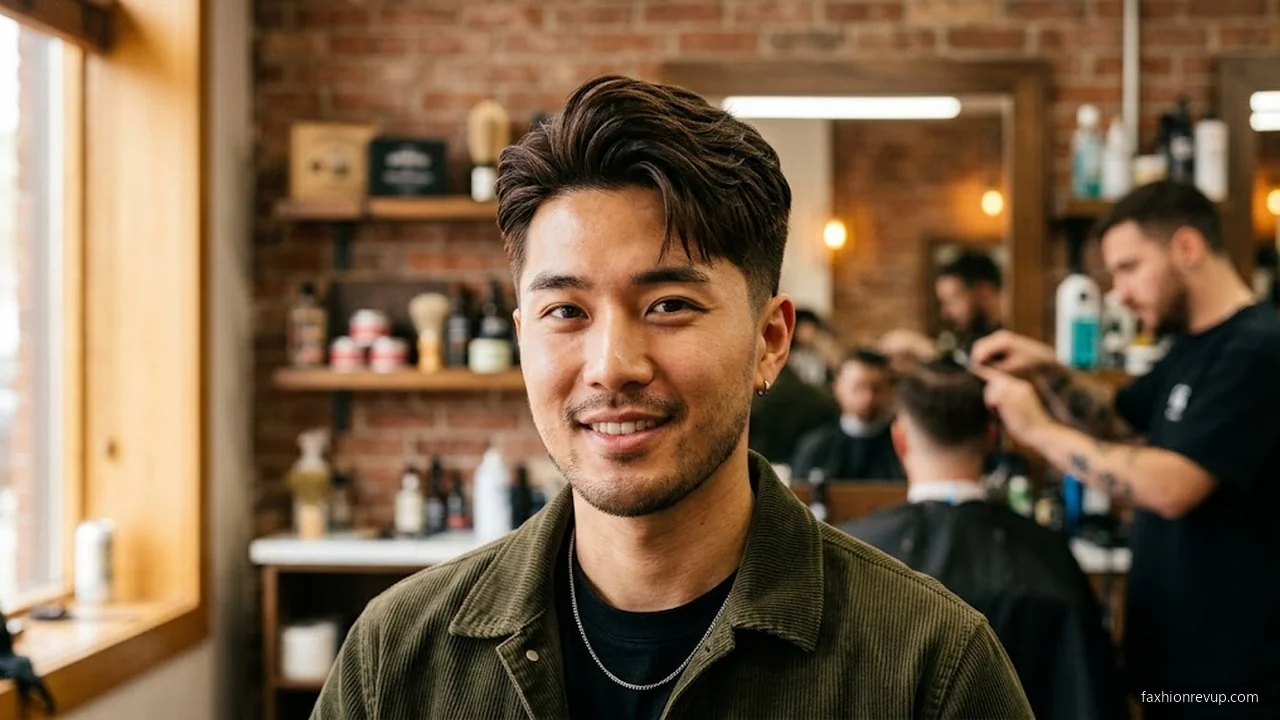
This version keeps the two block shelf but fades the sides high at the temple. The fade starts at the temple and runs toward the parietal ridge. Sides go from a #1 at the bottom to a #2 near the shelf. Three inches stays on top, so the contrast between flat sides and heavy top is strong.
Round and square faces gain from the height, since tight sides stop the head looking wide. Straight and wavy hair from 1B to 2C holds the shelf flat best. Work matte clay through damp hair and push the top forward over the fade. Book a touch-up every two to three weeks, because the high taper grows out fast.
C-Curl Shadow Fade Perm
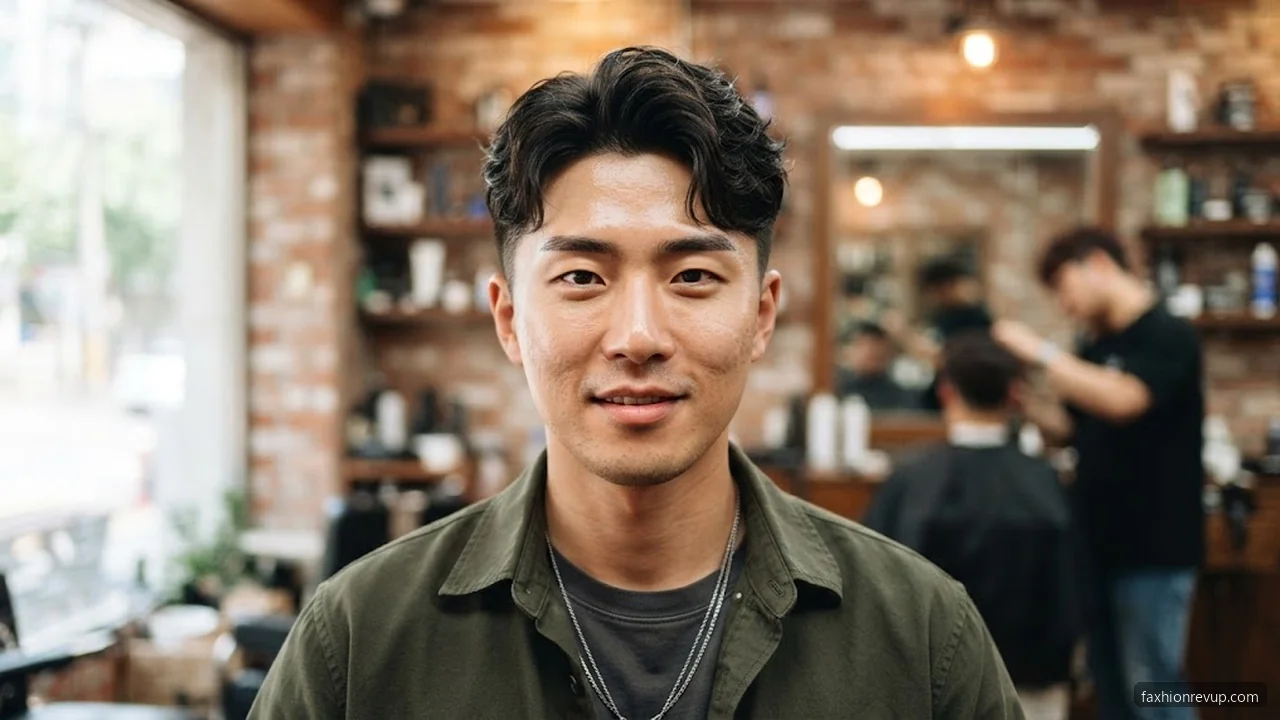
A shadow fade sits low and soft around the ear, and the perm curls the top ends into a C. The fade blends from a #1.5 at the bottom into the longer top. Four inches on top gives the C-curl room to bend forward over the forehead. The fade stays subtle so the curl pattern carries the look.
Square and heart faces suit the forward curl, which softens the jaw and covers a wide forehead. Straight and wavy hair from 1B to 2B takes the C shape best after the perm. Scrunch curl cream through damp hair and twist the ends with your fingers. Trim every five weeks and re-perm every three months.
Airy Fringe Down Perm
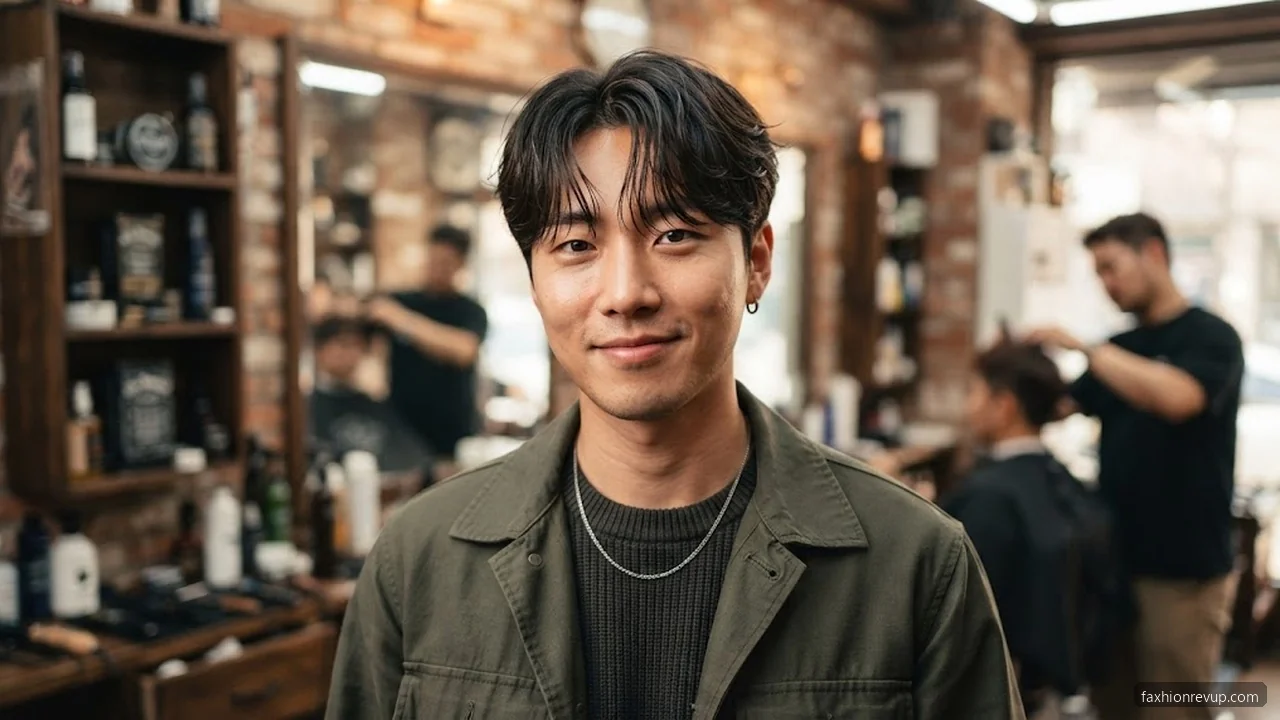
The down perm relaxes the sides and back while the fringe stays airy and light. Sides take a #2 guard and lie flat after treatment, which keeps the head narrow. Three inches on top holds the fringe above the brow in soft, broken pieces. The result pairs a clean side line with a light front.
Triangle and round faces gain the most, since flat sides balance a wide jaw and full cheeks. Thick, straight hair from 1A to 2B takes the down perm best. Mist a small amount of light mousse through damp bangs and dry them with your fingers. Repeat the down perm every six to eight weeks and trim the fringe every four.
Which Korean Hairstyles Work for Short, Medium, and Long Hair?
A #2 to #4 guard on the sides and two inches on top keeps a short cut sharp. Textured crops and French crops sit inside this short range, while a buzz cut is shorter. Short styles need a trim every two to three weeks because the sides show growth first. Ask your barber for point-cut ends so the top stays light and movable.
Medium lengths run from three to five inches on top with a #3 or #4 guard on the sides. Two blocks, comma hair and curtain cuts live here, and they suit most face shapes. You can wear the fringe forward or sweep it back depending on the day. Book a trim every four to six weeks to hold the shape.
Long styles keep five or more inches on top and often drop past the ears. Flow cuts sit in this group, while layered cuts and Korean mullets are medium. Long hair weighs itself down, so you need layers to keep movement in the shape. Book a trim every six to eight weeks and ask for weight removal.
How Should You Ask Your Barber for a Korean Haircut?
Photos beat words when you want a Korean haircut men actually get right. Save three shots: front, side and back, all taken in daylight. The back photo shows your barber the nape line and the fade height. Add one shot of your hair unstyled so the real texture is visible. See American Academy of Dermatology hair care guidelines for more.
Say: “A #3 on the sides, three inches on top. Keep the shelf above the temple sharp.” Then add a second line: “Leave the. Neckline natural and point-cut the fringe.” Those two lines tell your barber the guard. The length and the finish you want. Repeat the top length in inches, because a guard cannot cut three inches.
Tell your barber the fade height in plain words, not numbers alone. Say “low, just above the ear” or “mid, at the temple line” so the start point is clear. Ask for a taper if you want the sideburns and nape trimmed only. Those exact words keep the sides soft instead of shaved down to skin.
Ask for a down perm if your sides stick out above the ears. For movement on top, request a shadow perm with soft volume and no visible curl. Say: “A shadow perm on top, medium rods. Keep the ends almost straight.” Bring a photo of the wave size you want. Since the rods decide the final result.
Barbers who rarely cut Korean styles blend the sides into the top too high. That kills the shelf and turns a two block into a plain taper. Ask them to keep the disconnect line sharp if the shelf really matters to you. Also check the fringe wet and dry, because it shrinks as it dries.
How to Style Korean Hairstyles?
Start with damp hair, because most products spread evenly on damp strands. Towel it until it stops dripping, then comb it into the shape you want. A pre-styler like sea salt spray adds grip before you dry. Let the hair dry about eighty percent before you add anything heavier. See Healthline hair health and wellness resources for more.
Point the dryer down the hair shaft to keep the cuticle flat. Lift the roots with your fingers if you want height at the crown. For a fringe, aim the air forward so the hair bends over the brow. Finish with a blast of cool air to lock the shape.
Use matte clay or paste for texture without shine, and pomade when you want gloss. A pea-sized amount is enough for short hair, while longer tops take a dime. Rub it between your palms until it disappears, then work it from back to front. Pinch the ends last to break the shape into pieces.
Refresh a fringe at midday with a few sprays of sea salt spray. Cup your hand over the bangs and push them back into place. Dry shampoo at the roots soaks up oil that makes hair fall flat. Wash two or three times a week so natural oils keep the ends soft.
How to Maintain a Korean Hairstyle?
Upkeep decides whether a Korean cut keeps its shape between visits or grows into a shapeless mop. Intervals depend on the fade height, the top length and how fast your hair grows. A few habits at home stretch the time between trims without costing you the line. The habits below keep sides flat, the fringe light and the ends healthy.
Frequently Asked Questions
Can I get a Korean haircut at a regular Western barbershop?
Yes, if you bring clear photos and describe the cut in barber terms. Ask for a #3 on the sides and three inches on top. Explain that the top must stay disconnected from the sides. A shop that cuts fades daily can handle a two block.
Will a Korean perm damage my hair?
A perm uses chemicals that break and rebuild the bonds inside each strand. Some dryness and roughness follows, but healthy hair recovers over a few weeks. Tell your stylist about any bleach or colour from the past year. Deep condition weekly and wait three months before repeating the service.
How long does it take to grow into a Korean hairstyle?
Give it about six months to reach three inches on top from a short start. Hair grows about half an inch a month everywhere on the head. The sides reach a #3 guard in roughly three weeks. Keep trimming the sides flat while the top slowly catches up in length.
Do Korean hairstyles work on non-Asian hair types?
They do, though the products and the upkeep change with your texture. Coils from 4A to 4C need more moisture and a curl cream instead of clay. Fine hair often needs a shadow perm for volume that lasts. Thick straight hair is the easiest match for a two block.
How do I stop my Korean fringe from going flat by midday?
A flat fringe usually means too much product or a heavy cut through the front. Ask your barber to point-cut the bangs so they hold some air. Blow-dry the fringe with a small round brush to set a curve. Dry texture spray at the roots lifts the front without wetting it.
What’s the difference between a Two Block and an undercut?
A two block keeps some length on the sides under the top, so no skin shows. An undercut clippers the sides right down to a #1 or lower. The two block keeps a sharp shelf, while the undercut leaves a hard disconnect line. Choose the undercut if you want a sharper shape.
What are the most popular Korean Hairstyles for Men right now?
Two blocks, comma hair and shadow perms stay at the top of most request lists. Soft perms on the sides and top are popular for a natural finish. Fringes that fall forward still beat slicked styles for everyday wear. Shorter crops gain ground each year as men want lower upkeep.
How much does a Korean perm cost?
A shadow perm typically runs from around eighty to two hundred dollars, depending on the city and the salon. Down perms sit at the lower end, because they cover less hair. Digital perms cost more and take longer to set at the salon. Ask for the total price before the service starts, including the aftercare products.
Which Korean hairstyle suits a round face?
A high-taper two block suits a round face because it adds height and keeps the sides tight. The tight side guards stop the head looking wider than it is. Skip loose waves at the sides, which add the width you want to lose. Ask for a #1 to #2 taper above the ear.
Are Korean hairstyles professional enough for work?
Yes, many workplaces accept them, especially the shorter crops and side parts. A clean taper on the sideburns and nape reads sharp under office lighting. Keep the fringe above the eyebrows if your workplace is formal. Slicked back styles look the most conservative of the group.
Conclusion
Book a two block if you want the easiest entry into this look. Start with three inches on top and a #3 on the sides, then adjust. Men with round faces should ask for the high-taper version instead. Anyone with fine hair should add a shadow perm for volume.
In the chair, name the guard, the top length in inches and the finish you want. Bring one photo from the front and one from the side to remove doubt. Short sides need a return visit every two to three weeks, longer tops every six to eight. Treat Korean Hairstyles for Men as a steady routine rather than one appointment.
Peter Johnson has spent over 10 years behind the chair as a licensed barber and hairstylist, working with men’s grooming brands across the US. He writes for faxhionrevup.com to bring practical, tested haircut advice to everyday readers. Peter stays current with trends through hands-on client work and industry training, ensuring every guide reflects real barbering expertise.