Fade Haircuts For Black Men: 2026 Styles That Stay Sharp All Day

Fade Haircuts For Black Men blend short sides into a longer top, and they suit most face shapes. The top runs one to six inches long, while the sides drop to skin. Fade height changes the shape, so one cut can look soft or sharp. Barbers blend the sides with clippers and sharpen the lineup by hand.
4C coils hold a sharp fade best when the barber blends with small guard steps. Fine or light hair hides every clipper mark, so a longer guard is not needed. Round faces gain height from a high fade, but oblong faces need it lower. Book a touch-up every two to four weeks, since the sides grow out fastest.
Quick Answer
Fade Haircuts For Black Men use a #0.5 to #2 on the sides and a longer top. A low fade flatters oblong and diamond faces, while a high fade adds height. Barbers blend the sides with clippers and finish the edges with a trimmer. Skin and high fades need a fresh touch-up every two to three weeks.
Why Does the Fade Work So Well with Black Hair?
Black hair compresses as it dries, so a short top looks shorter than it really is. A fade keeps the sides tight and lets the top carry the height you want. That contrast between short and long is the whole point of the cut. Without it, an even length all over can make the head look rounder.
Coily hair also holds a cut edge better than straight hair does, which keeps blends sharp. The tight spiral stacks on itself and refuses to lie flat against the scalp. So the sides can go very short without the head looking bare or patchy. That is why a #0.5 on the sides still reads as hair, not as scalp.
Fade lines show most on dark, thick hair, so barbers blend with small guard steps. Jumping from a #1 straight to a #3 leaves a visible step in the back. A good blend moves through #0.5, #1, #1.5 and #2 in short passes. Light or fine hair hides those steps, which is why it needs less blending work.
A fade also shapes the face, since the height of the blend changes the head’s outline. A high fade lengthens the face, and a low fade keeps the width at the temples. Round faces look slimmer with tight sides, because width sits at the cheeks. That single choice does more for the shape than any product ever will.
Hair grows about half an inch a month, so a fade loses its edge quickly. The sides and nape grow out first, which is why the blend line softens before the top. A touch-up every two to four weeks keeps the shape looking intentional. Stretching it further turns a sharp fade into a grown-out shape.
What Are the Best Fade Haircuts For Black Men?
Choosing between these cuts comes down to height, texture, and how much upkeep you accept. Height sets where the blend line stops and how much bare skin shows. Texture decides whether the top stays curly, wavy, or straight after the sides come down. Upkeep decides how often you sit in the chair and how tight you keep the edge.
Low Fade
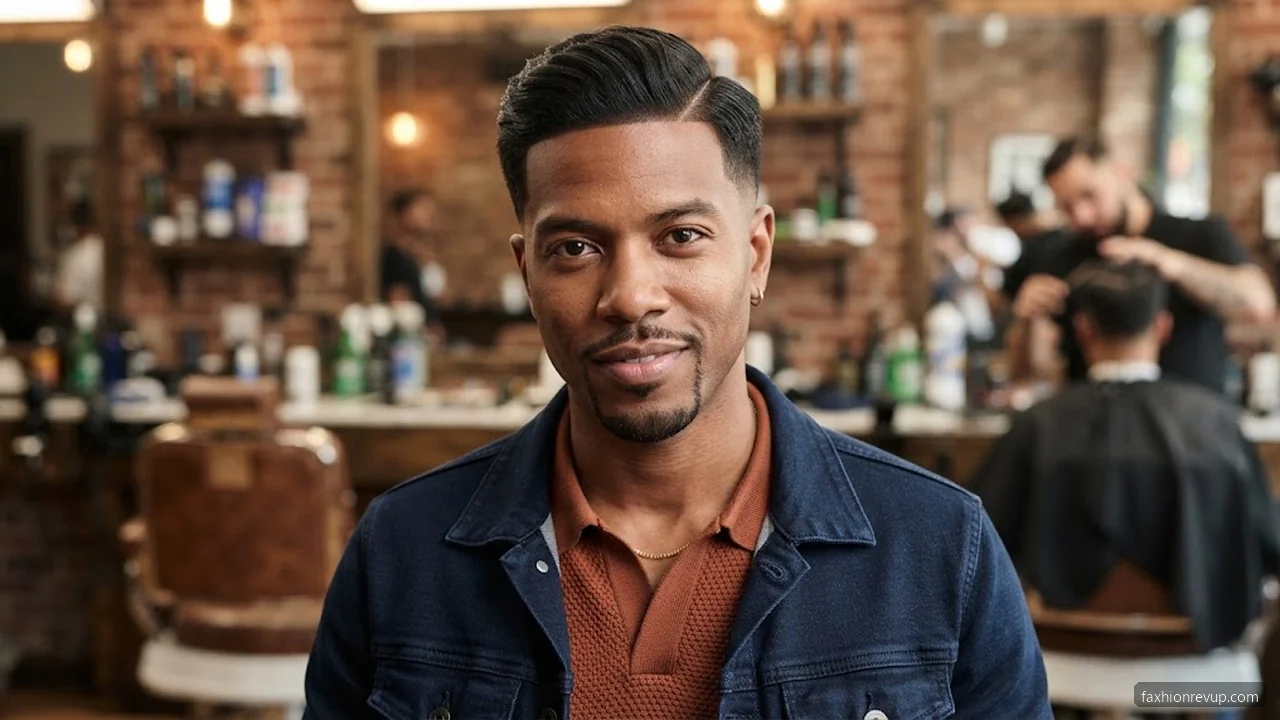
The low fade begins just above the ear and traces the natural neckline. It keeps weight around the temples, so the front edge stays soft. From the back, the blend line sits close to the hairline and reads clean. Most barbers take the bottom to a #0.5 and blend up to a #2 near the top.
Oblong and diamond faces suit a low fade, since fuller sides balance length and soft temples. Round faces should skip it and ask for a mid or high fade instead. Type 4 coils, 3C curls and thick waves all hold this shape for weeks. Work a dime-sized amount of light pomade through damp hair and brush the top flat.
A low fade holds its shape for about three to four weeks before the sides flatten. Ask for a #0.5 to #2 blend with about two inches left on top. Between visits, brush the sides down daily to keep the blend looking sharp. Skip heavy gels, which clump the hair and make the blend line obvious.
Low Fade with Waves
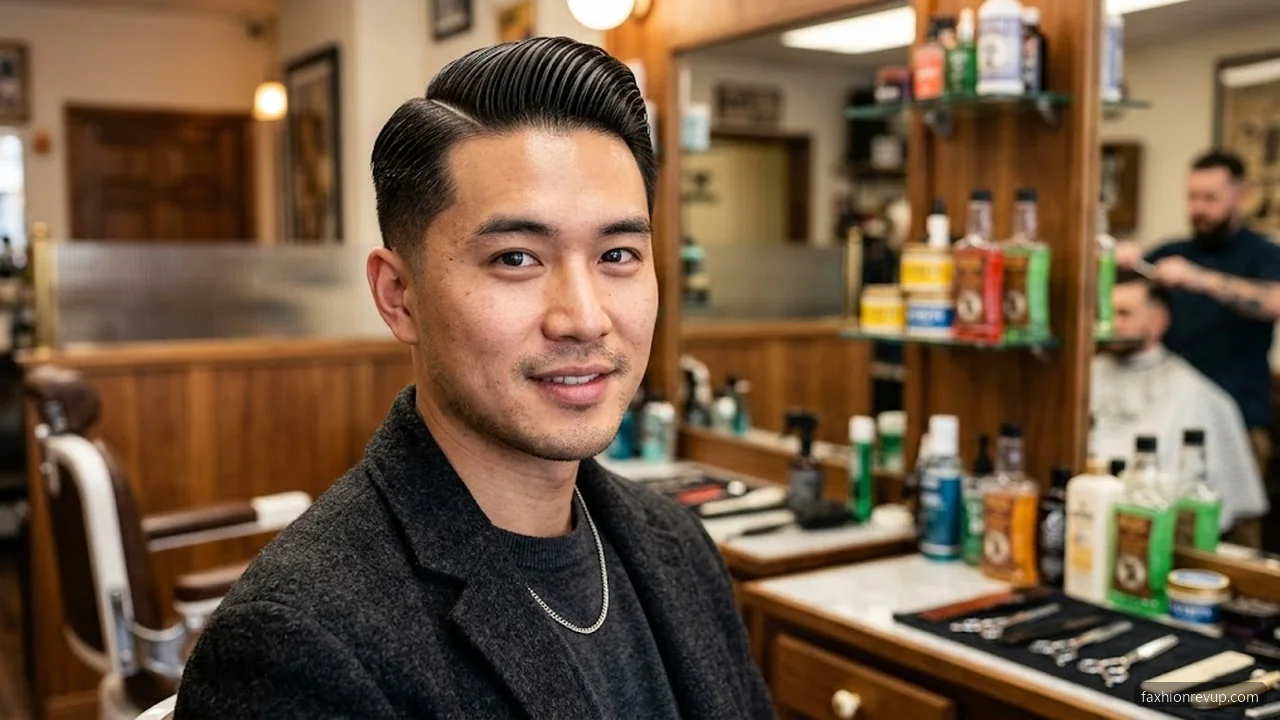
The low fade with waves keeps the fade low and lets 360 waves cover the crown and top. From the front, the hairline and lineup stay crisp while the sides fade softly. From the back, the blend sits low and the wave pattern flows down to the crown. Barbers keep the top at about two inches and brush the waves in one direction.
Waves need dense, coily hair with a natural spiral, so 3C to 4B patterns take best. Fine hair struggles to hold a wave pattern, and straight hair will not wave at all. Oval and square faces carry this look easily because the top stays flat, not tall. Finish with a light pomade and brush for two minutes to lock the pattern.
The blend runs from a #1 at the bottom to a #2 at the top. Ask for a low fade that leaves enough hair at the temple to keep the waves connected. Waves fade out around the second week, so a brush and durag matter more than clippers. Book a shape-up every three weeks to keep the hairline square between full cuts.
Low Taper Fade
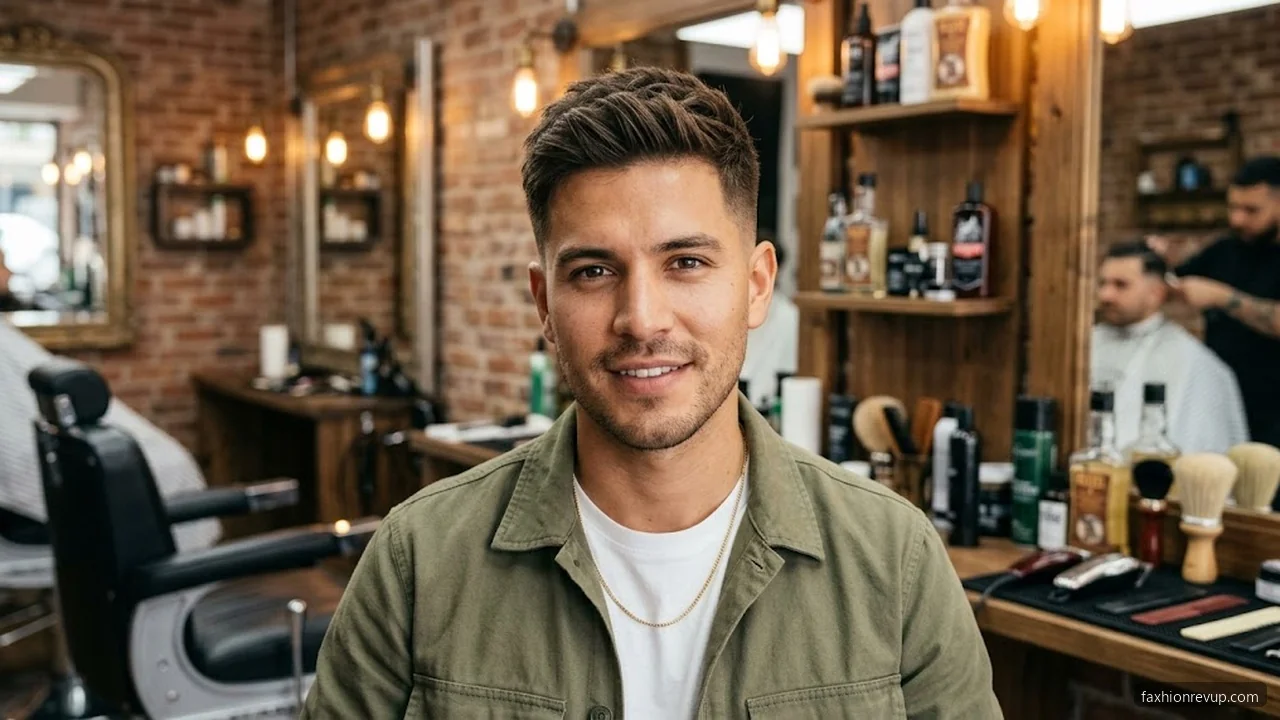
A low taper fade shortens only the sideburns and the nape, so the rest of the sides keeps length. The silhouette stays soft and grown-out rather than sharp and carved. From the side, the taper follows the natural hairline and leaves the temple full. Barbers finish the nape with a trimmer or a #1 guard, never with a foil shaver.
Men who want a clean edge without weekly upkeep do best with this cut. It suits oblong, heart and triangle faces because the sides keep their width. Straight, wavy and loosely curled hair all taper well, including fine textures. Use a small amount of sea salt spray and push the top back with your fingers.
Tapered sides can run three to four weeks before the sideburns look shaggy. Keep the top between two and three inches if you want to wear it messy. A #1 on the sideburn blended into a #3 above the ear gives a natural finish. Never let a barber take the taper above the temple, or you lose the soft shape.
Low Temp Fade
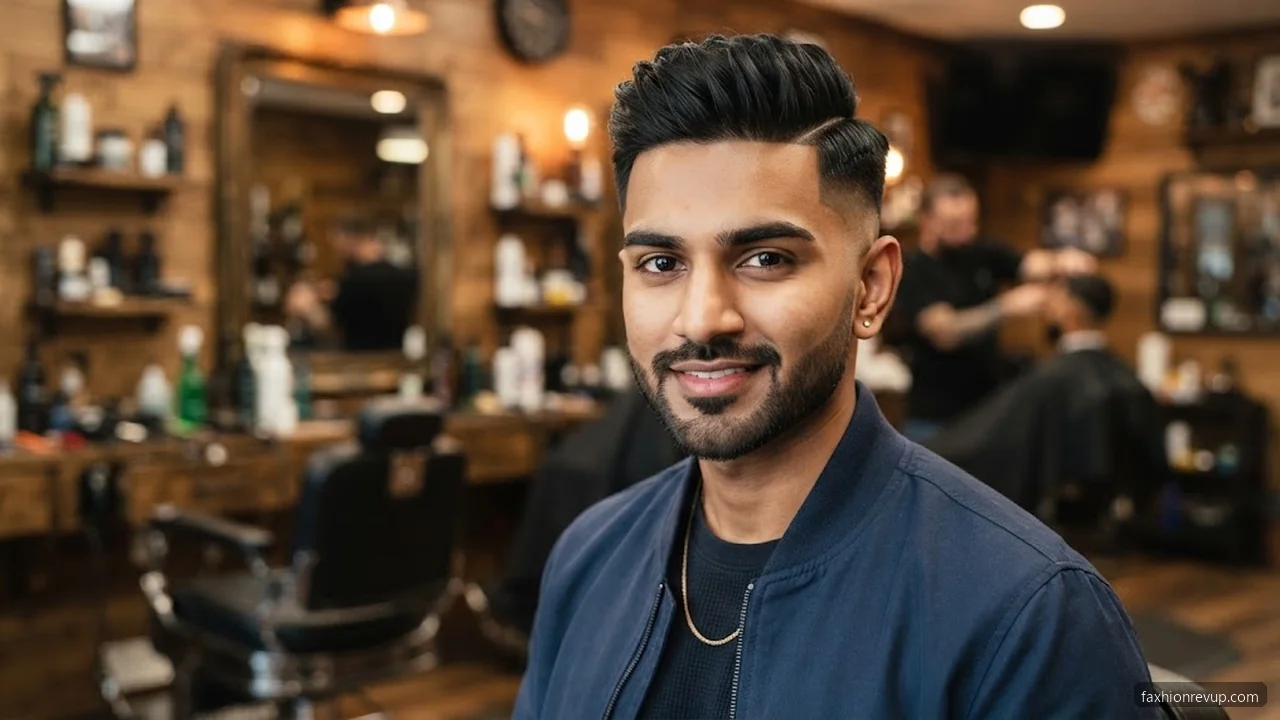
A low temp fade clears the hair around both temples and leaves the rest of the sides alone. The front corners get a sharp angle that frames the forehead and lineup. From the back, the fade disappears, since nothing is cut behind the ears. Barbers use a #0.5 or #1 at the temple and blend it into the hairline.
This cut suits men who want a sharp front without touching the sides or back. Diamond and heart faces gain width at the temple, which balances a narrow chin. Square faces also wear it well, because the angle matches a strong jawline. Set it with a pea-sized amount of paste and a quick finger rake.
A temp fade grows out at the corners, so plan a visit every three to four weeks. Ask for a temple taper with a #1 at the point and no line above the ear. Keep the temple edges clean with a trimmer between shop visits if you own one. Skip it if you wear your hair pushed forward, since the corners stay hidden.
Mid Fade

A mid fade starts at the temple line and blends the sides down to a #0.5 or #1. The height sits between the low and high versions, which keeps it balanced. From the front, the fade frames the eye line and narrows the forehead slightly. At the back, the blend curves above the occipital bone for a rounded shape.
Round and heart faces benefit most, since the mid fade trims width at the cheeks. It works on 4A to 4C coils, on thick waves, and on relaxed hair with body. Ask for a #1 at the bottom blended into a #3 near the top. Style it with a dime-sized amount of matte clay on dry hair for grip.
A mid fade keeps its edge for two to three weeks before the blend softens. Leave two to three inches on top if you like a bit of movement. Comb the top back with a wide-tooth comb while the clay is still workable. Wash the clay out weekly with a co-wash to keep the scalp from drying.
Mid Fade with Curls

A mid fade with curls leaves the coils long on top and cuts the sides tight. The curl mass sits like a soft crown above a clean blend line. From the side, the fade curves at the temple and melts into the curls. Barbers dry-cut the top so the coils keep their spring after a wash.
3A to 3C curls hold this shape best, since the pattern shows off the fade line. Oval and triangle faces wear it well, because the height on top adds balance. Skip it if your hair is fine, since thin curls flatten against the scalp. Scrunch a pea-sized amount of curl cream into wet coils and let them air dry.
Mid Fade with Beard
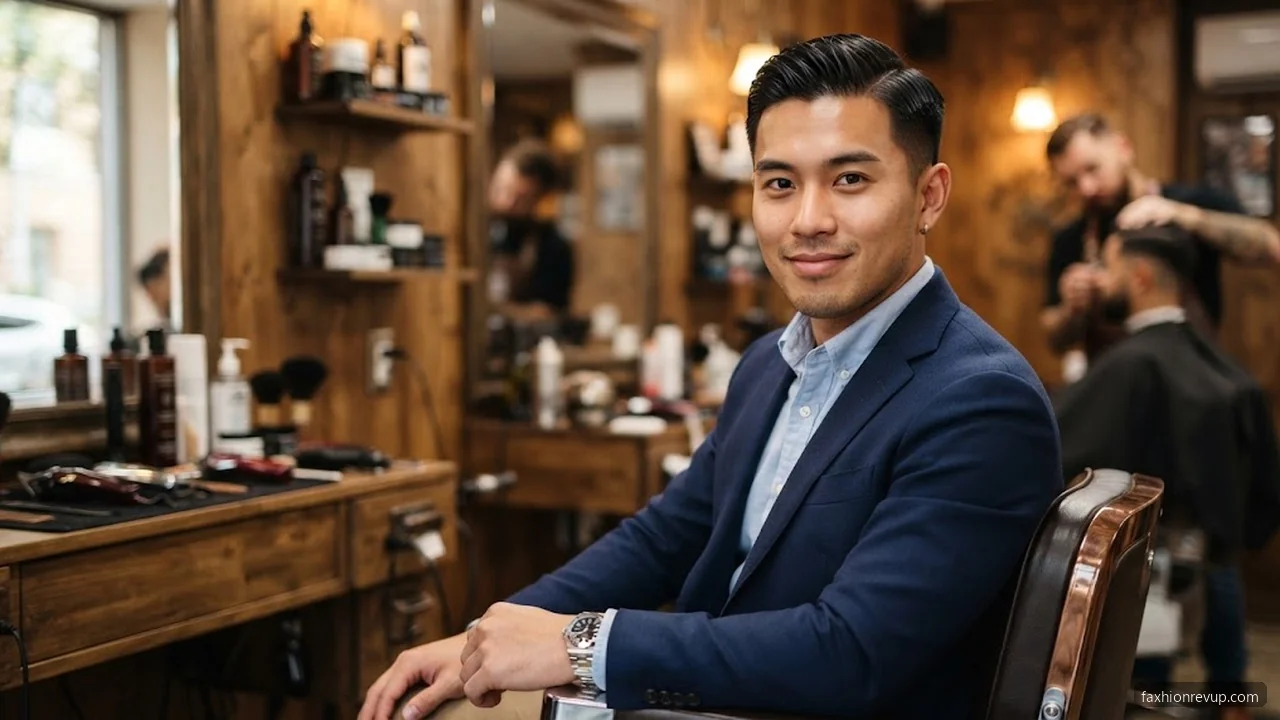
A mid fade with beard pairs a temple-height fade with a shaped beard along the jaw. The fade and the beard meet at the sideburn, so the barber must blend that corner. From the front, the beard squares the jaw while the fade narrows the upper face. Keep the top near two inches and the sides at a #1 for a tight finish.
Round and heart faces gain the most, since the beard adds length below the chin. 4B to 4C hair fills a beard quickly, so shape it every two weeks at home. Oil the beard daily and use a dime-sized amount of balm to lay the edges. Ask your barber to fade into the beard rather than leaving a hard line.
Medium Fade Textured Crop
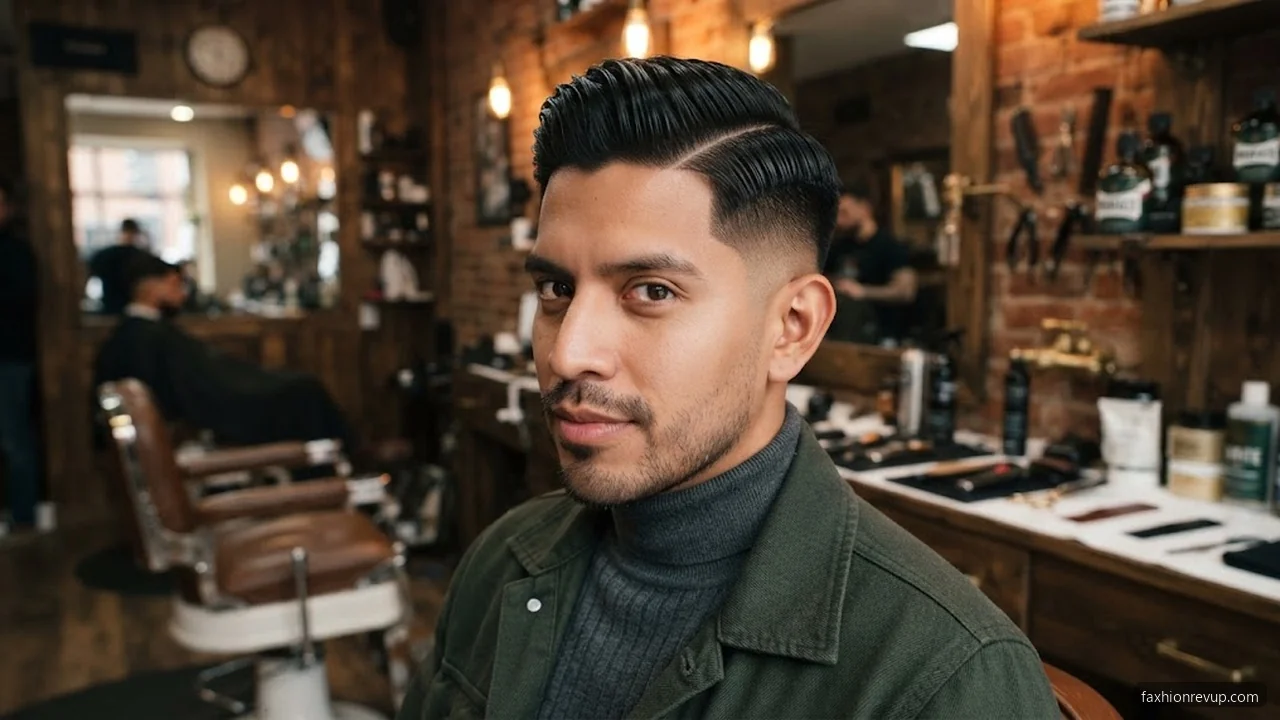
A medium fade textured crop keeps a choppy top of three to four inches above a mid fade. The fringe falls forward in broken pieces rather than sitting flat on the forehead. From the back, the fade climbs to the parietal ridge and keeps the crown full. Barbers point-cut the top so it stays light and moves with the head.
Square and oval faces suit the crop, because the fringe softens a strong jawline. It needs straight to wavy hair with medium density, so 2A to 3A textures work best. Rub a pea-sized amount of matte clay through dry hair and pinch the ends up. Book a trim every four weeks, since the choppy length loses shape fastest.
High Fade
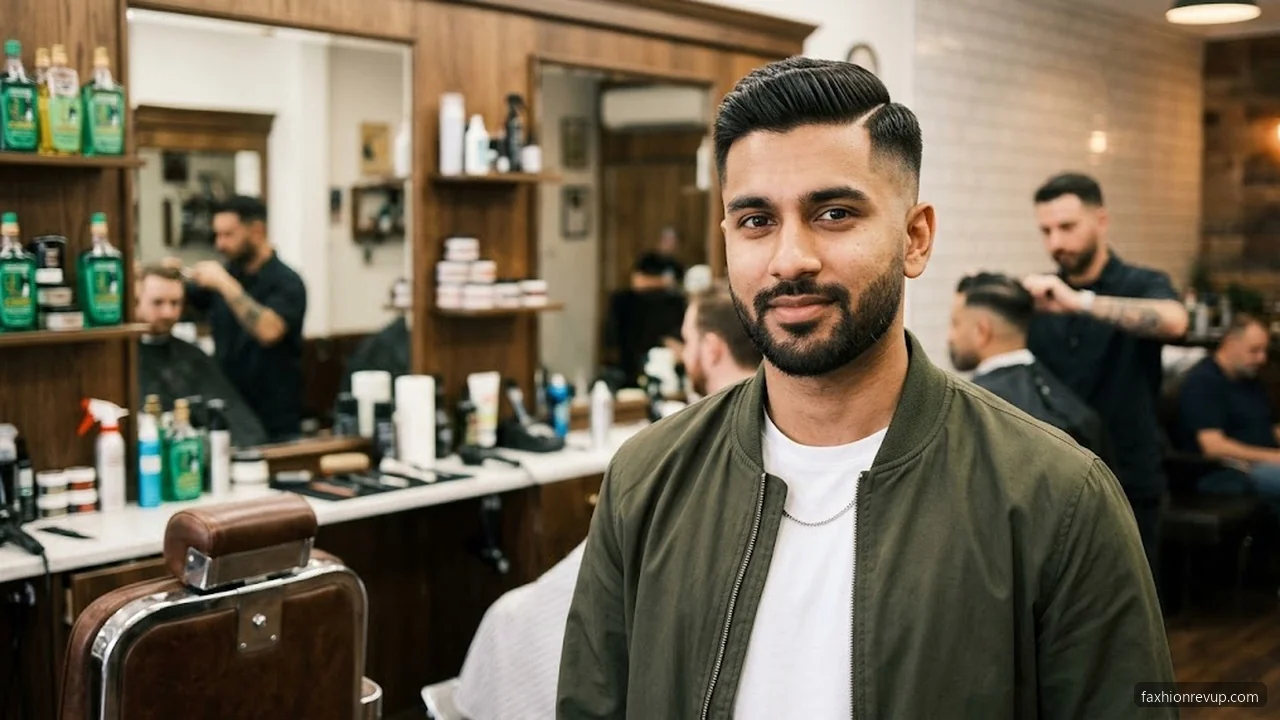
A high fade starts at or above the temple near the parietal ridge and drops to skin. The sides look almost bare, so the top carries all the weight of the cut. From the side, the blend line sits high and creates a long, narrow profile. Barbers use a foil shaver at the bottom and step through guards up to a #2.
Round faces gain the most height from a high fade, which slims the cheeks. Skip it on oblong or long faces, because the high sides stretch the head further. It works on 4A to 4C coils and thick waves that can stand up on their own. Use sea salt spray and a sponge to lift the top into a rounded shape.
High Skin Fade with Waves
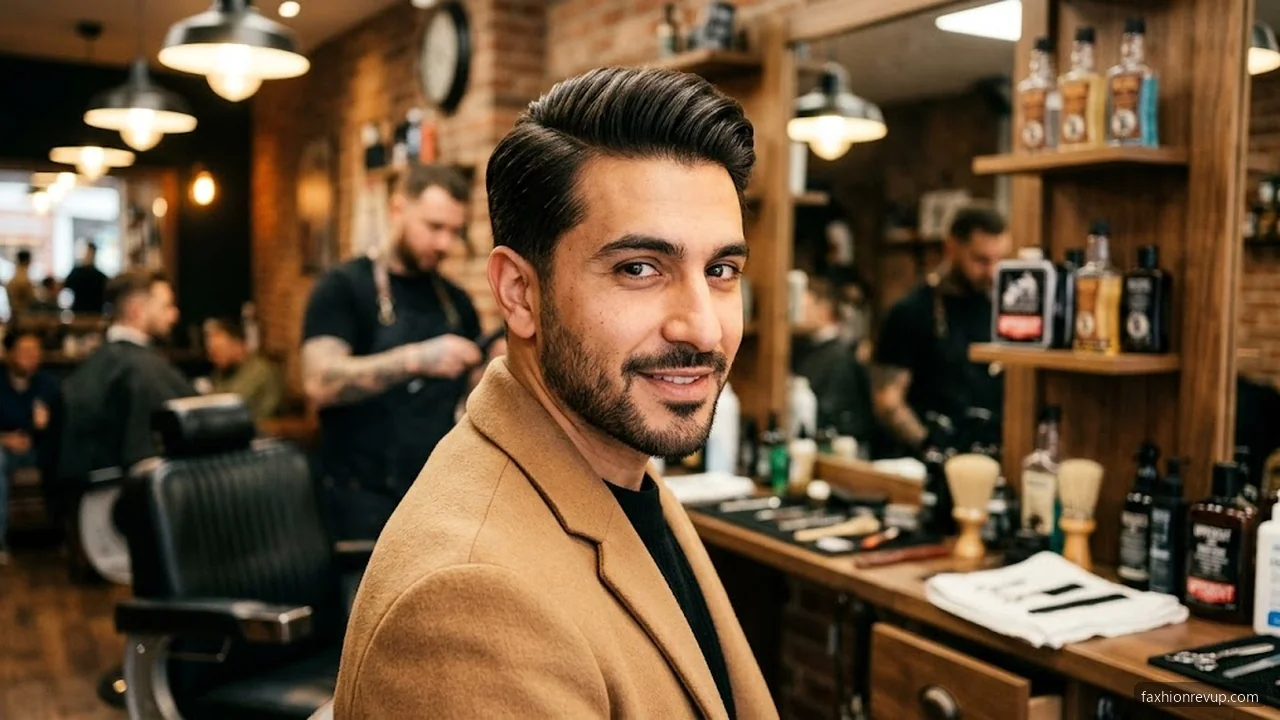
A high skin fade with waves takes the sides to bare skin and leaves the wave top alone. The wave pattern covers the crown and front, so the cut reads as one shape. From the back, the skin shows below the blend and the waves stop at the ridge. Keep the top at about two inches, which is enough length to hold a pattern.
4B and 4C hair with a tight spiral holds waves best under a skin fade. Oval and diamond faces carry the bare sides, since their cheekbones stay visible. Skin fades need a touch-up every two weeks to keep the bald line sharp. Brush the waves for five minutes nightly and wrap them with a durag.
High Fade Afro

A high fade afro rounds the top into a soft dome and takes the sides down to a #0.5. The silhouette is round rather than square, which separates it from a high top. From the side, the afro curves outward above the fade line and stays even. Barbers pick the top with a wide-tooth comb so the shape stays full.
Diamond and triangle faces balance well here, because the round top softens angles. 4B and 4C hair with high density gives the fullest dome after a wash-and-go. Use a light curl cream and a pick to lift the top without weighing it down. Book a shape-up every two to three weeks, since the fade line shows quickly.
High Fade with Design
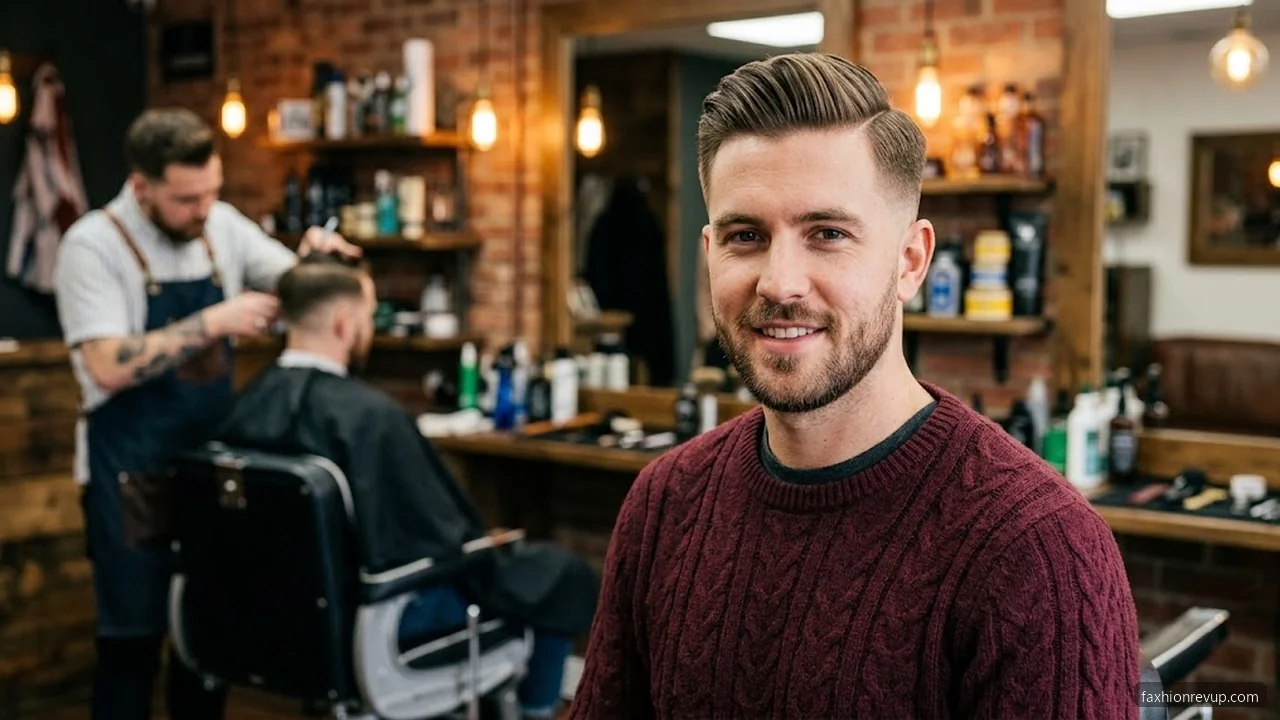
A high fade with design carves a pattern into the short side above the skin line. Common patterns include a single curve, a stepped line, or a small geometric shape. The design sits where the hair is short enough to show the contrast clearly. Barbers use a trimmer with a sharp blade and stencil the shape before cutting.
The design shows best on dark, thick hair, where the contrast is strongest. Fine or light hair hides the lines, so a simpler shape works better there. Square and oval faces carry a bold design well, since the sides stay tight. Keep the top at an inch or two and use a small amount of paste to define it.
Skin Fade

A skin fade takes the sides all the way to bare skin with a foil shaver or a #0. The bald line sits at the bottom and blends upward through #0.5, #1 and #2. From the front, the sharp bald edge makes the lineup look darker and cleaner. Barbers finish the skin with a razor or foil shaver for a smooth result.
Round and square faces suit a skin fade, because bare sides narrow the head. Skip it if your scalp is sensitive or you get razor bumps easily on the neck. Keep the top between one and two inches and set it with matte clay. A skin fade needs a touch-up every two weeks, since the bald line regrows fast.
Burst Fade
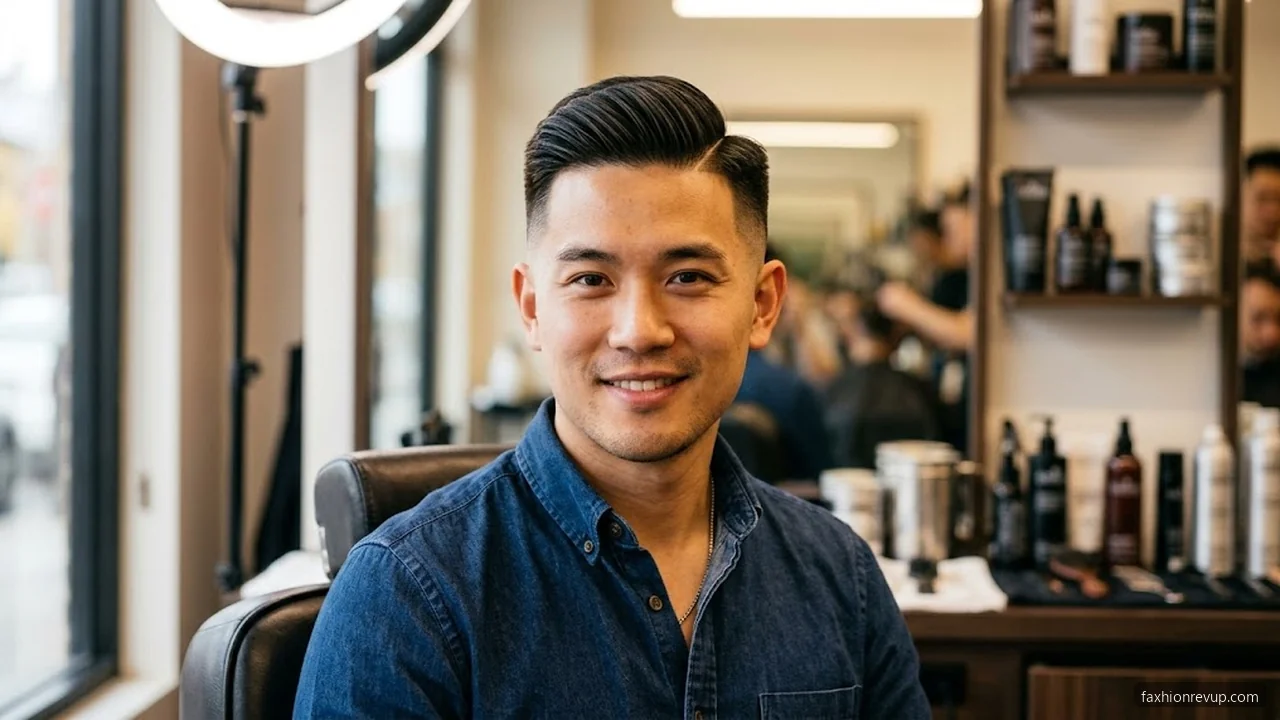
A burst fade arcs around the ear and leaves the hair behind it longer. The shape curves up and over the ear rather than running straight down the neck. From the front, the sides stay tight while the sideburn keeps a bit of weight. Barbers blend a #0.5 at the curve into a #2 near the top.
Diamond and oval faces suit the ear curve, which frames wide cheekbones nicely. It pairs well with 4A to 4C coils and with dreadlocks that need a clean side. Keep the top around two inches and set it with a light gel. Book a fresh cut every two to three weeks, since the curve grows out fast.
Burst Fade Mohawk

A burst fade mohawk leaves a strip of hair running from the forehead to the nape. The sides and back come down around both ears in a curved burst shape. That strip can stand up straight or lie flat depending on its length. Barbers take the sides to a #0.5 and leave three to four inches in the middle.
Round faces gain height from the center strip, while oblong faces should skip it. Thick 4B and 4C coils hold the strip upright with sea salt spray and a sponge. Skip it in a strict office, since the silhouette stands out in a meeting. Trim the strip every three weeks to keep the front edge square.
Drop Fade
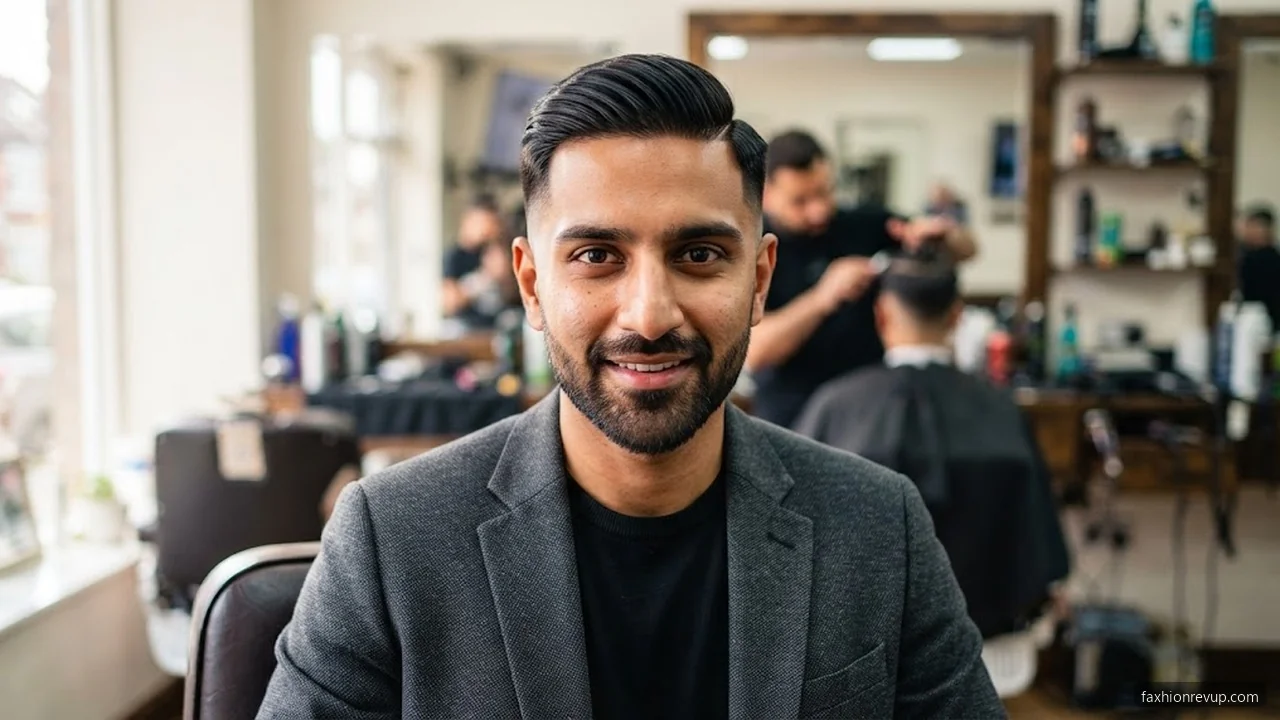
A drop fade curves down behind the ear instead of climbing straight up the side. The blend dips low at the nape, which keeps some length across the back. From the side, the line sweeps downward and softens the corner behind the ear. Barbers use a #1 at the bottom and blend to a #3 above the curve.
Triangle and square faces suit the drop curve, because it adds weight behind the jaw. It works on 3C curls, 4A coils and thick waves that need a softer back. Keep the top near two inches and rake a dime-sized amount of paste through it. A drop fade holds its shape for about three weeks before the dip fills in.
Drop Fade with Waves
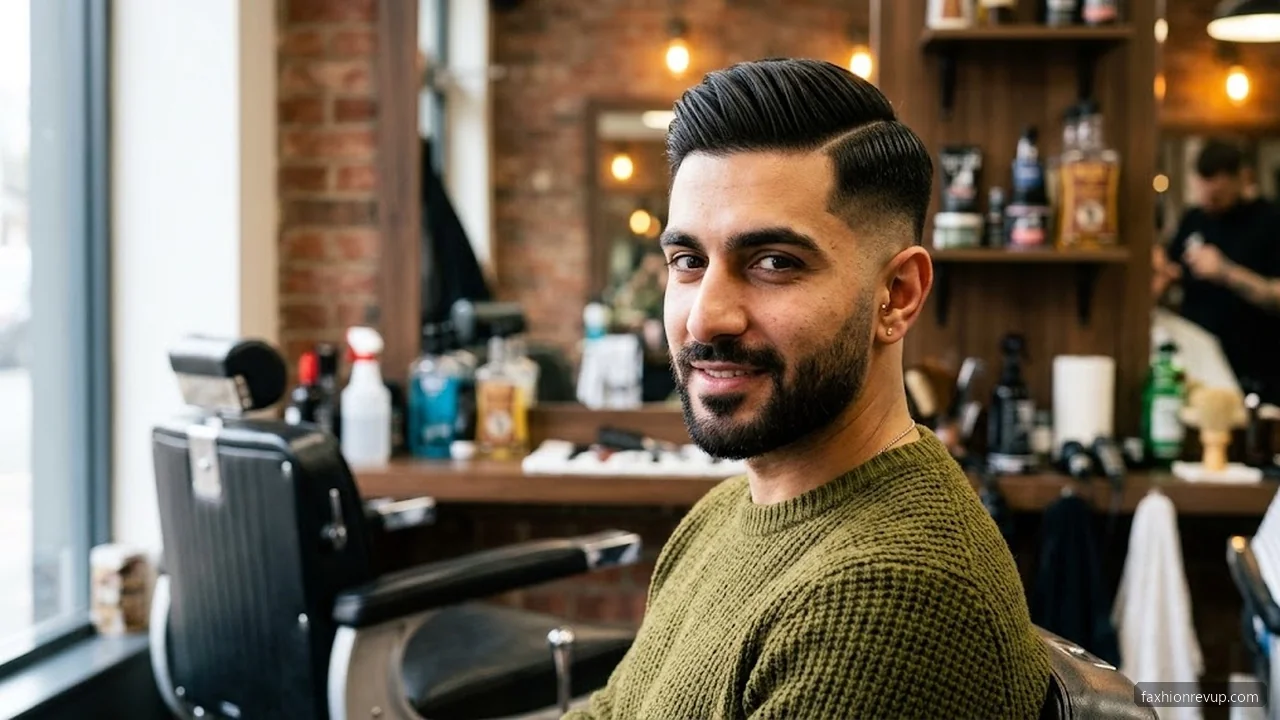
A drop fade with waves pairs the low back curve with a brushed wave pattern on top. The waves flow from the crown toward the drop, which keeps the pattern unbroken. From the back, the blend dips behind the ear and leaves the waves visible. Keep the top at roughly two inches, which is the length waves need to form.
4B and 4C hair with a natural spiral holds both the waves and the drop shape. Oval and heart faces wear it easily, since the dip adds softness at the neck. Brush the pattern daily and wrap it with a wave cap before bed. Ask for a #1 at the bottom blended into a #2.5 at the top curve.
Temp Fade / Temple Fade
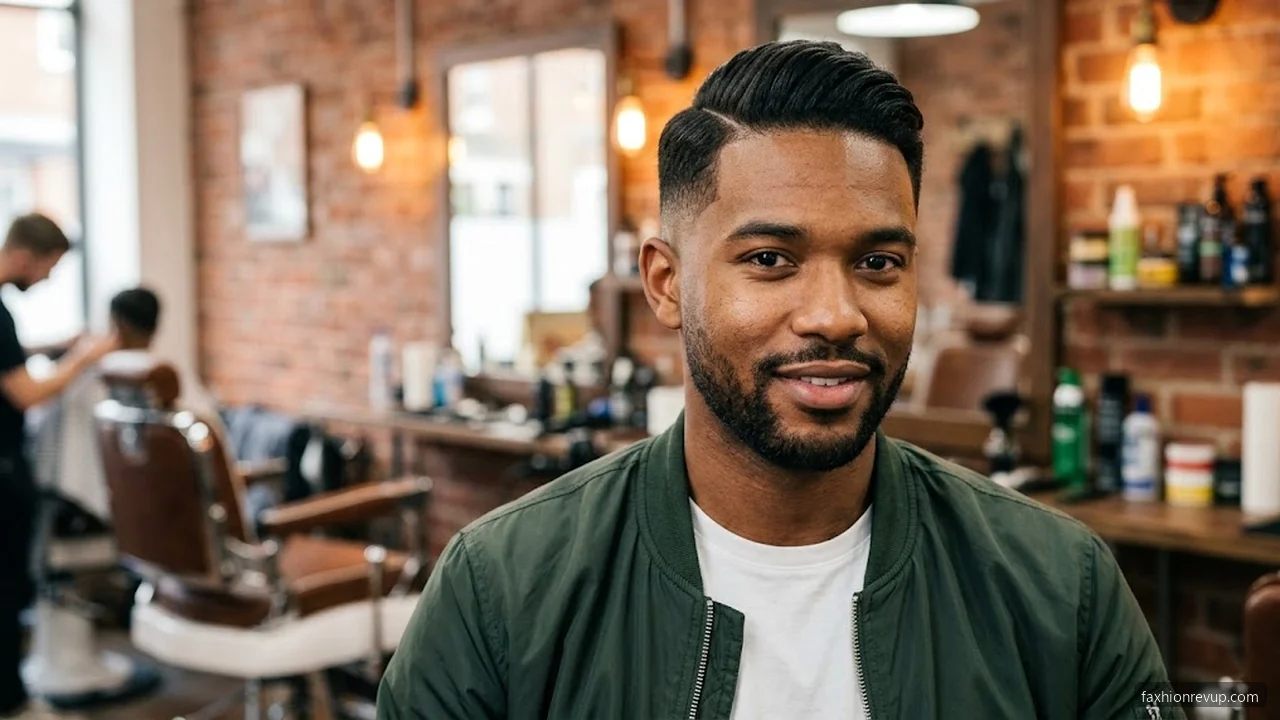
A temp fade clears the hair at both temples and leaves the rest of the sides untouched. The cut starts at the corner of the hairline and stops above the ear. It sharpens the front edge without taking weight off the sides or back. Barbers use a #0.5 or #1 at the point and fade it into the hairline.
Heart and diamond faces gain width at the forehead from a clean temple angle. Straight, wavy and coiled hair all take a temp fade, since the cut stays small. Wear the top at two to four inches and push it back with a light pomade. Expect a touch-up every three weeks, because the corners grow out first.
Fade with Lineup / Edge-up
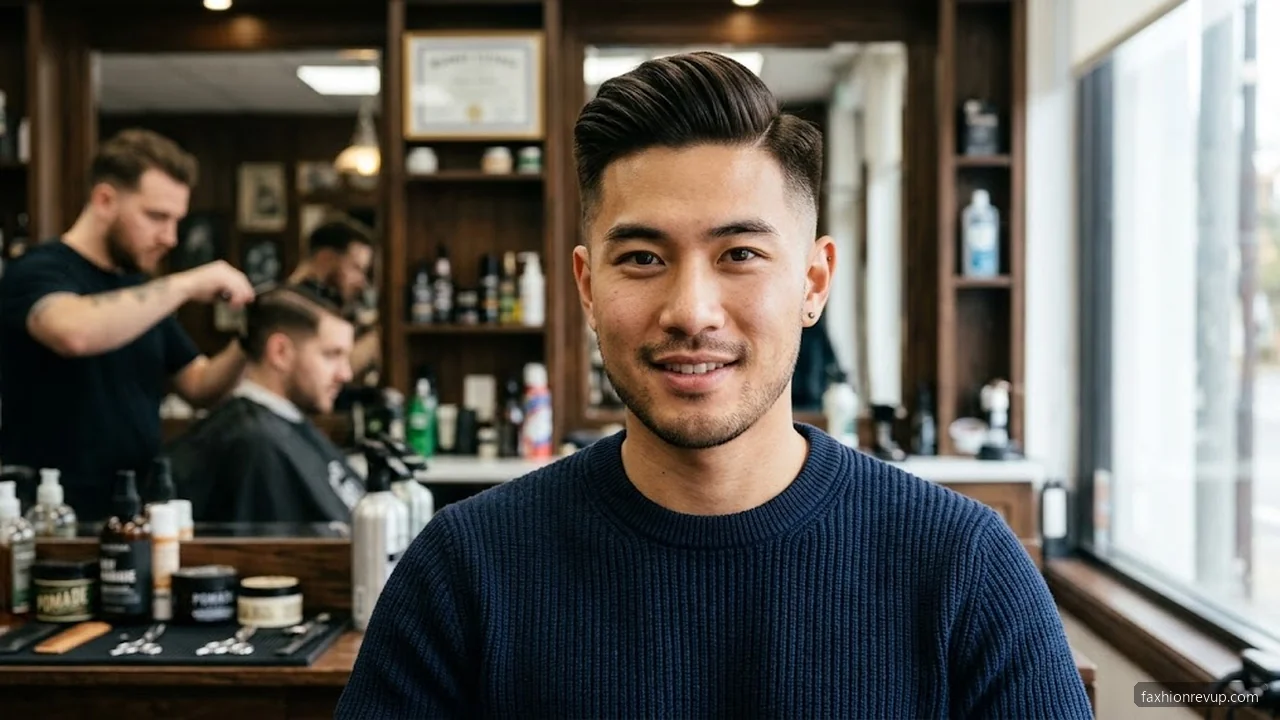
A fade with a lineup squares the hairline across the forehead and sharpens the temples. The barber cuts the front edge with a trimmer, then cleans the corners above each eye. That line frames the face and makes the whole cut look fresher than it is. A lineup is added to any fade height, from low to skin.
Square and oval faces suit a straight lineup, which matches a strong jawline well. Round faces should ask for a slightly rounded line instead of a hard square. Keep the edge natural at the temples so the hairline does not recede visually. Book a lineup every two weeks to keep the front edge sharp.
Fade with 360 Waves

A fade with 360 waves carries the wave pattern all the way around the head. The sides fade low while the waves run from the crown forward and down. From the back, the pattern continues below the crown to the fade line. Barbers leave about two inches on top so the waves stay connected.
Dense 4A to 4C coils hold the deepest wave pattern around the crown. Oval and square faces carry the flat top well, because the shape stays low. Brush for five minutes each night and wear a durag to train the pattern. Ask for a #1 on the sides and a #2.5 at the top, never shorter.
Fade with Afro
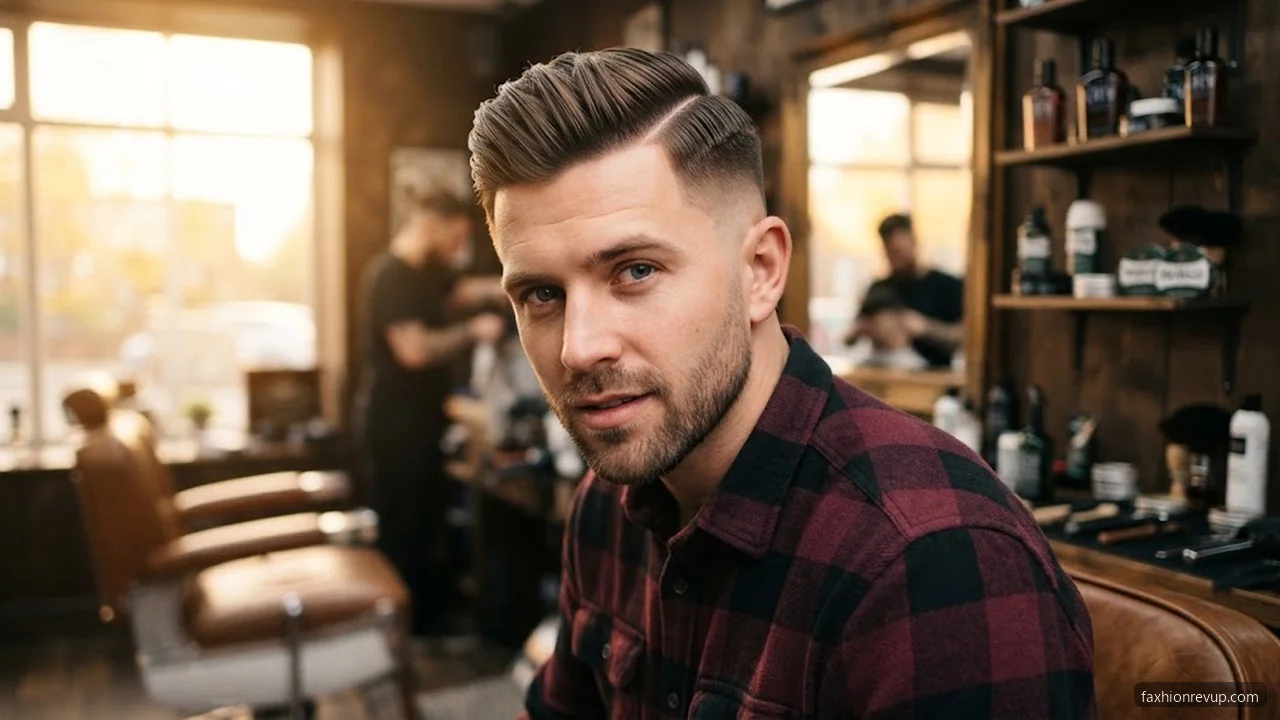
A fade with afro keeps a rounded cloud of hair on top above tight sides. The afro sits full and even, with no flat top or squared corners. From the side, the shape curves outward and sits above a #0.5 fade line. Barbers pick the top into a round shape after the sides come down.
Diamond and triangle faces balance well here, since the round top offsets a wide jaw. 4A to 4C coils with high density give the fullest shape after a wash-and-go. Use a light curl cream and a pick to lift the top without flattening it. Refresh the sides every two to three weeks so the round top keeps its contrast.
Fade with Dreadlocks
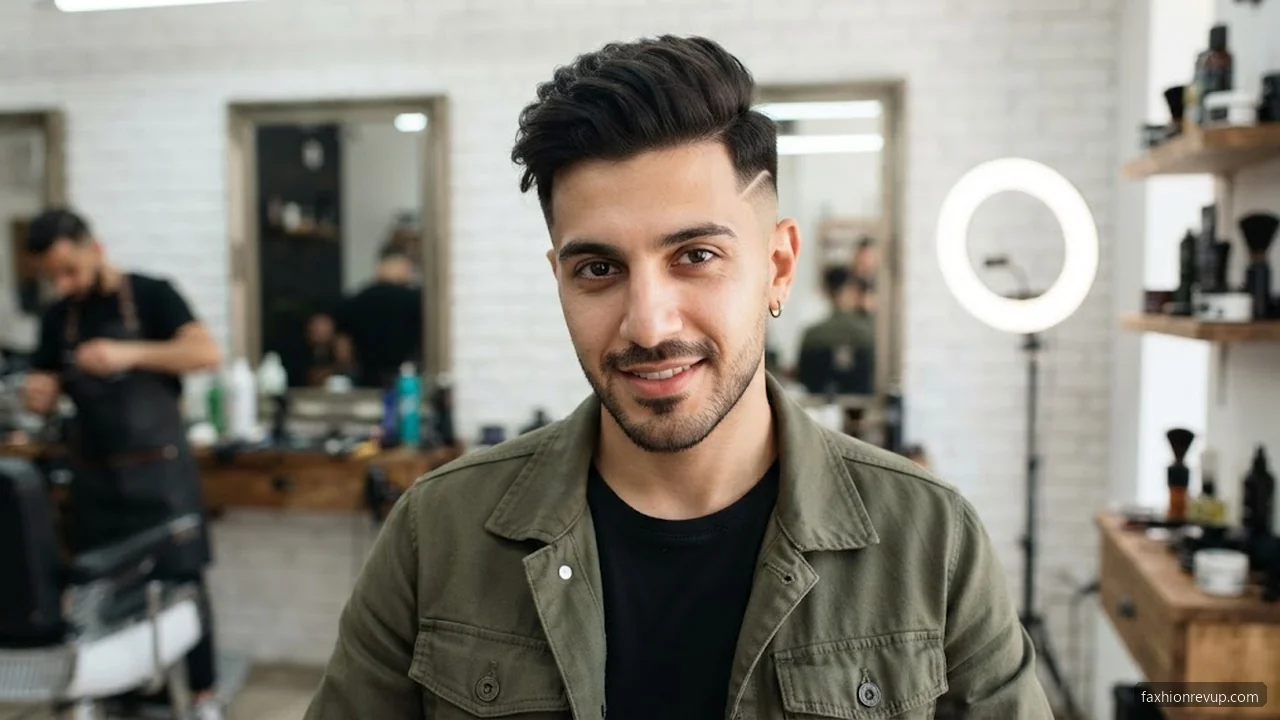
A fade with dreadlocks clears the sides and back while the locs stay long on top. The fade keeps the head cool and makes each loc look intentional rather than heavy. From the front, the hairline stays sharp and the locs fall over the fade. Barbers take the sides to a #0.5 and never touch the locs themselves.
Triangle and oblong faces suit locs, since the length on top adds needed height. Mature locs hold any fade height, but new locs need a lighter guard on the sides. Mist the scalp with water and oil the parts twice a week to prevent flaking. Retwist every four to six weeks and refresh the fade every three.
Fade with Braids
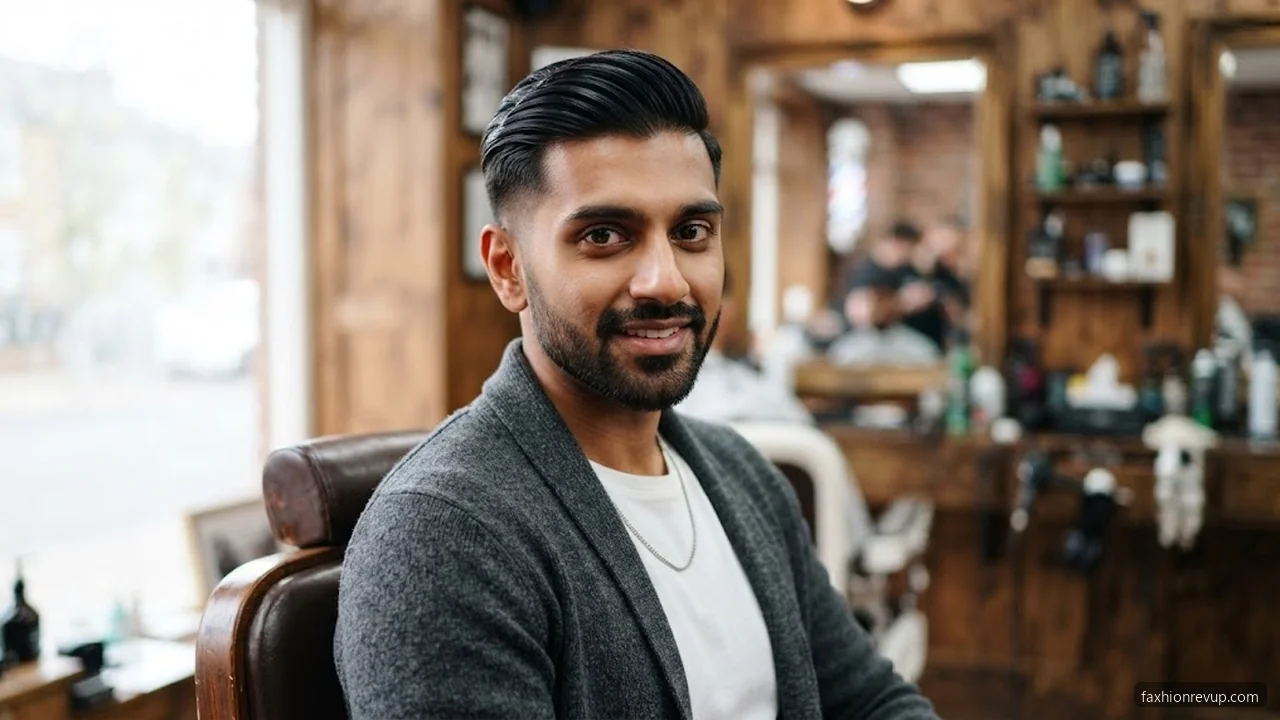
A fade with braids pairs tight sides with cornrows or single braids on top. The braid pattern starts above the fade line, so the two shapes read as separate. From the back, the fade climbs to the crown while the braids run forward. Barbers leave two to three inches on top so the braids have room to grip.
Heart and square faces wear braids well, because the pattern adds width at the forehead. 3C to 4C hair holds cornrows longest, while 2A to 2C waves slip out fast. Oil the scalp along each part and tie a silk scarf over the braids at night. Refresh the fade every four weeks and re-braid every four to six weeks.
Fade with Twists
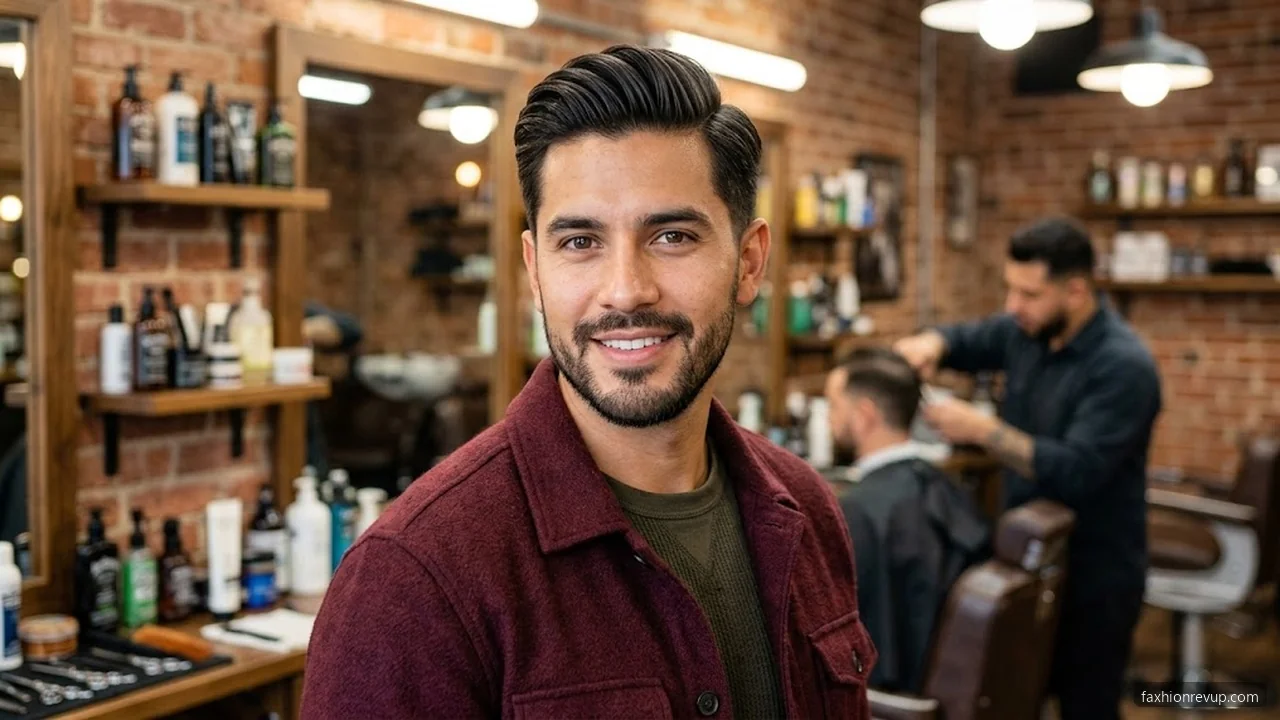
A fade with twists leaves two-strand twists long on top and short sides below. The twists stand away from the scalp, which adds texture and depth to the shape. From the side, the fade line cuts clean under a mass of small twists. Barbers leave three inches on top and take the sides to a #1.
Round faces benefit from the height, since twists lift the top away from the cheeks. 4A to 4C coils hold a twist for weeks, but fine hair unravels sooner. Use a light gel on damp hair and twist small sections for a tighter look. Refresh the fade every two to three weeks, since the sides show first.
Fade with Sponge Curls
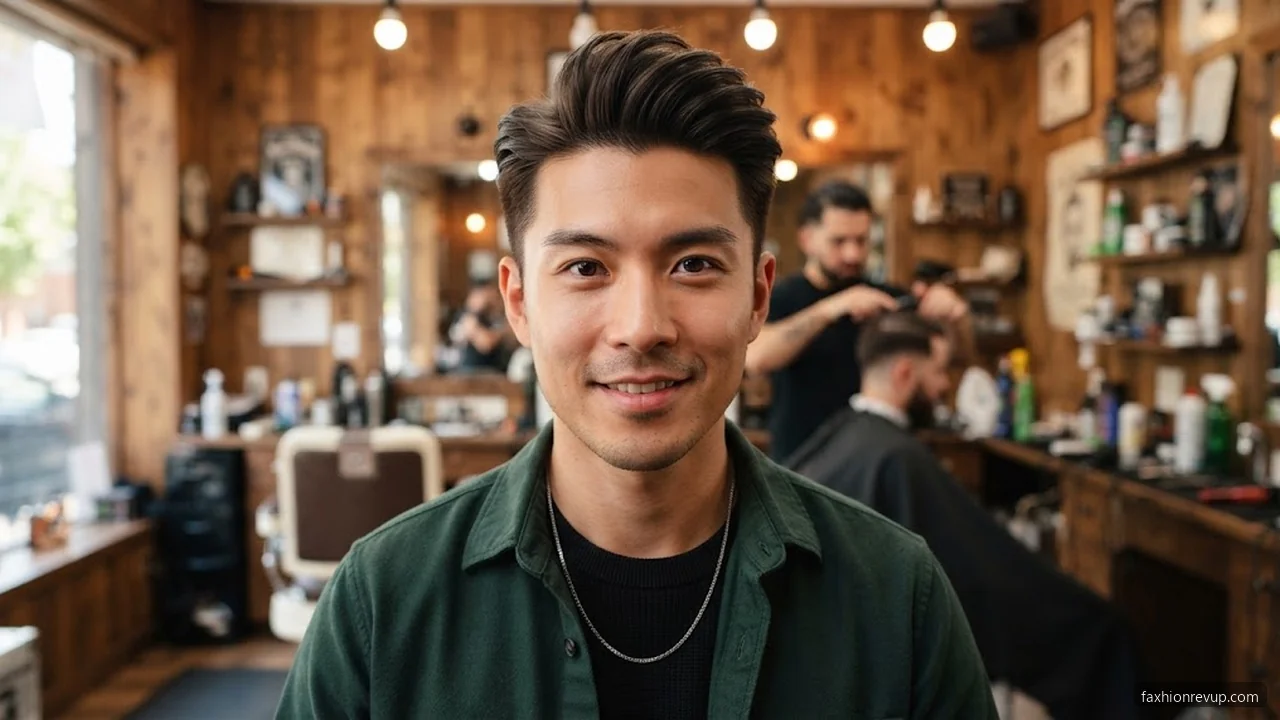
A fade with sponge curls uses a sponge brush to twist short coils into small round bumps. The top stays about an inch long, so the texture reads as even and soft. From the side, the fade climbs cleanly under a field of tiny curls. Barbers take the sides to a #1 and leave the sponge work to you at home.
Square and oval faces wear sponge curls well, since the round texture softens sharp angles. 4A to 4C coils hold the sponge pattern, but straight hair will not twist at all. Rub a small amount of curl cream through damp hair, then sponge in circles. Keep the sides fresh with a cut every three weeks to protect the pattern.
Fade with Hard Part
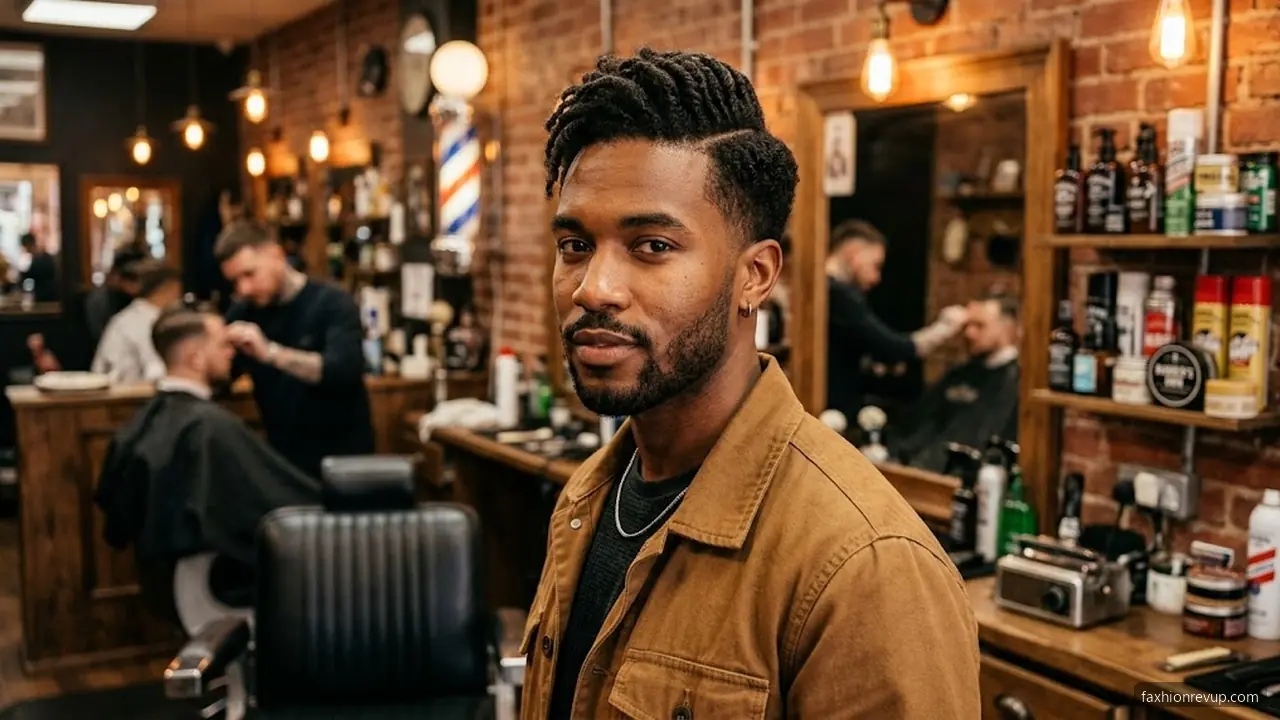
A fade with a hard part shaves a thin line into the hair to mark where the comb should go. The part sits on one side and separates the top into two clear sections. From the front, that line makes the top look ordered and deliberate. Barbers carve it with a trimmer straight back from the hairline.
Heart and oblong faces suit a side part, because it breaks the length across the forehead. Straight, wavy and loose coiled hair takes a hard part best, since the line stays visible. Keep the top at two to three inches and comb it flat with a light pomade. A hard part grows out in about two weeks, so book a tidy-up then.
Frohawk Fade
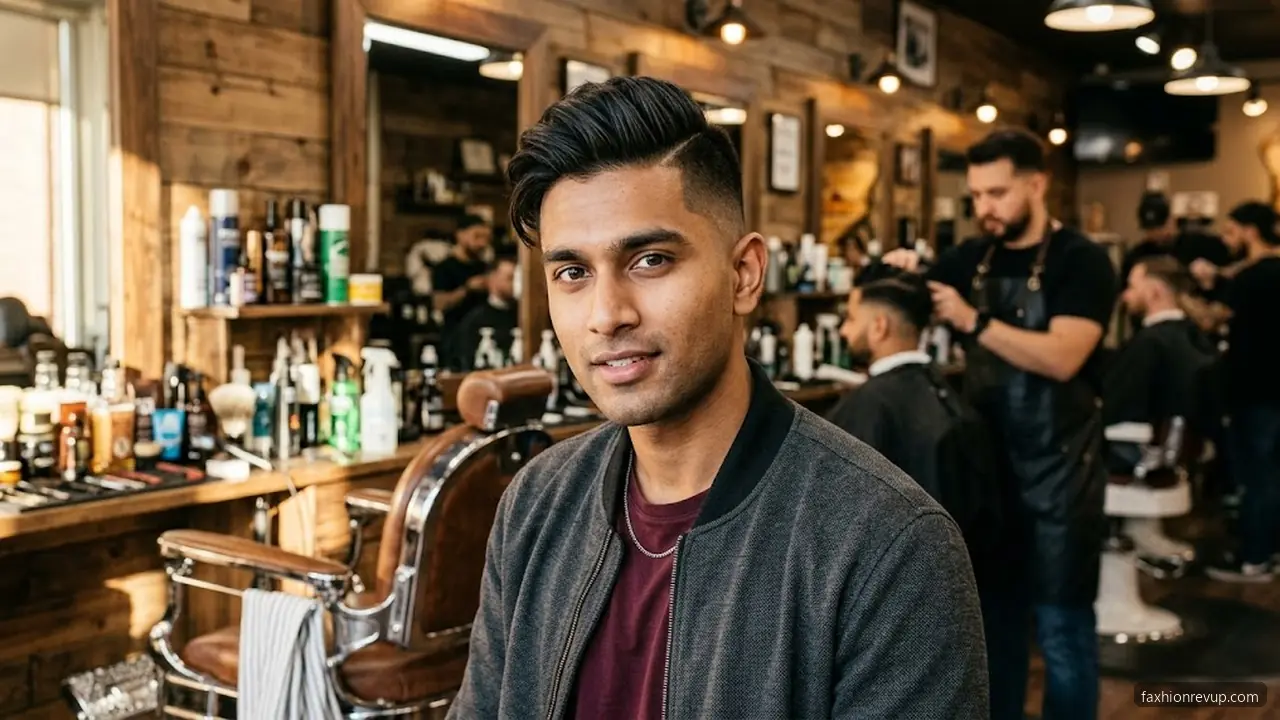
A frohawk fade keeps a narrow ridge of curls running from the forehead to the back. The sides fade low, so the ridge stands out as a soft mohawk shape. From the side, the curl strip rises above a tight #0.5 blend. Barbers trim the sides short but leave the ridge three inches long.
Round faces gain height from the ridge, which slims the cheeks without side volume. 4A to 4C coils hold the upright shape with a little gel or curl cream. Skip it in a formal office, since the ridge reads bold rather than neat. Trim the ridge every three weeks so the front edge stays clean.
South of France Fade
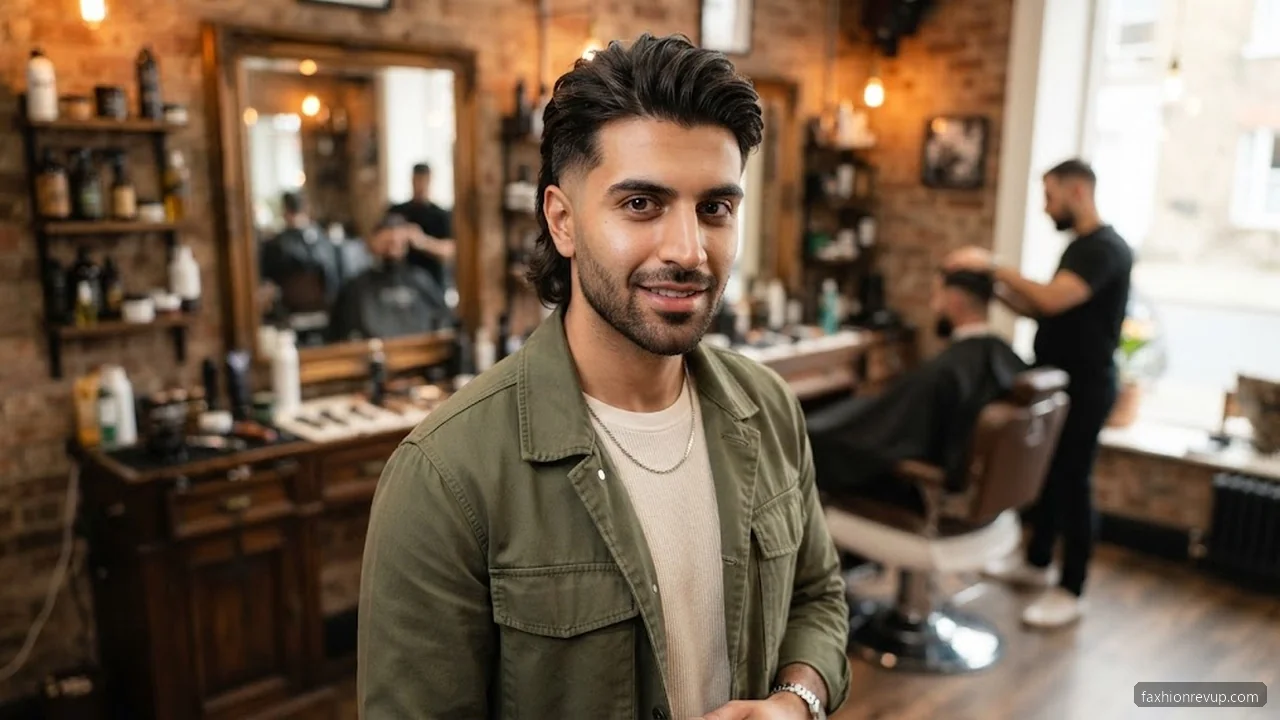
A South of France fade is a high fade with a deep, straight wave brushed into the top. The front stays low while the top rises and falls in a single soft curl. From the side, the wave dips at the forehead and lifts toward the crown. Barbers cut the sides high and leave three inches on top for the sweep.
Heart and oval faces suit the swept top, since the wave covers the forehead evenly. 2C to 3B waves hold the pattern, while 4C coils need a relaxer to lie flat. Use a light pomade and brush the top back for two minutes each morning. Book a cut every four weeks to keep the high sides from bulking.
Buzz Cut Fade
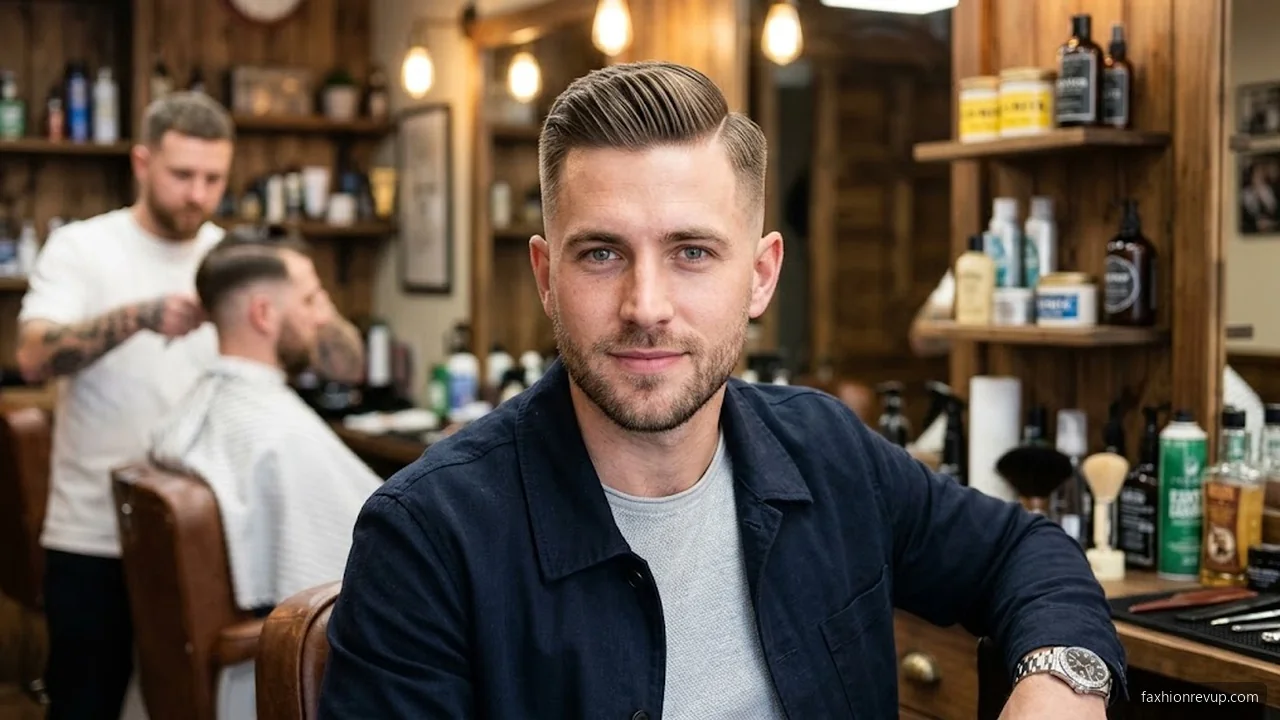
A buzz cut fade keeps the top at one length and fades the sides below it. The top runs a #2 to a #4, so the head looks even and cool. From the back, the fade drops from the crown to a #0.5 at the neckline. Barbers blend the sides with small guard steps to hide the transition.
Square and oval faces suit the short top, because the sides stay tight and even. It works on every texture, from 2A waves to 4C coils, with no styling needed. Keep a sponge handy if you want texture on top, or leave it smooth. A buzz cut fade looks best with a touch-up every two weeks.
Faux Hawk Fade

A faux hawk fade lifts the center of the top into a soft peak above short sides. It looks like a mohawk without shaving the sides down to bare skin. From the front, the top narrows toward the middle and stays longer there. Barbers fade the sides to a #1 and leave three inches in the center strip.
Oblong and round faces gain the most height from the raised center. 3B to 4A curls and thick waves hold the peak with sea salt spray and a blow-dry. Skip it if your hair is fine, since the center will not stand up. Book a cut every three weeks so the sides keep their contrast.
High Fade with Kinky Top

A high fade with kinky top leaves a dense, tightly coiled mass above bare sides. The top keeps its natural shrinkage, so the shape stays round and full. From the side, the fade climbs high while the coils sit like a cap. Barbers take the sides to a #0.5 or skin and never straighten the top.
Square and diamond faces carry the round top, since their angles balance the full coils. 4B and 4C coils give the tightest kink and the fullest shape after a wash. Use a light curl cream and a pick to lift the coils without crunch. Refresh the fade every two to three weeks to keep the contrast sharp.
Bald Fade with Beard
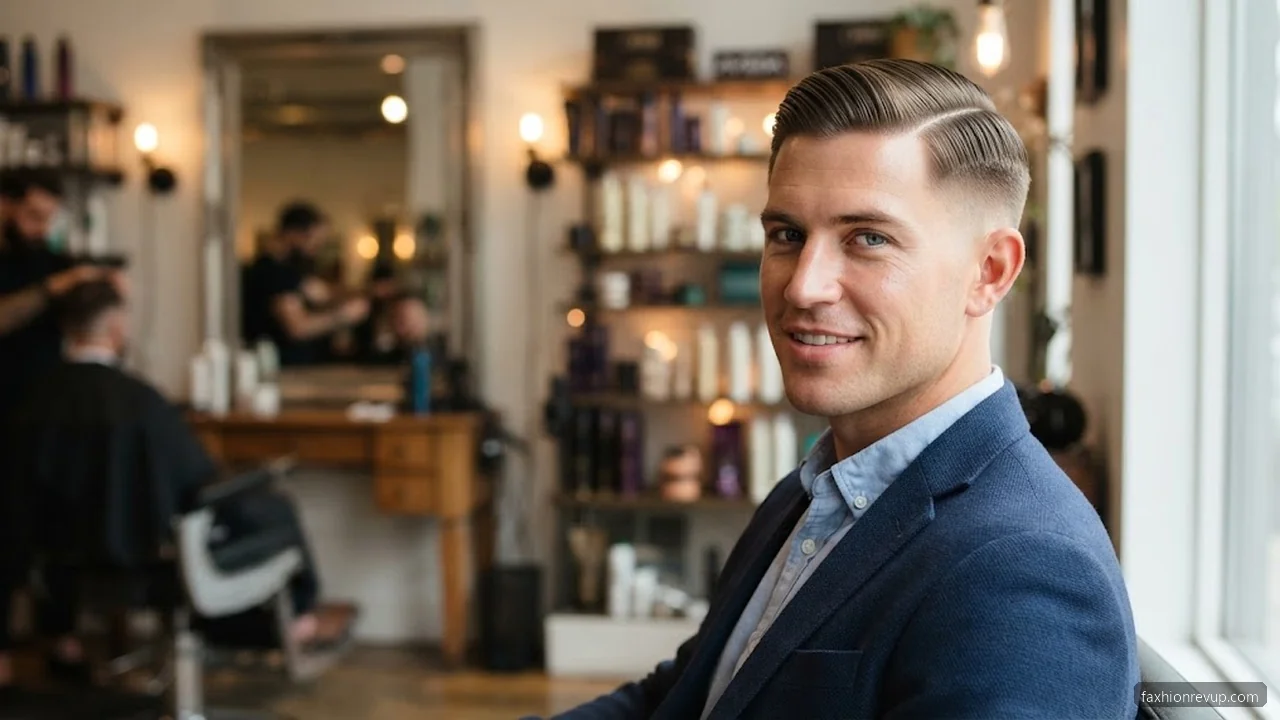
A bald fade with beard takes the sides to bare skin and leaves a full beard below. The line between fade and beard runs along the sideburn and stays soft. From the front, the beard squares the jaw while the shaved sides slim the head. Barbers blend the fade into the beard rather than leaving a hard step.
Round and heart faces gain length below the chin from a shaped beard. 4B and 4C hair fills a beard fast, so trim the edges every two weeks. Oil the beard daily and comb it down for an even shape. Book a fresh bald fade every two weeks, since the skin line shows first.
Mid Taper Fade with Hard Part
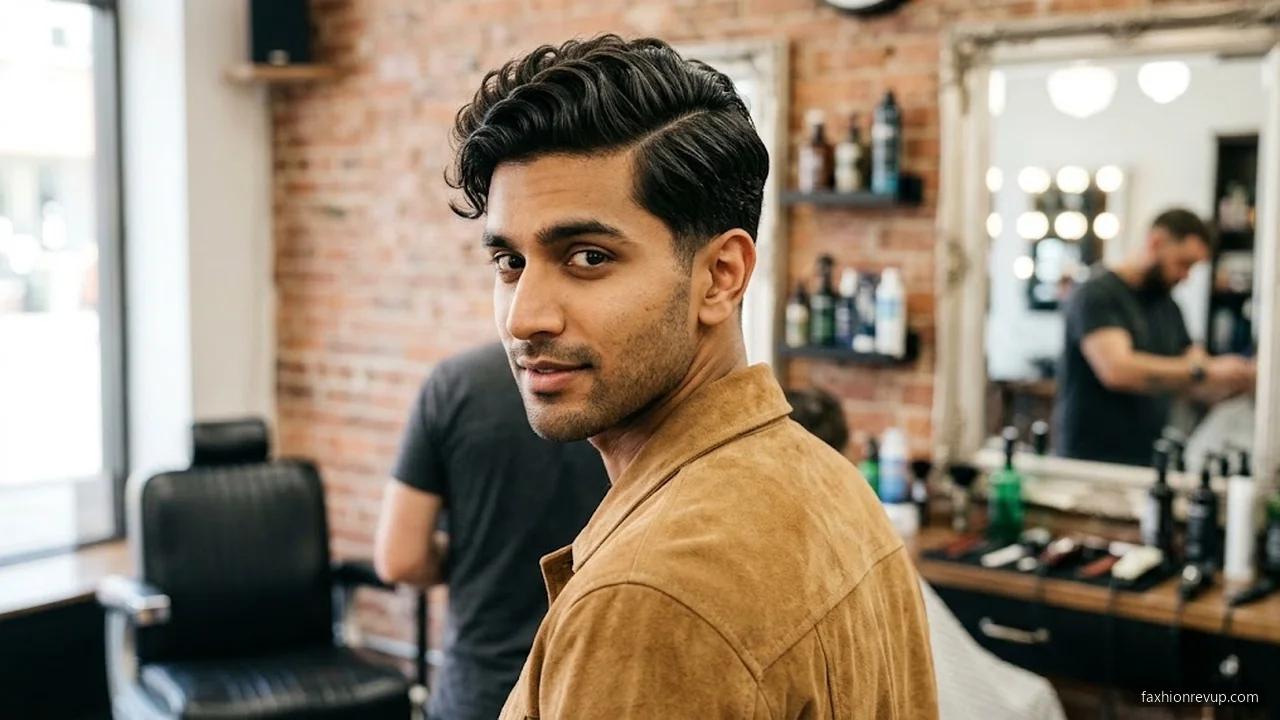
A mid taper fade with hard part combines a sideburn-and-nape taper with a shaved side line. The taper shortens only the sideburns and nape, so the sides keep weight. From the side, the hard part runs back above a soft taper. Barbers blend a #1 at the sideburn into a #3 above the ear.
Heart and oblong faces suit the side part, because it breaks length across the forehead. Straight and wavy hair holds the line best, while tight coils hide it fast. Comb the top flat with a light pomade and keep the part trimmed. Book a trim every three to four weeks, since tapers grow out slowly.
High Top Fade with Twists

A high top fade with twists stacks two-strand twists into a tall, flat-topped shape. The sides go to skin or a #0, which makes the twists look taller. From the front, the twists rise straight up and square off at the corners. Barbers leave five inches of twist length and level the top with scissors.
Oval and square faces carry the height, since their proportions stay balanced under it. 4A to 4C coils hold twists upright, but fine hair falls flat within days. Use a light gel when twisting and a small amount of pomade to tame frizz. Refresh the fade every two to three weeks to keep the sides bare.
What Happens to a Fade on Black Hair When It Dries?
Coily hair shrinks as it dries, so a fade looks shorter an hour after the cut. The sides pull up toward the scalp and tighten the blend line you just paid for. That shrinking is normal, and it happens on every coil pattern from 4A to 4C.
A wet fade always looks longer, because water stretches the coil before it snaps back. Your barber cuts the hair dry or damp, and that choice changes the final length. Dry cutting shows the true shape, which keeps the top from ending up too short.
- Low fade on 4C hair: the blend sits below the temple, so shrinkage at the sides barely shifts the outline.
- Mid fade on 4C hair: the temple line shows first, and it softens within two weeks as the coils tighten.
- High fade on 4C hair: the bald sides stay sharp after drying because bare skin cannot shrink or frizz.
Which Fade Suits Your Hair Type?
Your coil pattern decides how short the sides can go before the skin shows through. Tight 4C coils hide a #0.5, while fine or light hair shows every clipper mark. Density matters just as much, since thin patches appear fastest on the sides. Waves and curls need more length on top to keep their pattern readable. See American Academy of Dermatology hair care guidelines for more.
Straight hair takes a fade well, though the blend needs smaller guard steps. Wavy 2A to 2C hair suits a low or mid fade with a longer top. Locs, braids and twists change the plan, because the sides must stay short under weight.
| Hair Type | Best Fade | Why It Works |
|---|---|---|
| 4C coils, thick | Mid fade | The tight pattern hides the blend line and holds a sharp edge for weeks. |
| 4A to 4B coils | Burst fade | The ear curve suits dense sides that would otherwise bulk out quickly. |
| 3A to 3C curls | Low fade | Curls stay full above a soft blend that starts just above the ear. |
| 2A to 2C waves | Drop fade | The dip behind the ear leaves enough length for the wave pattern to flow. |
Match the fade to your pattern first, then adjust the height for your face. A barber who cuts coily hair daily will blend small guard steps without being asked. Bring a photo from the side and the back, not just the front. Ask how short the sides can go before your scalp shows through.
How Do You Choose the Right Fade?
Three things decide the height: your face shape, your hair texture and your daily routine. A round face needs height on top, so a high fade slims the cheeks. An oblong face should keep the fade low and leave weight at the sides. Your job and your patience for upkeep narrow the choice further. See Healthline hair health and wellness resources for more.
| Factor | Low Fade | Mid Fade | High Fade |
|---|---|---|---|
| Blend line | Just above the ear and neckline | Starts at the temple line | Starts at the parietal ridge |
| Best face shape | Oblong and diamond | Round and heart | Round and square |
| Touch-up window | Every 3 to 4 weeks | Every 2 to 3 weeks | Every 2 weeks for a sharp edge |
- Face shape: round faces gain from height, so pick a high fade and skip any volume at the sides.
- Hair texture: tight coils take a #0.5 on the sides, while fine hair needs a #2 for cover.
- Workplace: a skin fade reads bold in a formal office, so a low taper suits stricter dress codes.
- Maintenance: if you will not book every two weeks, choose a low fade or a taper.
What Should You Tell Your Barber?
Bring a photo from the front, the side and the back, since each angle shows a different edge. Say the guard number for the sides and the length in inches for the top. Point at the blend line with your finger so the height is clear before the clippers start.
- Low fade: “tell your barber you want the blend to sit below the ear and stay soft at the neckline.”
- Mid fade: “tap your temple with one finger so the height is clear before the clippers touch your head.”
- High fade: “ask for a foil shaver at the bottom and a #1 at the ridge for a clean blend.”
- Burst fade: “say the curve must arc around the ear and leave the hair behind it longer.”
- Temp fade: “ask for a #1 at the temple corner with no line cut above the ear.”
- Lineup: “ask for a natural edge at the temples so your hairline does not look pushed back.”
How Often Should Black Men Get a Fade?
| Fade Type | Recommended Frequency | Why |
|---|---|---|
| Low fade | Every 3 to 4 weeks | The blend sits low, so the neckline takes longest to look untidy. |
| Mid fade | Every 2 to 3 weeks | The temple line shows regrowth before the top changes shape. |
| High fade | Every 2 to 3 weeks | Bare sides and a high blend lose their contrast quickly. |
| Skin fade | Every 2 weeks | The bald line regrows fast and softens within days. |
| Taper fade | Every 3 to 4 weeks | Only the sideburns and nape grow out, so the shape holds longer. |
What Is the Biggest Mistake Black Men Make with a Fade?
The most common mistake costs nothing to fix, and it starts with how you describe the cut. Most men ask for a number instead of a shape, so the blend lands in the wrong place. Others let the sides grow for six weeks and blame the barber for the result.
Which Face Shape Suits This Style?
Your face shape decides how much height a fade can carry, and the sides do most of the work. Round faces wear tighter sides well, because that shorter fade adds height above the cheeks. Square faces can take the same treatment, since texture on top softens a strong, angular jaw.
| Face Shape | Best Variation | Guard / Length |
|---|---|---|
| Round | High fade with height on top | #0.5 at the sides, 2 inches on top |
| Square | Mid fade with a textured top | #1 blending to #3, 1.5 inches on top |
| Oval | Mid taper fade | #2 at the nape, 3 inches on top |
| Oblong | Low taper fade with a fringe | #2 sides, 2 inches with fringe |
| Heart | Mid fade with a side sweep | #1.5 sides, 2.5 inches swept |
| Diamond | Burst fade with weight at the forehead | #1 around the ear, 2 inches on top |
| Triangle | Low taper fade with a textured quiff | #1.5 sides, 2 inches on top |
Oval and heart faces both suit a low or mid fade, because neither shape needs the sides to shrink. A side sweep or fringe covers a wide forehead on heart shapes, while a narrow chin stays balanced. Oval faces can carry almost any variation here, so pick the one your hair texture handles best.
Frequently Asked Questions
What is the best fade haircut for Black men?
A mid fade suits most coil patterns because it balances height and cover. Tight 4C hair takes a #1 at the bottom blended into a #3 near the top. If your face is round, move the blend higher to add length. Book a touch-up every two to three weeks to hold the shape.
What fade looks good on Black hair?
Almost every height works, but the guard choice matters more than the name. A low fade keeps weight at the temples and suits oblong or diamond faces. High fades slim round faces and pair well with waves or a beard. Pick the height that adds balance, not the one you saw last week.
Can straight hair get a fade?
Yes, and straight hair blends faster because the cut ends sit flat against the head. Ask for smaller guard steps, since a jump from #1 to #3 leaves a visible line. Fine or light hair hides marks better and needs less blending work. Keep the top near two inches if you want any movement.
What is a lineup for Black men?
A lineup is the sharp front edge cut along the hairline with a trimmer. Your barber squares the forehead, cleans the temples and clears the corners above each eye. It frames the fade and makes the whole cut look fresher than it is. Book one every two weeks, since the front edge grows out first.
How do you maintain a fade with coily hair?
Wash with a co-wash twice a week and oil the scalp along the part lines. Brush the sides down daily so the blend keeps its shape between visits. Sleep with a silk durag or a satin pillowcase to cut friction. Book a shape-up every two to three weeks rather than a full cut.
Which fade lasts longest on coily hair?
A low taper fade lasts longest because it only shortens the sideburns and nape. The rest of the sides keep their length, so there is no blend line to blur. Expect three to four weeks before the edges look untidy. A skin fade softens in about a week as the bald line grows back.
What is a temp fade?
A temp fade is a small temple fade, not a full side blend. Your barber clears the front corner and leaves the hair above the ear untouched. It suits men growing out a short cut who want a neat edge. Skip it if you wear your hair forward, since the corner stays hidden.
Do fade haircuts work on thinning hair?
They can, but the sides need more length than usual to cover thin patches. Ask for a low fade or a taper with a #2 on the sides instead of a skin fade. Keep the top a little longer and add texture with matte clay. Avoid hard part lines, which draw the eye toward any sparse patches on top.
Conclusion
Fade Haircuts For Black Men work best when the height matches your face shape and coil pattern. A mid fade suits most men, since it balances height on top with tight sides. Round faces should ask for it higher, and oblong faces should keep it low. Bring a side photo so your barber sees the blend height you want.
Tell your barber the guard for the sides and the length in inches for the top. Ask for small guard steps, which hide the blend line on dark, thick hair. Book a touch-up every two to three weeks for skin and high fades. Low fades and tapers can wait three to four weeks between visits.
Peter Johnson has spent over 10 years behind the chair as a licensed barber and hairstylist, working with men’s grooming brands across the US. He writes for faxhionrevup.com to bring practical, tested haircut advice to everyday readers. Peter stays current with trends through hands-on client work and industry training, ensuring every guide reflects real barbering expertise.