Korean Hairstyles for Men: 2026 Cuts That Actually Suit Your Face

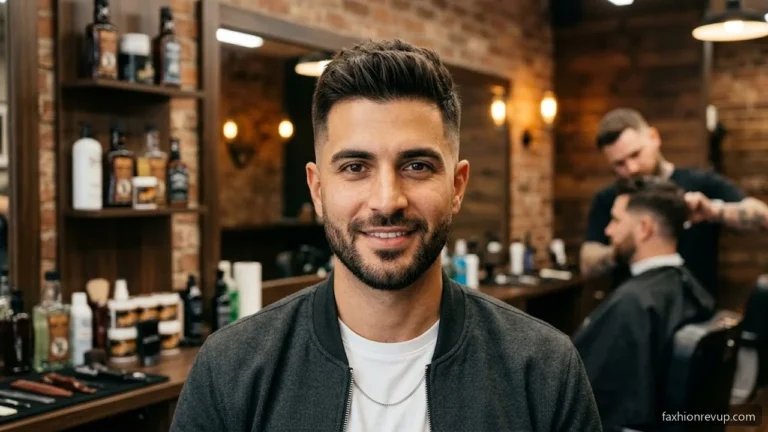
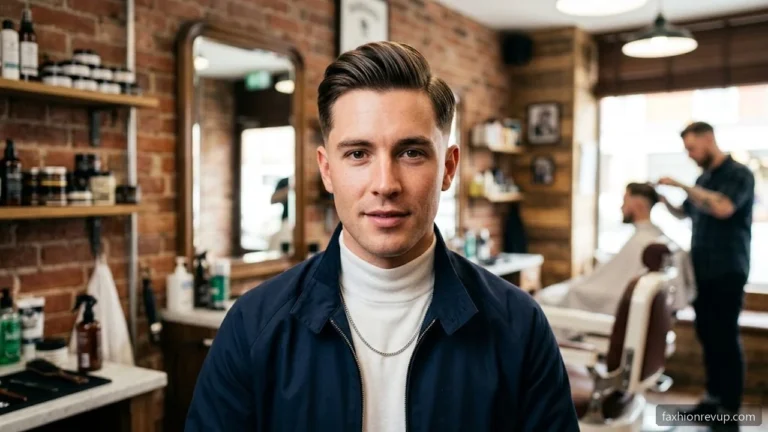
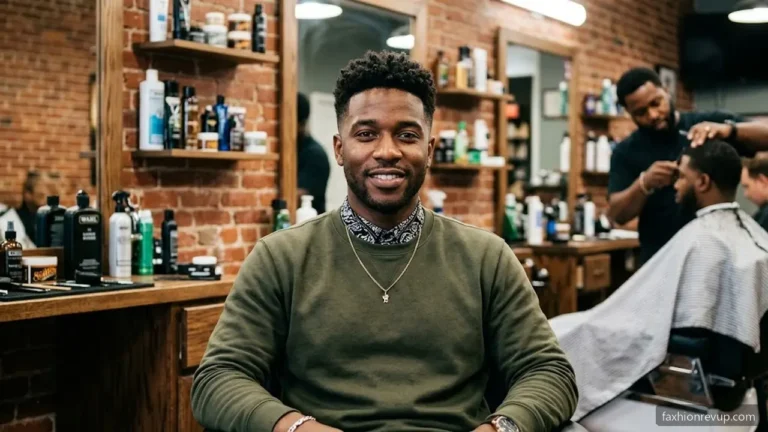
Korean Hairstyles for Men are layered cuts that keep length on top and softness at the sides. The fringe stays long and the sides stay soft, which gives hair movement. The two block, comma hair and shadow perm all grow from that same base. A light hold product keeps the shape soft instead of stiff.
Round faces do best with height on top and tighter sides, so ask for a two block. Straight hair holds a shadow perm well, while 4A to 4C coils need a longer fringe. Expect a touch-up every three to four weeks to keep the sides clean. Bring two photos that show your own hair type before you sit down.
Quick Answer
Korean Hairstyles for Men are soft, layered cuts with long fringes and gentle sides. They suit oval, heart and diamond faces, plus straight, wavy and curly hair. Most tops run from two to five inches, cut with scissors rather than a guard. Plan on a touch-up every three to six weeks, depending on how tight the sides are.
How to Choose the Right Korean Hairstyle for Your Face Shape?
Your face shape decides how much height you can carry on top and how tight the sides should sit. Oval faces wear most cuts, so they can pick on hair type instead. Round faces need height on top and tighter sides, and they should skip volume at the sides.
Square faces carry strong jawlines, so texture on top softens the angles nicely. Oblong faces should skip tall height and keep some fullness at the sides or a fringe. A mid-length two block with a soft fringe balances both shapes without adding length.
Heart shapes have a wide forehead and a narrow chin, so a fringe or side sweep works well. Diamond faces show wide cheekbones, which means fullness at the forehead and temples helps. Both shapes should skip very tall volume that stretches the face longer.
Triangle faces have a jaw wider than the forehead, so volume belongs on top and the upper sides. Very tight sides make that jaw look wider, which is why a taper beats a skin fade here. A textured crop with soft sides keeps the balance without hiding the jawline.
Hair type matters as much as face shape when you pick a cut. Fine hair needs lighter products and shorter layers, while thick hair holds a heavier fringe. Curl pattern decides which perm suits you, because 2A to 2C waves take a shadow perm easily. Tighter 3A to 3C curls need a lighter touch and a longer fringe.
| Face Shape | Best Korean Styles | Why It Works |
|---|---|---|
| Oval | Two block, comma hair, curtain haircut | Balanced features carry length and volume without any correction. |
| Round | Two block skin fade, textured crop, short textured | Height on top with tight sides adds length and slims the cheeks. |
| Square | French crop, side part, textured fringe | Soft texture on top eases the angles of a broad, strong jaw. |
| Oblong | Side swept fringe, see-through bangs, middle part | A fringe shortens the face while the sides keep useful fullness. |
| Heart | Curtain haircut, side bangs, layered cut | A fringe or sweep covers a wide forehead and balances a narrow chin. |
| Diamond | Layered cut, curtain haircut, S-shaped fringe | Fullness at the forehead and temples softens prominent cheekbones. |
| Triangle | Korean ivy league, flow cut, dandy cut | Volume on top and at the upper sides keeps a wide jaw in balance. |
The Best Korean Hairstyles for Men in 2026
Every cut below shares the same backbone: soft sides, a longer top and a fringe you can move. They differ in how tight the sides go and how much weight the top carries. Use your face shape and hair type to narrow the field before you book. Upkeep and product needs change with each one, so read the details.
Two Block
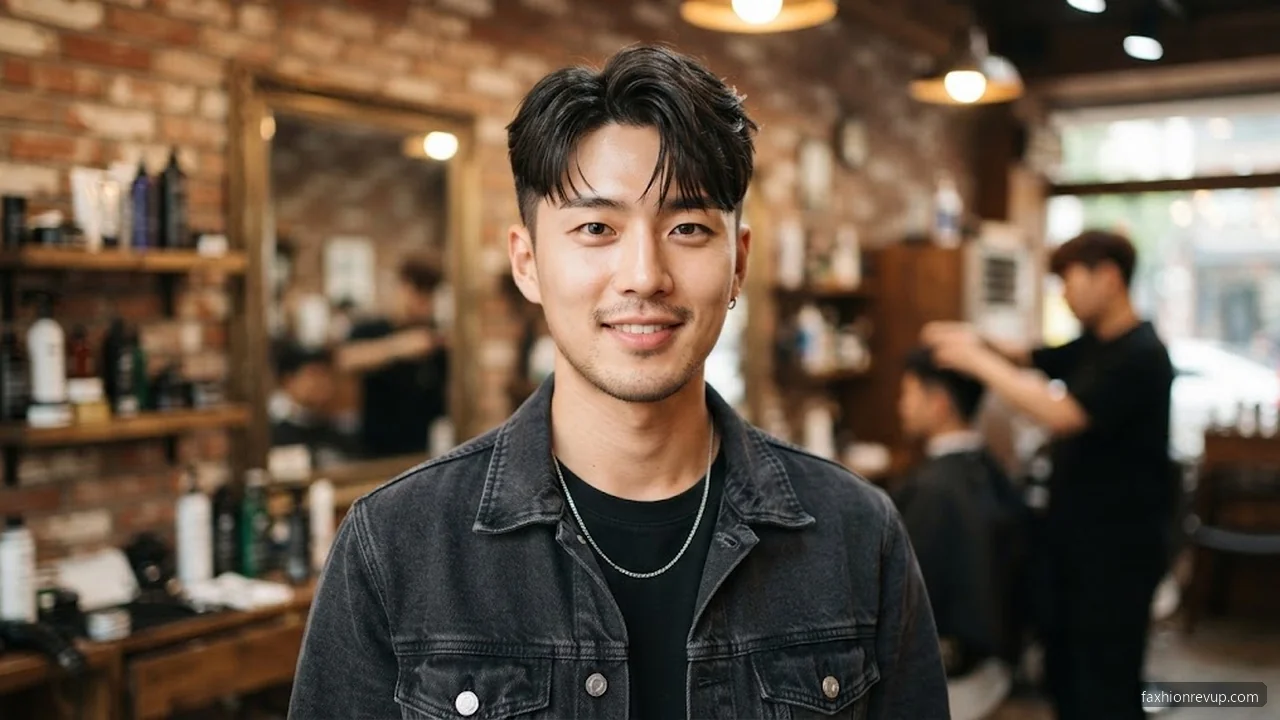
The two block keeps the sides short and the top long, with a clear step between them. From the front you see a heavy fringe that hangs past the eyebrows. The back stays short through the nape, and the sides sit close to the head. That hard line is what separates it from a fade, which blends instead of stopping.
Round and square faces suit it best, because tight sides add height without widening the head. Oval faces can wear it too, though they rarely need the extra lift. Ask for a #2 or #3 on the sides and leave three to four inches on top. Blow-dry the fringe forward, then smooth a dime-sized amount of matte paste through it.
- Best for: men who want length they can push around without growing the sides out.
- Hair type: straight, medium-thick hair holds the step best, while fine hair drops it.
- Ask your barber: “Keep the fringe heavy at the front and leave the neckline natural, not squared.”
- Upkeep: a trim every four weeks, since the fringe reaches the eyes first.
Caesar Cut
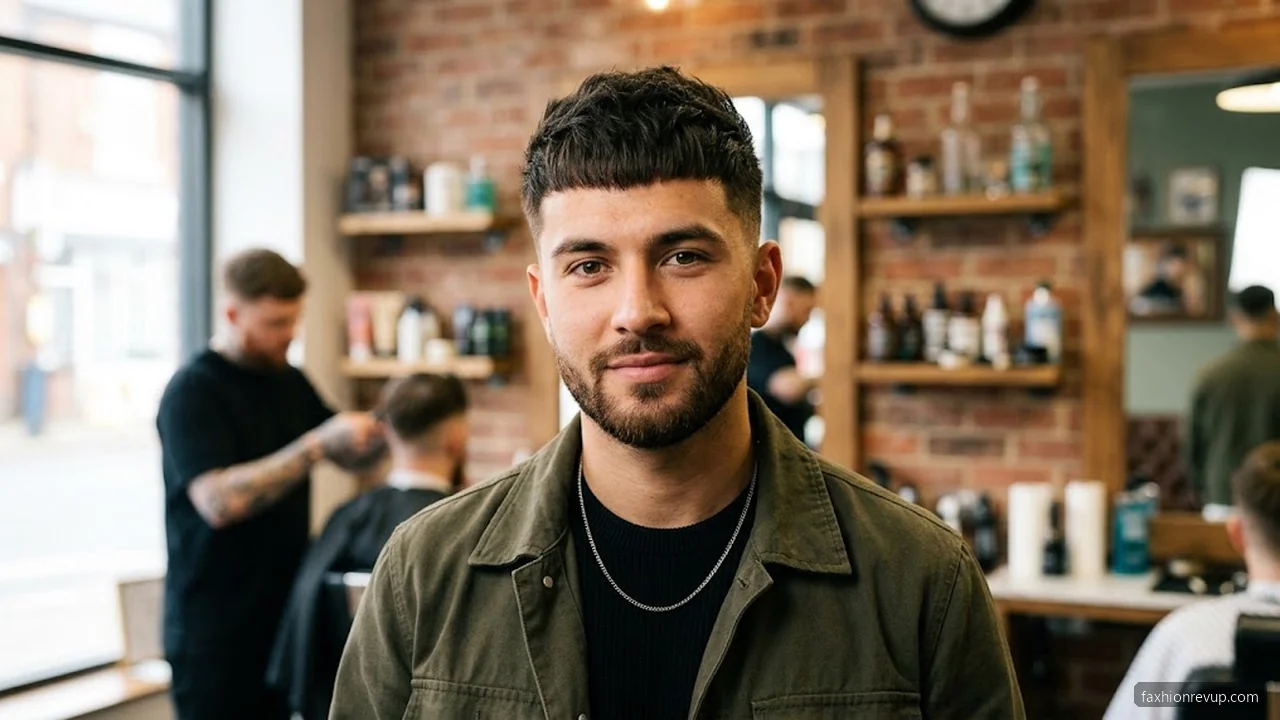
A Caesar cut runs short and even, with a straight fringe that sits above the brow. The sides and back take a #3 guard, and the top stops near one inch. It reads cleaner than a textured crop because the fringe is cut blunt instead of chopped. The shape stays square across the forehead, which gives it a tidy, deliberate edge.
Oval and square faces wear it easily, since the flat fringe adds width where they need it. Round faces should skip it, because a blunt fringe shortens the face even more. Wavy 2A to 2C hair holds the line best, while tight 4A coils fight it. Run a pea-sized amount of matte clay through damp hair, then push the fringe forward.
- Best for: men who want a short cut that still looks sharp at the office.
- Hair type: straight to wavy hair takes it; thick coils push the fringe out of line.
- Ask your barber: “Cut the fringe blunt across and keep the corners rounded, not squared off.”
- Upkeep: a trim every three weeks, since a blunt fringe loses its line fast.
Textured Crop

A textured crop keeps the top short and chopped, usually between one and two inches. Point-cut layers give the surface a broken, piecey look rather than a flat one. The sides take a #1 or #2 with a mid fade that starts at the temple line. That choppy fringe is the main difference between this and a blunt Caesar cut.
Oblong and heart faces suit it, because a ragged fringe breaks up the length. Round faces can wear it too, if the sides stay tight and the top keeps lift. Straight and wavy hair works best, and fine hair gains body from the texture. Rub a pea-sized amount of matte clay between your palms, then scrunch it through dry hair.
- Best for: men who want a low-maintenance cut that looks styled without much effort.
- Hair type: fine to medium straight hair; 3A curls need longer layers instead.
- Ask your barber: “Point cut the top and keep the taper soft so the temple line stays blurry.”
- Upkeep: three to four weeks, since the taper at the temple grows out first.
French Crop

The French crop is a short cut with a blunt fringe pushed forward and very short sides. It sits close to the head, with #0.5 sides and roughly one inch on top. From the side you see a straight fringe line that stops well above the brow. A blunt fringe cut flat across sets it apart from choppier crops.
Square and oval faces carry it well, because the flat fringe balances a strong jaw. Round faces should skip it and choose something with more height on top. Straight and wavy 2A to 2C hair suits it best, and thick hair needs thinning at the fringe. Work a dime-sized amount of matte paste through damp hair, then push the fringe flat.
- Best for: men with a strong jawline who want a sharp, formal-looking short cut.
- Hair type: medium to thick straight hair holds the blunt line; fine hair looks sparse.
- Ask your barber: “Keep the fringe tight to the forehead and thin the ends so it lies flat.”
- Upkeep: two to three weeks, because the fringe and sides lose shape quickly.
Buzz Cut
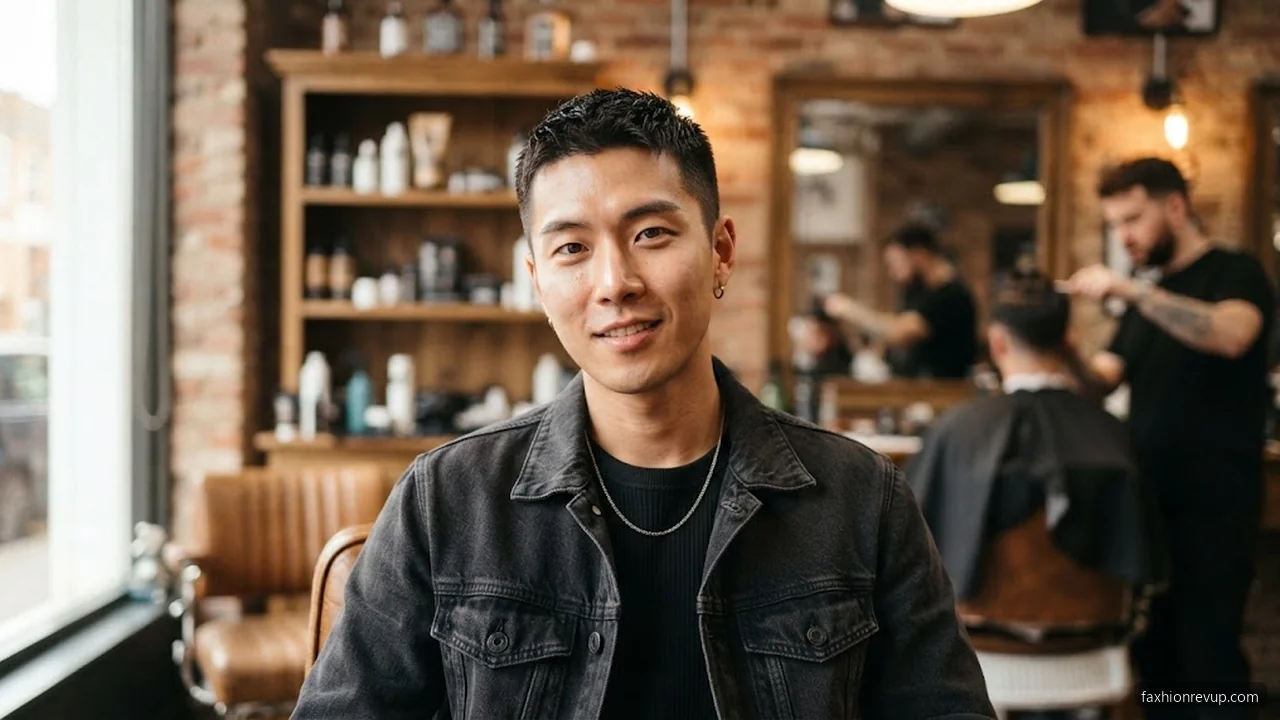
A buzz cut takes the whole head down to one length, usually a #1 or #2 all over. Some versions run a #3 on top and a #1 on the sides. It follows the skull, so the crown and hairline show through clearly. There is no fringe to style, which makes it the fastest cut to live with.
Oval and square faces wear it well, since there is no hair to fight the bone structure. Round faces should avoid it, since a buzz adds no height on top. It suits straight and wavy hair, and it hides thinning better than longer cuts. Run a light moisturizer or scalp oil over the head, since short hair shows dryness fast.
- Best for: men who want zero styling time and a clean, uniform look.
- Hair type: straight to wavy 2A-2C hair; 4A coils shrink and need a longer guard.
- Ask your barber: “Soften the hairline and skip the sharp line-up so it grows out clean.”
- Upkeep: two weeks for a #1, and three weeks if you keep it at a #2.
Drop Fade
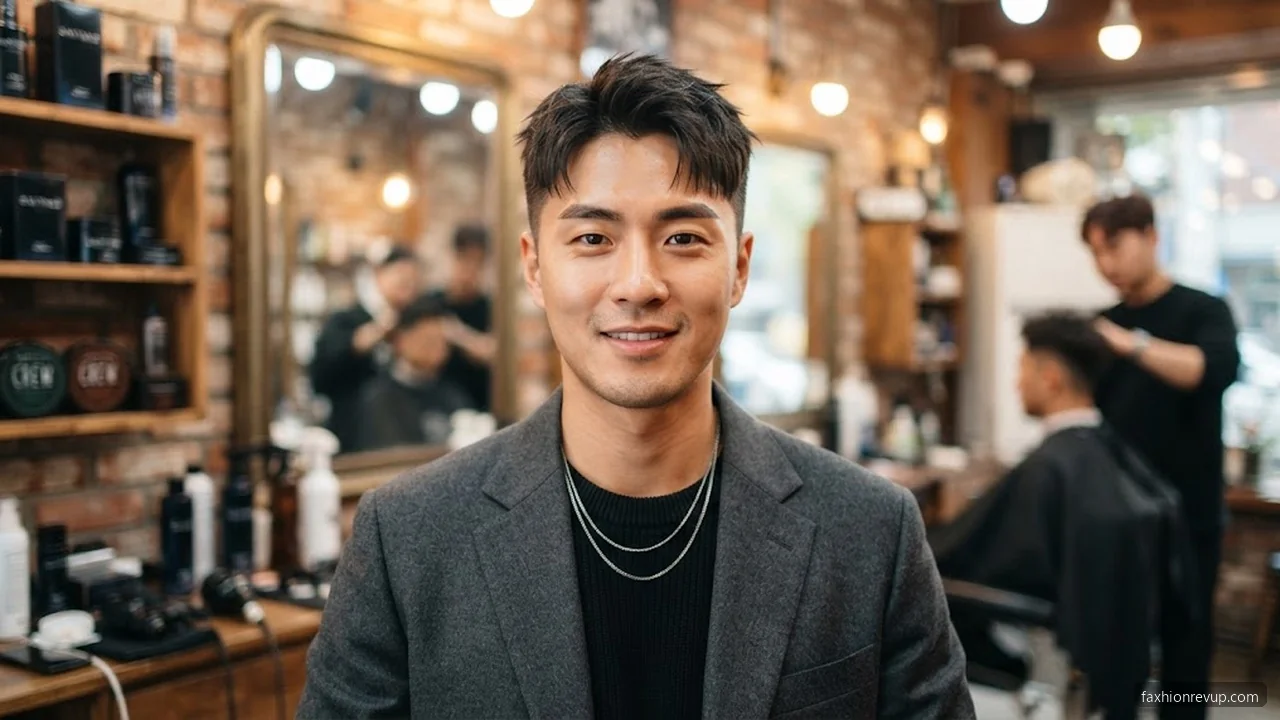
A drop fade curves down behind the ear instead of running straight across it. That curve follows the head shape, so the fade sits lower at the back. The result reads softer than a straight fade and grows out with less visible weight. Pair it with a short top of one to two inches and a #1 at the base.
- Best for: heart and diamond faces that want a softer curve behind the ear.
- Hair type: straight and wavy hair shows the curve best; tight 4A coils blur the line.
- Ask your barber: “Curve the fade down behind the ear and keep the back edge soft.”
- Upkeep: two to three weeks, since the skin-level base grows back first.
Taper Fade
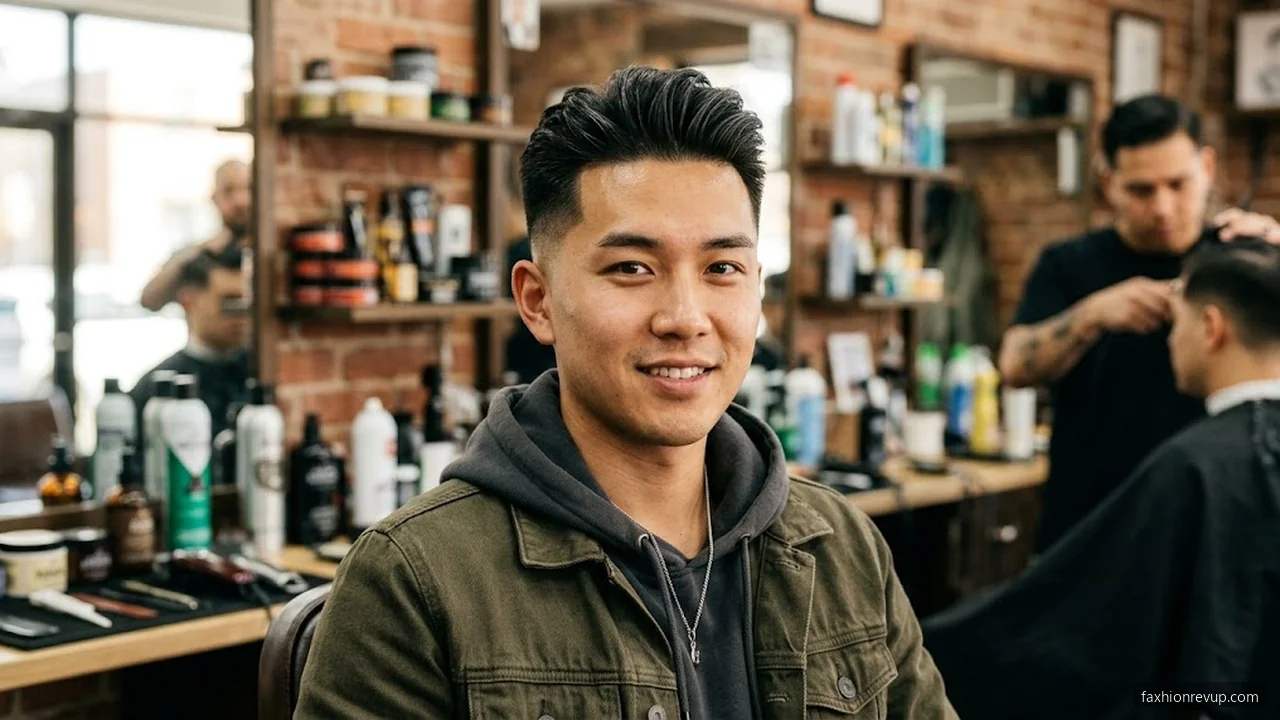
A taper fade shortens only the sideburns and the nape, and it keeps length everywhere else. The hair above the ear stays full, so the transition is gentle rather than tight. This is the better choice when you want a clean neckline without shaving the sides down. Ask for a #2 at the sideburn tapering into a #0 at the hairline.
- Best for: oval and oblong faces that want a tidy neckline without tight sides.
- Hair type: every type takes a taper, and fine hair keeps more weight here.
- Ask your barber: “Taper the sideburns and nape only, and leave the rest of the sides alone.”
- Upkeep: three to four weeks, longer than a full fade because less hair comes off.
Korean Ivy League

The Korean ivy league is a short combed cut with tight sides and a pushed-back top. It keeps a soft hairline instead of a hard line-up, which Korean barbers prefer. The sides usually take a #2 or #3, and the top sits around two to three inches. From the back the shape tapers neatly into the nape, with no visible clipper marks.
- Best for: square and triangle faces that need volume up top and a neat nape.
- Hair type: medium straight hair combs back best; thick 3A curls spring out of it.
- Ask your barber: “Taper the neckline instead of lining it, and keep the part soft.”
- Upkeep: four weeks, since the top keeps its shape longer than a fade would.
Short Textured
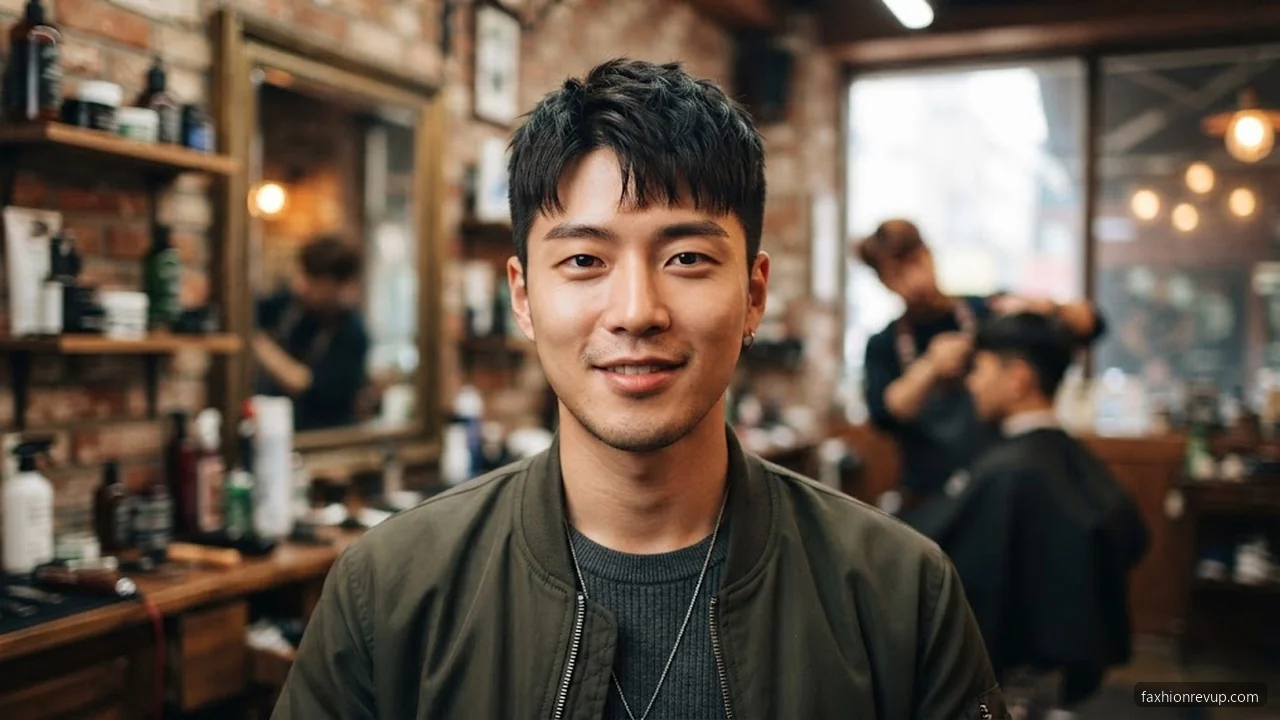
A short textured cut keeps everything under two inches and adds grip through the top. The sides take a #2 with a low taper, so the shape stays close. Point cutting breaks up the top so it dries with movement instead of lying flat. It is the easiest way to test a Korean look if you have never worn long hair.
- Best for: round and heart faces that want texture without a long fringe.
- Hair type: fine and medium hair gains the most volume from point cutting.
- Ask your barber: “Add texture through the top and keep the low taper close at the nape.”
- Upkeep: four weeks, because short texture keeps its shape between visits.
Comma Hair

The comma hair takes its name from the fringe, which curls into a soft comma shape. A round brush and a blow dryer shape the front while the sides stay smooth. The rest of the cut sits close to the head, so the focus lands on that curved fringe. It reads softer than a side part and more deliberate than messy hair.
- Best for: oval and heart faces that want a soft focal point at the front.
- Hair type: medium straight to wavy 2A-2C hair holds the comma shape best.
- Ask your barber: “Curl the fringe into a comma and keep the sides soft and smooth.”
- Upkeep: five weeks, since the fringe keeps its shape longer than a taper would.
Curtain Haircut
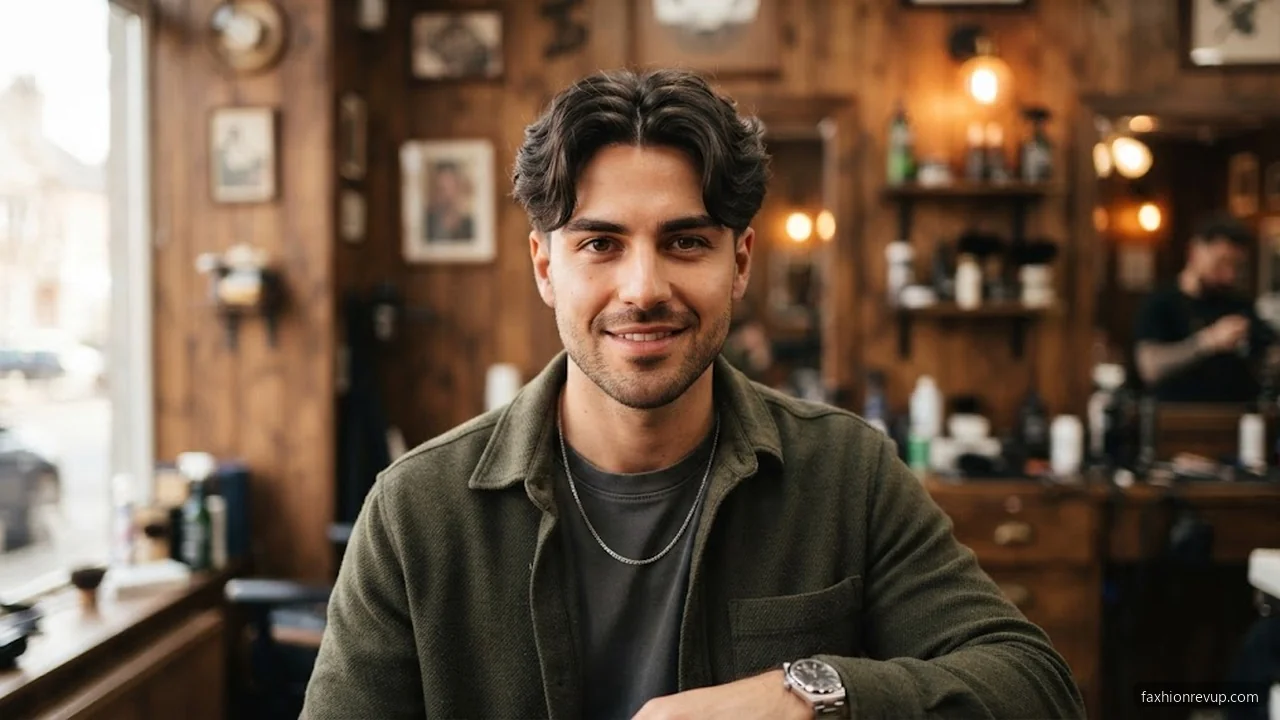
Curtains part in the middle and fall to both sides like fabric. The length reaches past the cheekbones, which frames the face and softens the jaw. Unlike a middle part, curtains carry more weight and a gentle inward curve at the ends. They suit medium to thick hair that can hold a bend without collapsing.
- Best for: heart and diamond faces that need width at the forehead and temples.
- Hair type: medium to thick straight or wavy 2A-2C hair with some natural bend.
- Ask your barber: “Keep the curtains past the cheekbones and add a soft inward curve at the ends.”
- Upkeep: six weeks, because the length grows out slowly and keeps its shape.
Middle Part

A middle part splits the hair evenly and lets it fall to each side. The line is sharper than a curtain cut, and the hair sits closer to the head. It works best when the top has volume at the crown, which keeps the shape from looking flat. Sea salt spray gives the roots grip so the part stays visible all day.
- Best for: diamond and oblong faces that want balance at the temples and forehead.
- Hair type: straight, medium-density hair that holds a clean center line.
- Ask your barber: “Keep the front loose and add volume at the crown, not at the sides.”
- Upkeep: five weeks, since the part loses its sharp line as the front grows.
Side Part
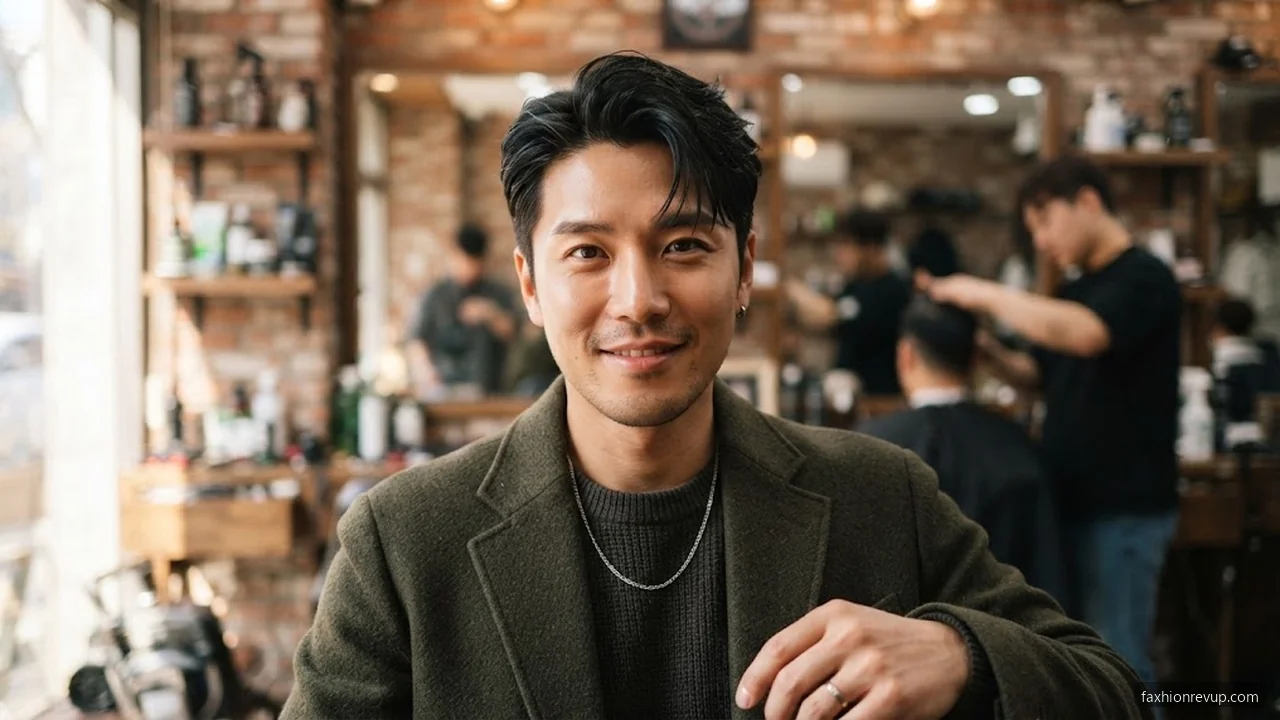
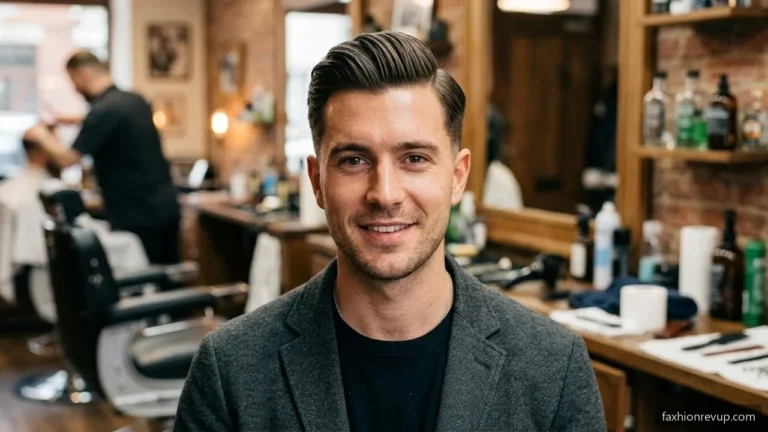
A side part moves the line off center and sweeps the hair to one side. The sides can be tapered or faded, which makes the cut look sharper than a middle part. Pomade gives the top a glossy finish and holds the sweep in place. It suits fine to medium hair that lies flat without much effort.
- Best for: square and oval faces that want a formal, structured shape.
- Hair type: fine to medium straight hair that lies flat without much product.
- Ask your barber: “Keep the part on the left and taper the sides with a #3 guard.”
- Upkeep: four weeks, because the sides grow out and blur the taper line.
Dandy Cut

The dandy cut keeps a rounded outline and soft edges all around. The sides stay longer than a two block, so the shape looks full rather than stepped. A slight wave through the top adds movement, and the fringe falls naturally instead of sitting flat. It reads romantic and relaxed, which is why it pairs well with a light perm.
- Best for: triangle and diamond faces that want fullness at the forehead and temples.
- Hair type: wavy 2A-2C hair with medium density that holds a soft bend.
- Ask your barber: “Keep the outline rounded and the sides soft, with no hard lines.”
- Upkeep: six weeks, since the rounded shape grows out gently without a sharp line.
See-Through Bangs

See-through bangs are cut wispy so the forehead shows between the strands. They sit lighter than a full fringe and move easily when you turn your head. The rest of the cut stays short at the sides, which keeps the focus on the front. They work well when you want a fringe but hate the heavy, solid look.
- Best for: oblong and round faces that want a fringe without extra weight.
- Hair type: straight, fine to medium hair that separates into wispy strands.
- Ask your barber: “Cut the bangs wispy so the forehead shows through the ends.”
- Upkeep: three weeks, since bangs lose their line faster than the rest of the cut.
Textured Fringe

A textured fringe is point cut so the ends break into pieces instead of forming a line. The sides take a #2 with a low taper, which keeps the shape clean. Matte clay gives the fringe grip and keeps the pieces separate through the day. It sits between a French crop and a longer fringe, with more movement than either.
- Best for: oval and square faces that want a short cut with visible texture.
- Hair type: thick straight or wavy hair that holds a chopped shape without falling.
- Ask your barber: “Point cut the fringe and keep the sides tight with a #2 guard.”
- Upkeep: four weeks, because the low taper and fringe grow out at the same rate.
S-Shaped Fringe

An S-shaped fringe curves first one way and then the other, which gives the front a soft wave. A round brush and a light gel set the shape while the hair dries. The sides stay longer than a two block, so the whole cut looks fluid rather than sharp. It is a styling choice more than a cut, which means the fringe length must reach the brow.
- Best for: heart and diamond faces that want a soft curve across the forehead.
- Hair type: medium to thick straight or wavy 2A-2C hair with some length.
- Ask your barber: “Leave the fringe at brow level and keep the sides soft, not tight.”
- Upkeep: five weeks, since the fringe needs length to hold the S curve.
Side Swept Fringe

A side swept fringe pushes the front hair to one side in a single sweep. The line starts at a soft part and travels across the forehead without breaking. Matte paste holds the sweep without shine, which keeps the look natural. It suits straight hair that lies flat, and it hides a cowlick when the barber cuts around it.
- Best for: square and oblong faces that want a fringe with a clean diagonal line.
- Hair type: straight, medium hair that lies flat and holds a sweep.
- Ask your barber: “Sweep the fringe to the right and taper the sides with a #2.”
- Upkeep: four weeks, because the swept fringe loses its line as it grows.
Side Bangs
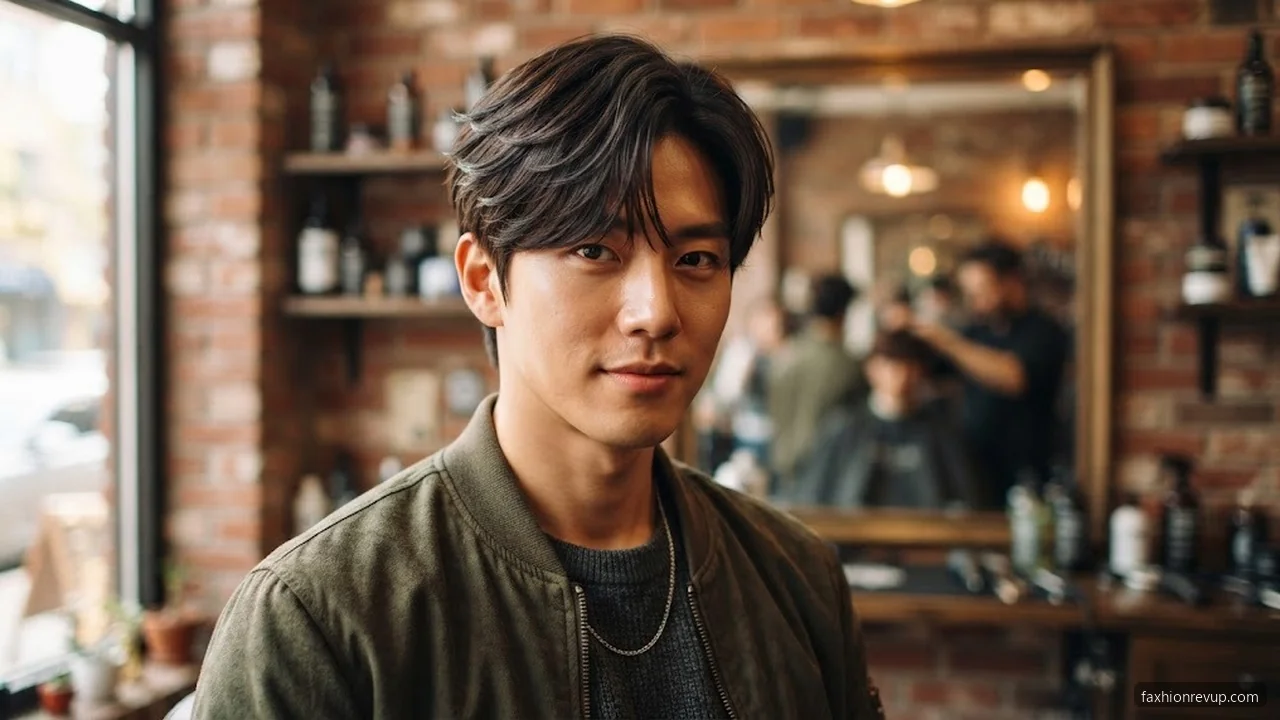
Side bangs sit longer on one side and shorter on the other, which creates a soft diagonal. They cover part of the forehead and skim the cheekbone, so they frame the face without hiding it. Sea salt spray adds grit so the bangs stay separated instead of clumping. The rest of the cut stays short, which keeps the shape from looking heavy.
- Best for: round and heart faces that want a diagonal fringe to break the width.
- Hair type: fine to medium straight hair that separates easily into strands.
- Ask your barber: “Keep the bangs long on one side and short on the other.”
- Upkeep: three to four weeks, since the shorter side grows out first.
Down Perm
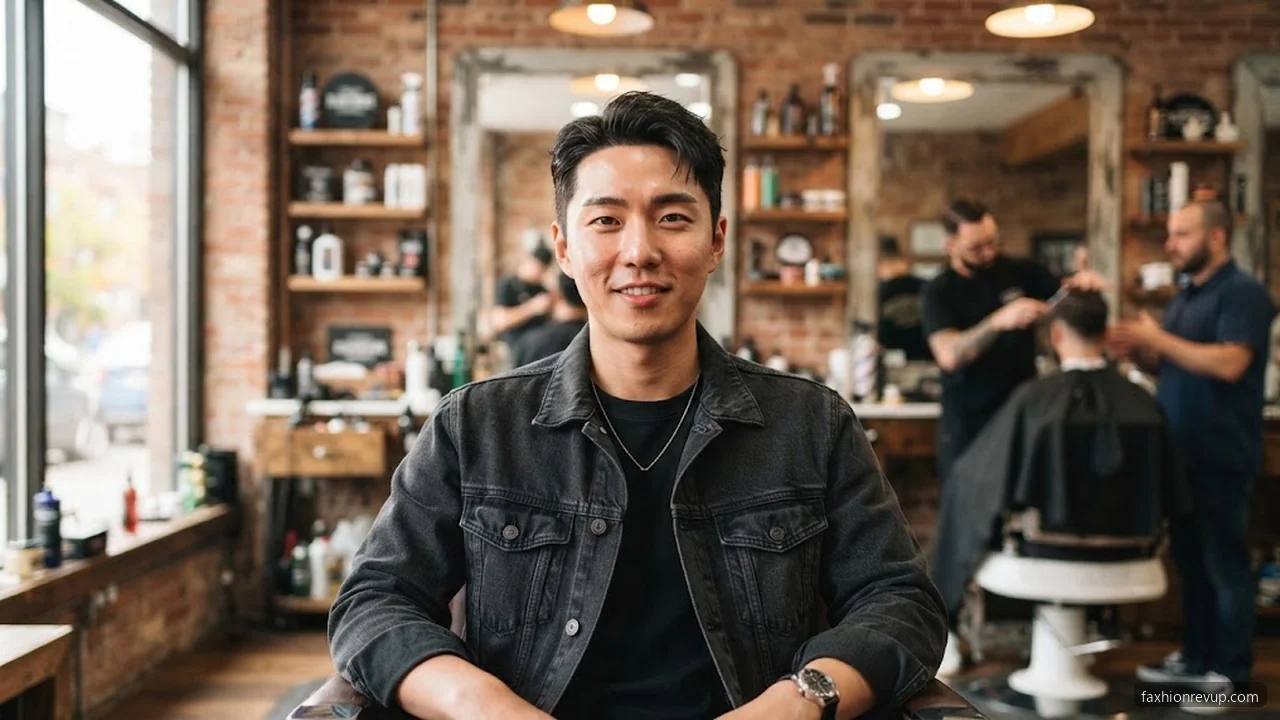
A down perm relaxes the sides so they lie flat against the head instead of puffing out. The top stays natural, which keeps the volume where you want it. It is a chemical treatment, not a cut, so it works alongside whatever style you already wear. Thick straight hair that puffs at the sides gets the most out of it.
- Best for: round and square faces that want the sides flat without a tight fade.
- Hair type: thick straight hair that puffs out at the sides after a few weeks.
- Ask your barber: “Perm the sides down and keep the top natural and full.”
- Upkeep: six to eight weeks, since the perm grows out with the hair.
Messy Hair

Messy hair looks unstructured on purpose, with uneven lengths and a rough surface. The cut keeps the top longer and chops into it so the ends point in different directions. Matte clay or sea salt spray adds grip, and you push the hair around with your fingers. It hides a cowlick and a growing-out fringe better than any clean cut.
- Best for: oval and diamond faces that want a relaxed cut with no hard lines.
- Hair type: wavy 2A-2C or straight hair with enough texture to hold a rough shape.
- Ask your barber: “Chop into it and keep the lengths uneven, with no clean outline.”
- Upkeep: six weeks, since the uneven lengths look fine as they grow out.
Bowl Cut

The modern bowl cut keeps the fringe blunt across the forehead and the sides slightly longer than the back. The outline is round rather than stepped, which gives it a soft, full shape. It is not the old close-cropped bowl, because the sides now carry some length. Light gel or mousse holds the fringe flat without making it stiff.
- Best for: oblong and heart faces that want width at the sides and a covered forehead.
- Hair type: thick straight hair that holds a blunt line across the front.
- Ask your barber: “Keep the fringe blunt and the sides a little longer than the back.”
- Upkeep: four weeks, because the blunt fringe loses its edge quickly.
Korean Undercut
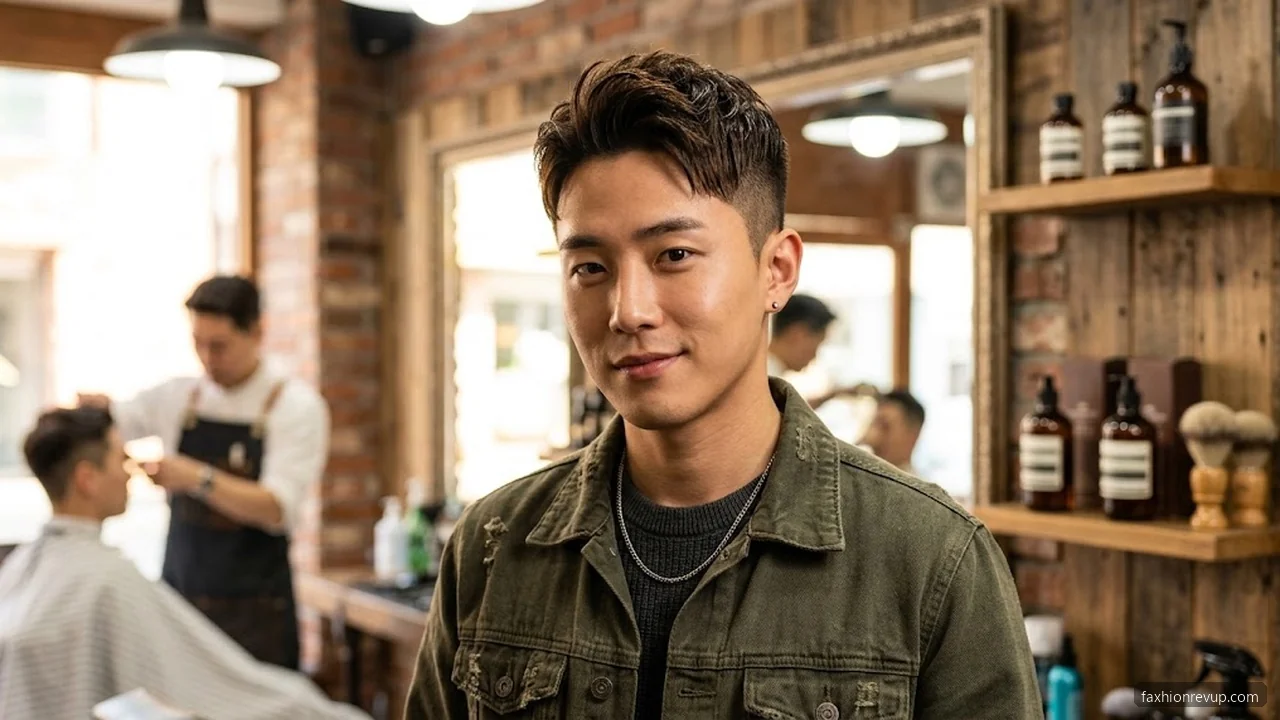
A Korean undercut takes the sides down to a #1 and leaves the top long enough to sweep back. The contrast between tight sides and a loose top makes the cut look sharp. Pomade gives the top shine and holds the sweep, while the sides stay bare. It suits straight hair that can lie flat when it is pushed back.
- Best for: square and oval faces that want a bold contrast between top and sides.
- Hair type: straight, medium to thick hair that sweeps back without splitting.
- Ask your barber: “Take the sides to a #1 and leave four inches on top.”
- Upkeep: three weeks, since the short sides grow out and lose the contrast.
KPop Style
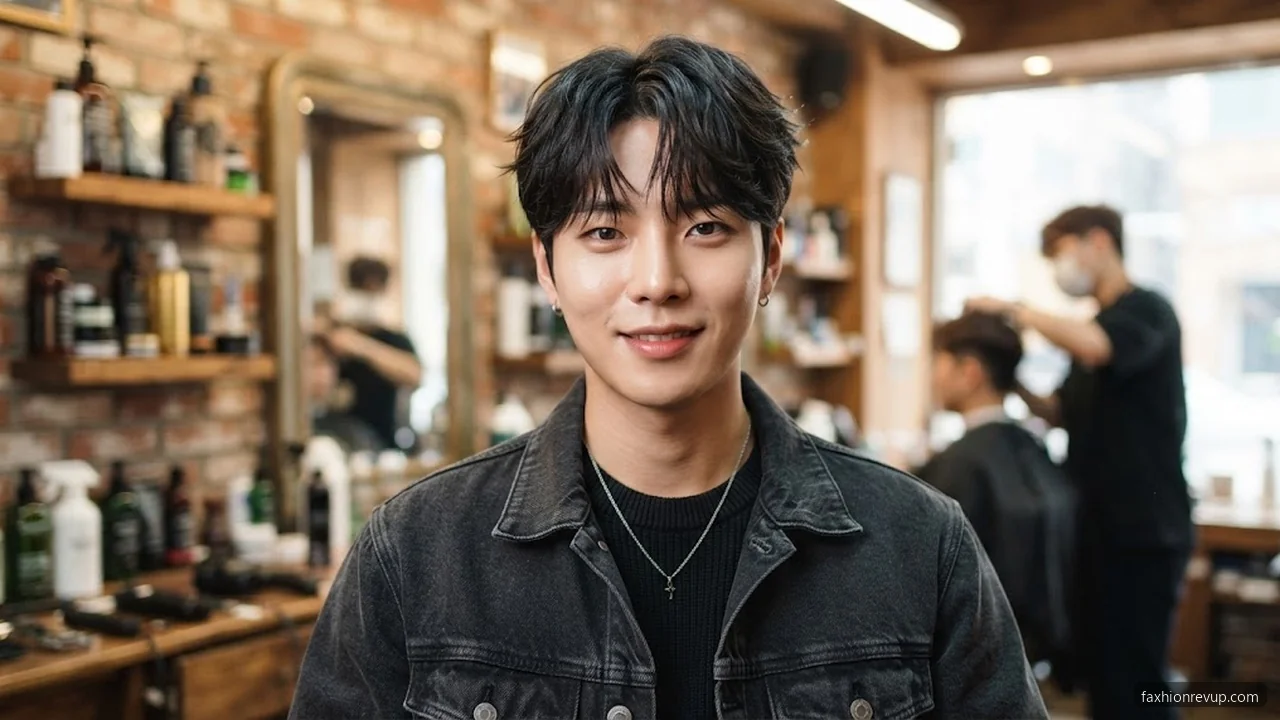
A K-pop style pulls together a perm, a long fringe and a soft, piecey finish. The hair usually carries a shadow perm or a light wave so it moves when you do. Light gel or mousse holds the shape without making it look wet. It suits medium-length hair that can take a chemical wave and still feel soft.
- Best for: oval and heart faces that want a styled, performance-ready look.
- Hair type: straight to wavy medium hair that holds a light perm.
- Ask your barber: “Add a shadow perm and keep the fringe long and piecey.”
- Upkeep: five to six weeks, since the perm relaxes as the hair grows.
Wolf Cut
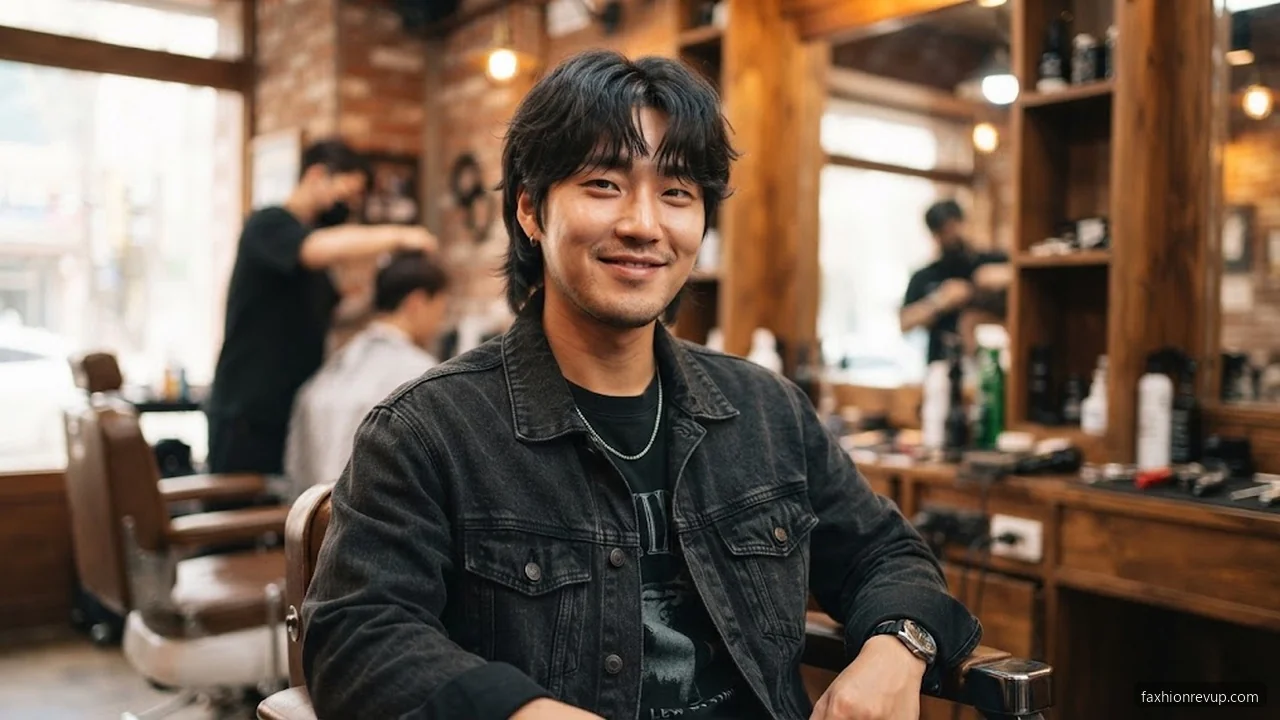
A wolf cut layers the top short and leaves the back long and shaggy. The sides taper into the length, so the shape moves from tight to loose. Wavy or curly hair brings out the layers best, while straight hair needs a light perm to match. It reads wilder than a Korean mullet because the layers are choppier.
- Best for: diamond and triangle faces that want volume at the crown and a long back.
- Hair type: wavy 2A-2C or curly 3A hair that shows the layers clearly.
- Ask your barber: “Layer the top short and keep the back long and shaggy.”
- Upkeep: six to eight weeks, since the long back keeps its shape between cuts.
Korean Mullet
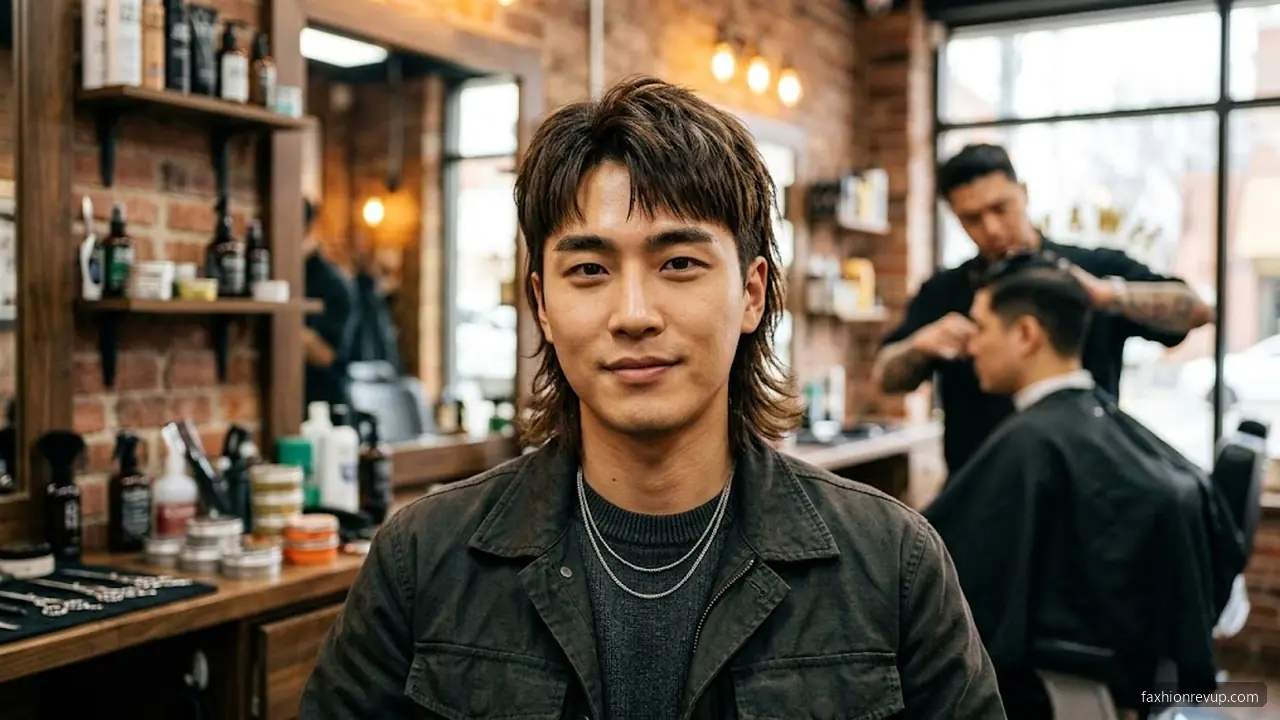
A Korean mullet keeps a two block base and lets the back grow long past the nape. The sides stay short and the fringe stays soft, which separates it from a western mullet. Matte paste adds grip so the back looks shaped rather than flat. It suits straight to wavy hair that can carry length without looking heavy.
- Best for: oblong and heart faces that want length at the back and a soft front.
- Hair type: straight to wavy 2A-2C hair with medium density and some length.
- Ask your barber: “Keep the sides short and the back long, with a soft fringe.”
- Upkeep: five weeks, because the back grows out and loses its shape.
Shaggy Cut
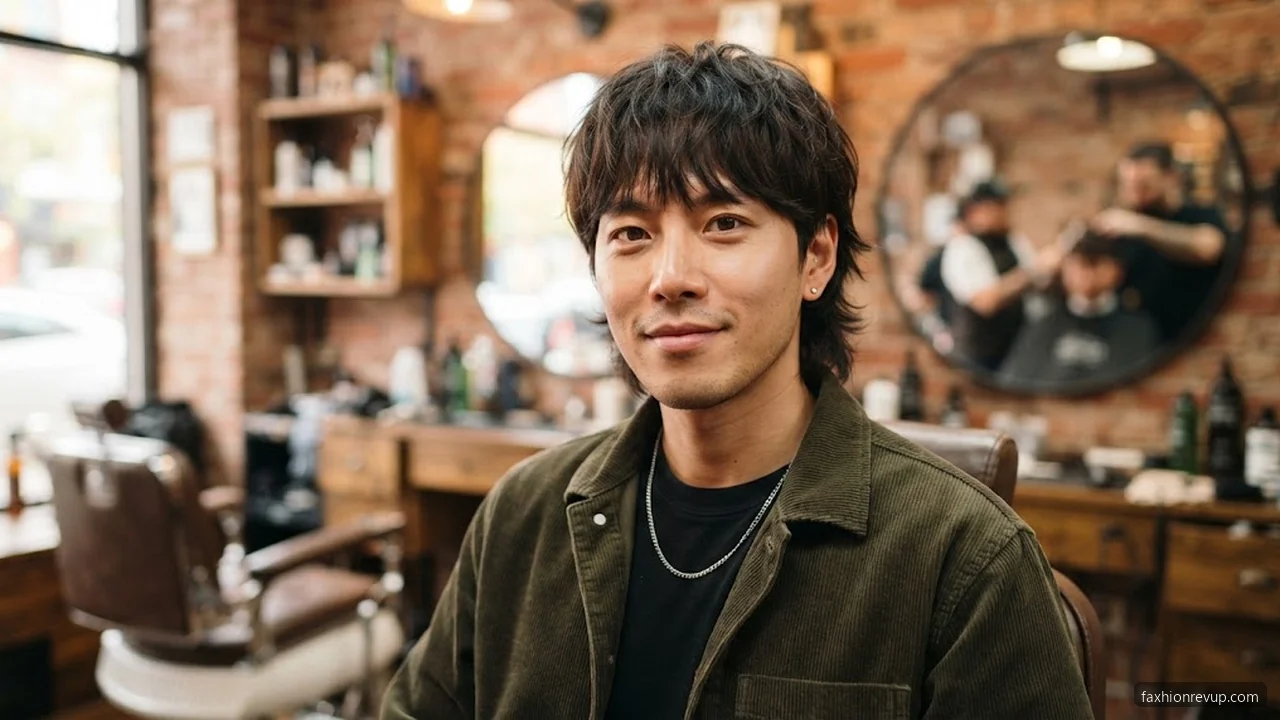
Shaggy hair carries uneven layers that start high and fall past the ears. The cut keeps weight at the sides so the shape looks full without looking round. Loose ends point outward, which gives the surface a rough finish. A shag sits between a wolf cut and a layered cut, with softer edges than both.
- Best for: triangle and square faces that want softness at the sides with height on top.
- Hair type: wavy 2A-2C or curly 3A hair that already shows a rough, uneven surface.
- Ask your barber: “Cut high layers and keep the ends uneven so the shape stays soft.”
- Upkeep: six weeks, since high layers keep their shape while the ends grow out.
Layered Cut

Layers build length in steps, so the hair falls in soft sections instead of one block. The shortest layer sits near the crown and the longest reaches the shoulders. From behind you see the ends stack rather than sit flat. This is the base cut that makes a curtain perm or a dandy cut work.
- Best for: oblong and diamond faces that need fullness at the sides and temples.
- Hair type: medium to thick hair with a natural bend that shows the layers clearly.
- Ask your barber: “Slide cut the layers and keep the longest one below the cheekbone.”
- Upkeep: seven weeks, since layers hold their shape longer than a blunt cut.
Flow Cut

The flow cut keeps length around the whole head so the hair moves as one piece. It usually reaches the jaw or a little past it, with soft ends and no hard line. A center part or a loose sweep keeps the front open. Thick hair flows best, while fine hair needs a light perm to hold the shape.
- Best for: oval and triangle faces that want movement around the jaw and neck.
- Hair type: thick straight or wavy 2A-2C hair with enough weight to hang down.
- Ask your barber: “Leave the length at the jaw and soften the ends all the way around.”
- Upkeep: eight weeks, since the long length grows out slowly without a visible line.
Long Bangs
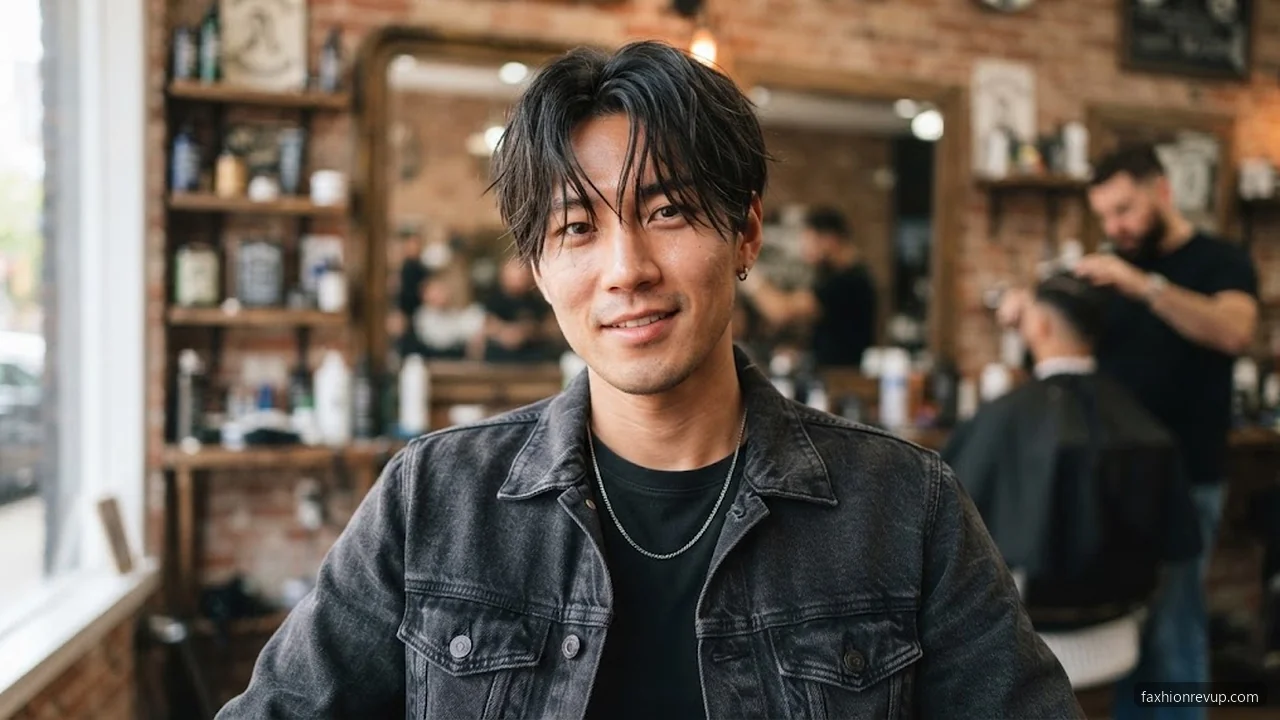
Long bangs reach past the eyebrows and sometimes touch the eyes. They carry more weight than a see-through fringe, so the forehead stays covered. The sides stay short, which keeps the front as the focus of the cut. Straight hair holds the line, while waves make the bangs break apart.
- Best for: oblong and diamond faces that want the forehead covered without tight temples.
- Hair type: straight, medium-density hair that keeps a heavy fringe in line.
- Ask your barber: “Cut the bangs just past the brow and keep the sides short.”
- Upkeep: three weeks, since heavy bangs grow into the eyes and need trimming.
Bangs with Ponytail

This style pairs a soft fringe with hair that is long enough to tie back. The bangs stay loose at the front while the rest gathers low at the nape. It suits men growing their hair out who still want a clean front. Sea salt spray keeps the bangs separated so they do not clump together.
- Best for: heart and oval faces that want a fringe now and length for tying later.
- Hair type: wavy 2A-2C hair with medium density that gathers without slipping loose.
- Ask your barber: “Keep the bangs soft at the front and leave the back long enough to tie.”
- Upkeep: six weeks, since the back length only needs a light trim at the ends.
Slicked Back
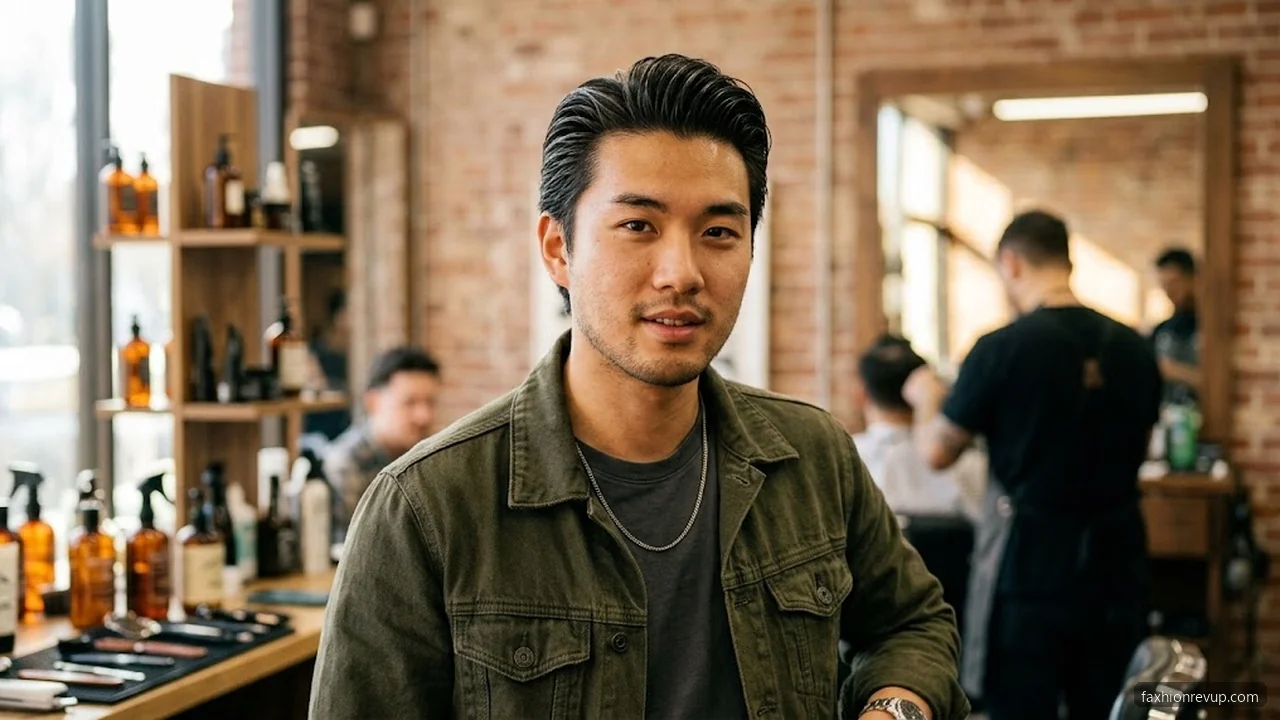
Slicked back hair runs straight from the forehead to the nape with no part. Pomade gives it a wet shine and keeps every strand in place. The cut underneath stays short at the sides and around three inches on top. It looks formal and holds through a long day, but it shows any scalp you have.
- Best for: square and diamond faces that want a formal shape with an open forehead.
- Hair type: straight, medium hair that lies flat when it is pushed back.
- Ask your barber: “Leave three inches on top and taper the sides with a #2 guard.”
- Upkeep: four weeks, because the sides grow out and break the slicked line.
Korean Perm (Wavy)
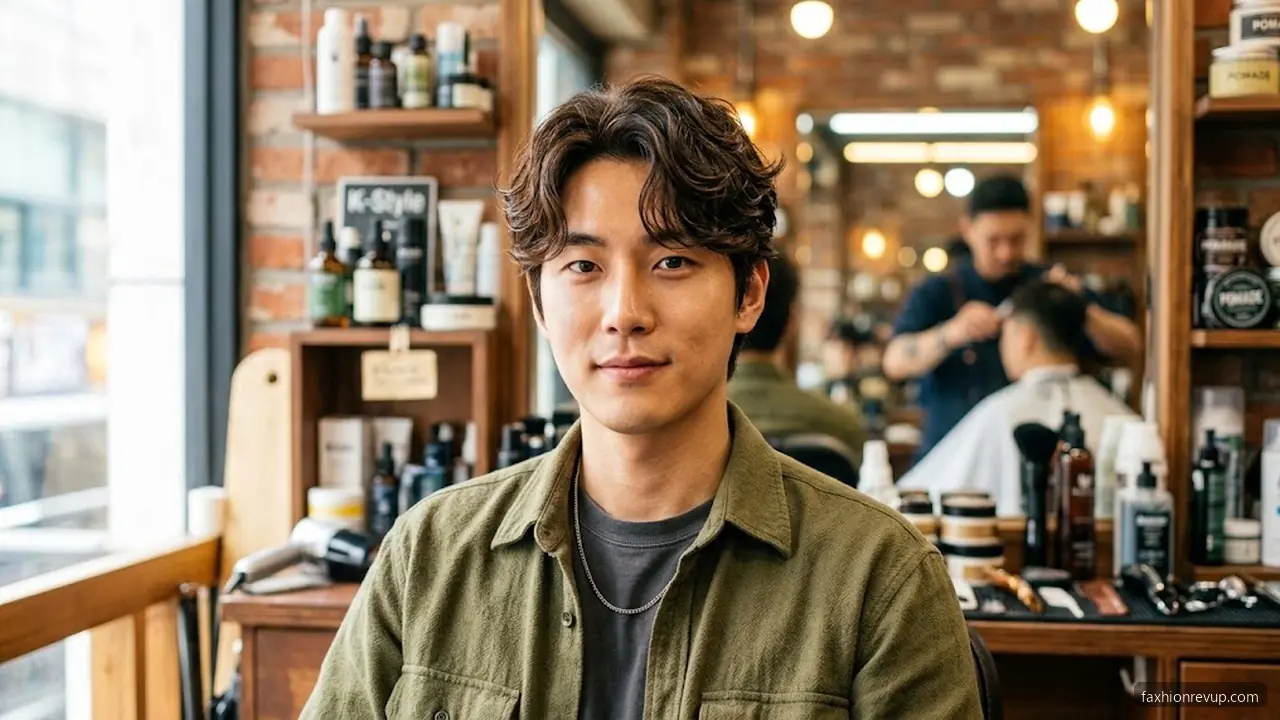
A Korean perm adds soft waves through the top and keeps the sides relaxed. The rods are set wide, so the result looks loose instead of curly. It gives straight hair the movement that a dandy or flow cut needs. The wave lasts until the permed hair grows out and is cut away.
- Best for: oblong and triangle faces that want width and movement at the sides.
- Hair type: straight, medium to thick hair that takes a chemical wave evenly.
- Ask your barber: “Set the rods wide for loose waves and keep the sides soft, not curled.”
- Upkeep: six weeks, since the wave relaxes as new hair grows at the roots.
Shadow Perm
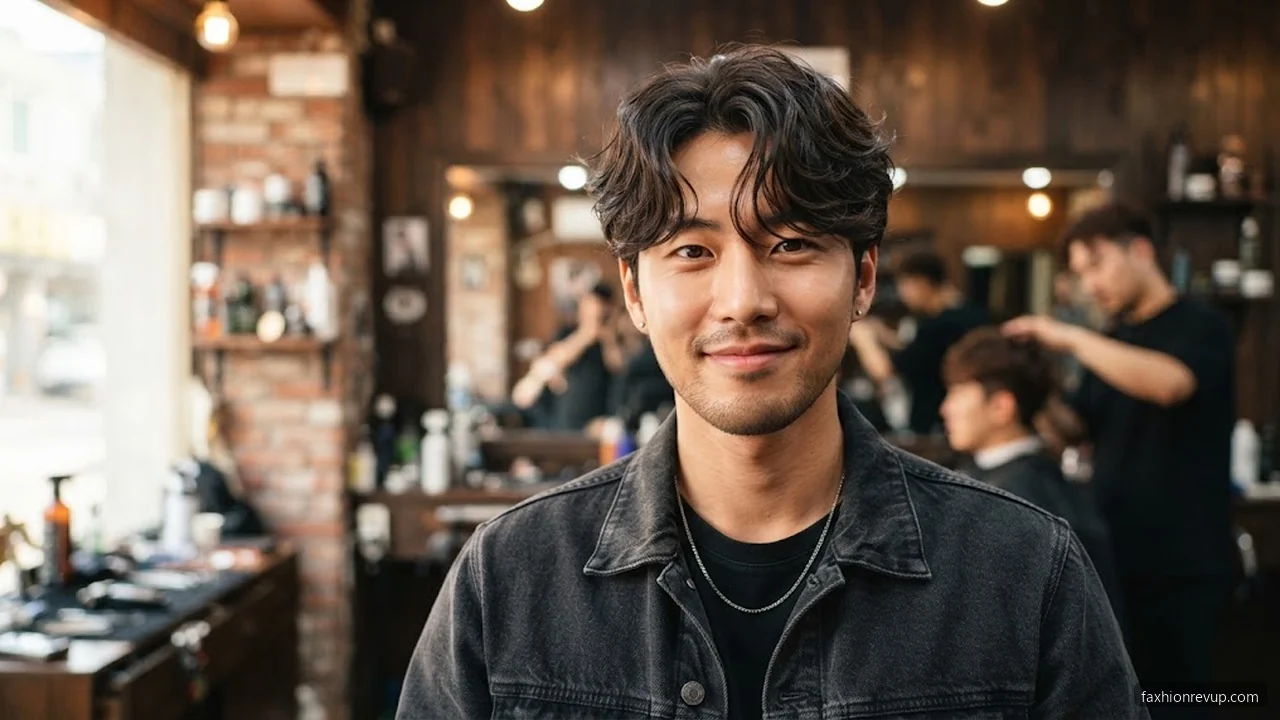
A shadow perm adds a light bend rather than a full curl. The top gains volume while the sides stay close, which keeps the shape neat. It works on men who want movement without a visible wave. Light mousse holds the bend and keeps the finish from looking wet.
- Best for: round and diamond faces that want volume on top without wide sides.
- Hair type: fine to medium straight hair that needs body at the crown.
- Ask your barber: “Perm the top for volume and leave the sides flat, with a light bend.”
- Upkeep: six weeks, because the bend fades as the permed length is trimmed.
Leaf Perm
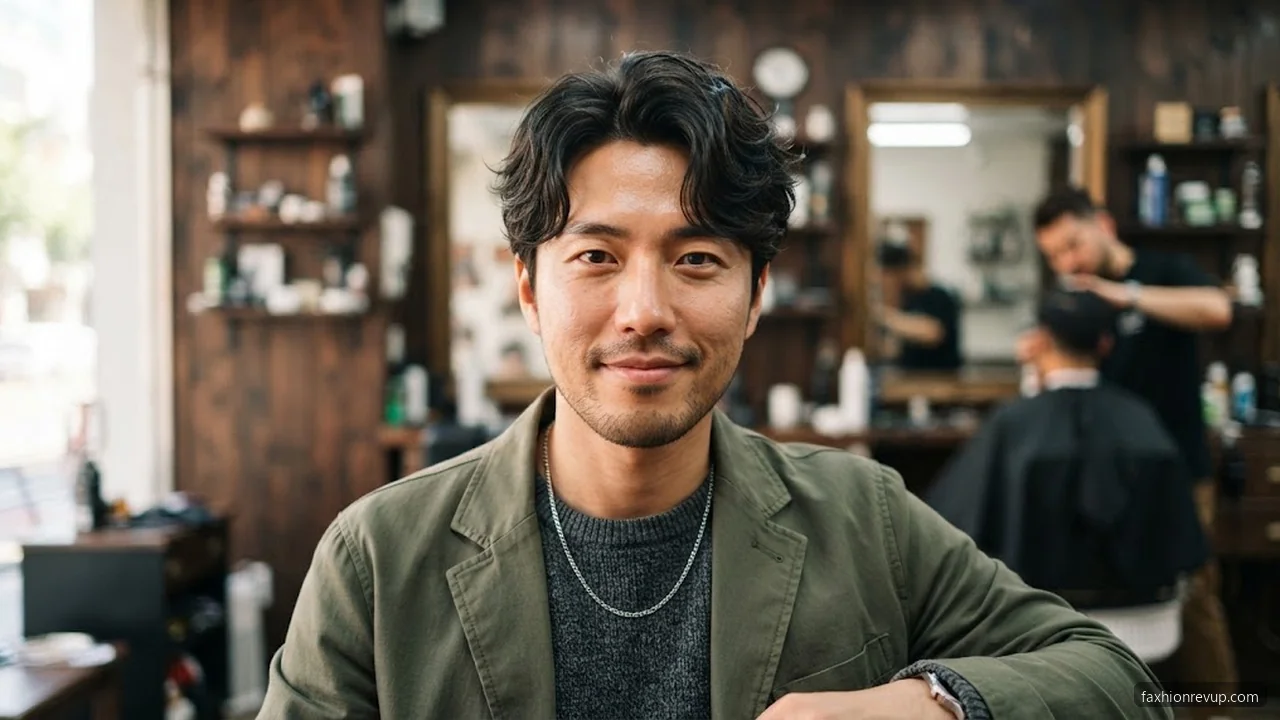
A leaf perm shapes the ends into flat, pointed pieces that look like leaves. The pattern is set with a small rod and a light hold, so the finish stays soft. It works through a fringe or a longer top, where the pointed ends show. Curl cream keeps the pieces defined and stops the ends from frizzing.
- Best for: heart and square faces that want defined ends with softness at the front.
- Hair type: medium straight or wavy hair that takes a small rod pattern well.
- Ask your barber: “Set small rods through the fringe so the ends point like leaves.”
- Upkeep: five to six weeks, since the pointed ends relax and straighten over time.
Two Block Skin Fade

A two block skin fade takes the sides down to a #0 and leaves the top long. The step between the shaved side and the heavy top is the whole point of the cut. It suits round faces best, because the bare sides add height without width. Dark, thick hair shows the blend line more than light hair does.
Ask for the skin fade to start low at the ear and keep the fringe heavy. The shortest hair sits right above the ear, so that line shows first. Book a touch-up every two weeks, since a skin fade grows back fast. A dime-sized amount of matte paste keeps the top piecey all day.
Korean Curtain Perm

A Korean curtain perm adds a soft inward curl to curtain-length hair. The rods sit on the ends, so the middle of the hair stays straight and natural. The result frames the face with a gentle bend at the cheekbone. Fine hair gains the most, because the perm gives it shape that holds.
Ask your barber to keep the length past the cheekbone and perm only the ends. Heart and diamond faces get the best balance from the added width. Wash with a sulfate-free shampoo to keep the curl from drying out. The curl fades after about six weeks, when the permed ends are trimmed away.
Korean Air Perm
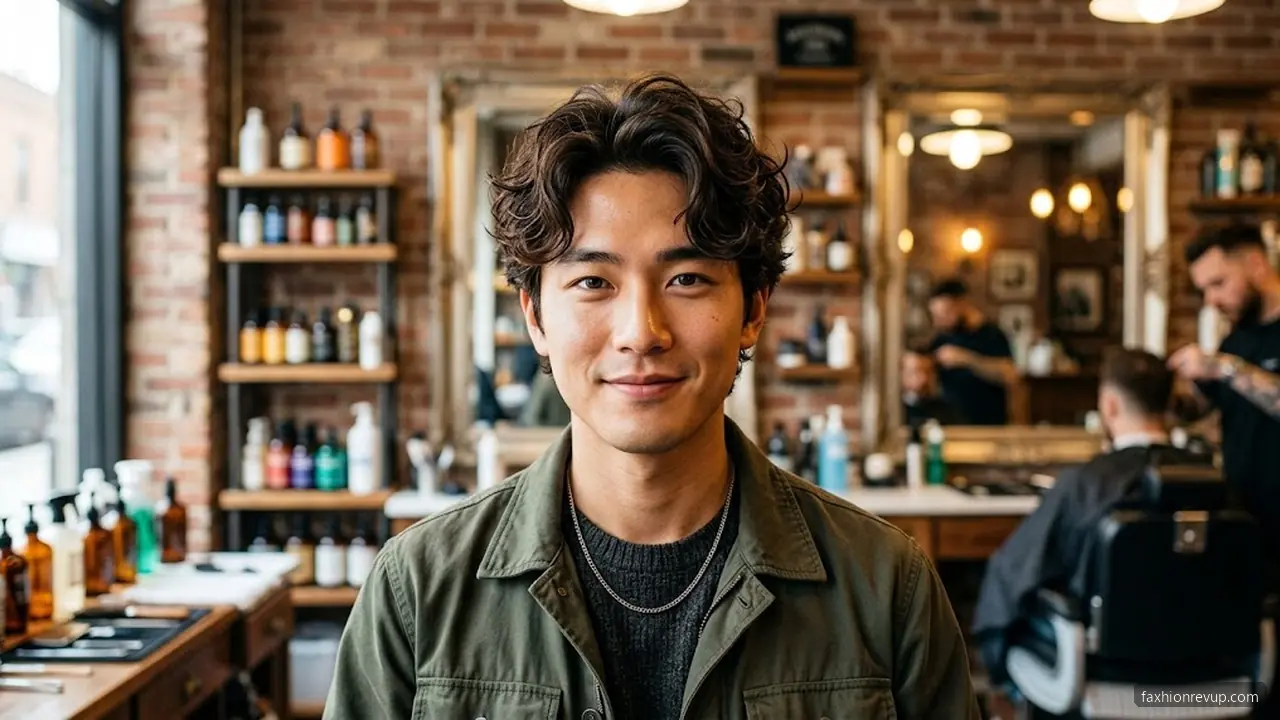
A Korean air perm lifts the roots and leaves the ends almost straight. The rods are large and the solution is light, so the hair keeps its natural feel. It gives flat hair volume at the crown without any visible curl. Round faces benefit most, since the lift adds height where they need it.
Ask for lift at the crown and keep the fringe soft so it still moves. The perm sits well under a two block or a textured fringe without changing the cut. Three sprays of sea salt spray set the lift before you dry the hair. A touch-up at six weeks keeps the volume from falling flat.
Which Korean Hairstyles Work for Short, Medium, and Long Hair?
Short cuts keep the top under two inches, so a #2 or #3 guard shapes the sides. The two block, textured crop and French crop sit in this group. Short hair suits men who want a fast morning and a clean neckline. Most of these cuts need a touch-up every three to four weeks.
Medium lengths run from two to four inches on top and are cut with scissors. The comma hair, curtain haircut, middle part and shadow perm live here. Blow drying matters more at this length, because the fringe must fall a certain way. Book a trim every four to six weeks to keep the shape.
Long styles pass the jaw and ask for eight weeks between visits. The flow cut, layered cut and Korean mullet grow well past the cheekbone. Weight pulls the hair down, so the layers must be cut to keep movement. A light curl cream controls frizz without weighing the ends down.
How Should You Ask Your Barber for a Korean Haircut?
Bring two photos and describe your hair type before you talk about the cut. Tell your barber: “Two block, #2 on the sides. Three inches on top.” Say whether you want the sides blended or left with a hard step. A step grows out slower than a fade, which matters for your schedule. See American Academy of Dermatology hair care guidelines for more.
Tell your barber: “Mid taper, #1 at the bottom blending to a #3. Leave three inches on top.” That script keeps the sideburns and nape short while the rest stays full. Add: “Keep the neckline natural and skip the square line-up.” Photo angles matter too. So, bring a front, side and back shot.
Mention the fade height, because a low fade and a mid fade look very different. Tell your barber: “Skin fade on the sides, low at the ear. Keep the top long.” Dark thick hair shows clipper marks. So, ask for a soft blend there. Fine hair hides blend lines, which gives your barber more room.
Common mistakes: a barber thins the fringe too much, which makes it stringy. Another thins the sides on fine hair, so the shape goes flat. Ask for point cutting on the top rather than a pass with thinning shears. Say “keep the weight in the fringe” if you want it to fall straight.
For perms, say “loose wave, not a tight curl” and point at a photo. Ask how long the solution stays on, since timing controls the result. If your scalp burns, speak up at once instead of waiting it out. Book the cut and the perm on separate days when you can.
How to Style Korean Hairstyles?
Start on damp hair and add three sprays of sea salt spray at the roots. Blow dry upward with a round brush to build volume at the crown. Aim the nozzle down the hair shaft so the cuticle lies flat. Stop when the hair is ninety percent dry, then switch to cool air. See Healthline hair health and wellness resources for more.
Scoop a pea-sized amount of matte clay and rub it between your palms. Work it from the back to the front so the fringe gets the last of it. Pinch the ends into small pieces instead of smoothing them down flat. Add a second pea-sized scoop only if the hold drops by midday.
For slicked looks, use pomade and comb the hair back while it is damp. A wide-tooth comb sets the direction without pulling strands out of line. Wavy hair takes more product than straight hair does, so add a little at a time. Keep the sides flat with a light pass of the comb and your palm.
Curly and permed hair needs a different order, so start with curl cream on wet hair. Scrunch upward and let the hair air dry without touching it at all. Light gel holds the shape, but too much makes the curls look wet. Break the cast with dry hands once the hair is fully dry.
How to Maintain a Korean Hairstyle?
Between visits, the shape holds or it does not, and the difference comes down to a few habits. Wash less often, condition the ends, and keep the fringe trimmed on schedule. Permed hair needs a sulfate-free shampoo to stop the wave from drying out. A steady routine keeps the shape sharp and the ends healthy too.
Frequently Asked Questions
What are the most popular Korean Hairstyles for Men right now?
The two block, comma hair and shadow perm top the list right now. Each keeps length on top and softness at the sides, which is the shared look. Curtain cuts and down perms follow close behind for men with thick sides. Popularity shifts with the season, but these four shapes stay steady all year.
Can I Get a Korean Haircut at a Regular Western Barbershop?
Many barbers can cut the shape once they see a clear photo. The risk is a tight fade where you wanted a soft step on the sides. Say “no skin fade, keep the sides at a #2 or #3” before they start. A Korean salon is worth the trip if you want the perm too.
Will a Korean Perm Damage My Hair?
A perm always changes the hair, so some dryness follows the treatment. Loose waves use a milder solution than tight curls do, which limits the damage. Skip a second perm within eight weeks and condition the ends every wash. Hair that is already bleached should not be permed at all.
How Long Does It Take to Grow Into a Korean Hairstyle?
Hair grows about half an inch a month, so a fringe takes three months. Growing the sides out from a fade takes longer than the top does. A short textured cut is the fastest route in, at around six weeks. A shadow perm adds volume at the crown while your length catches up.
Do Korean Hairstyles Work on Non-Asian Hair Types?
Yes, though the sides usually need more help on fine Western hair. A down perm flattens the sides that would otherwise puff out by lunchtime. Wavy 2A-2C hair takes the shapes easily and needs less product. Coils from 4A to 4C need a longer fringe and a lighter hand.
How Do I Stop My Korean Fringe from Going Flat by Midday?
Flat fringe usually means the roots have no grip, so start with sea salt spray. Three sprays at the roots give the hair something to hold onto. Blow dry the fringe upward first, then push it forward as it cools. A pea-sized amount of matte clay at the roots keeps the lift.
What’s the Difference Between a Two Block and an Undercut?
A two block keeps a visible step between the short sides and the long top. An undercut takes the sides shorter and sweeps the top back instead of forward. The two block looks softer and grows out with less visible contrast. Pick the undercut if you want a sharper line around the head.
How Much Does a Korean Perm Cost?
A Korean perm is priced by your salon, so ask for a quote before you book. Price depends on the length of your hair and the number of rods used. A down perm costs less, since only the sides take the solution. Add a cut on top if your shape needs tidying at the same visit.
Should I Wash My Hair Before a Korean Haircut Appointment?
Wash the night before or the morning of, but skip heavy product. Clean hair lets your barber read the natural growth pattern at the crown. Clay and pomade left in the hair clog the clippers and hide the real shape. Skip conditioner on the day if you want a perm at the same visit.
What’s the Difference Between a Down Perm and a Shadow Perm?
A down perm flattens the sides and leaves the top of your hair alone. A shadow perm adds volume at the top while the sides stay flat. Most men book both together, since they solve opposite problems on one head. Choose the down perm first if your sides puff out within a week.
Conclusion
Book a two block if your face is round and you want height on top. Choose a curtain cut or comma hair if your forehead is wide and needs framing. A shadow perm adds movement when your hair lies flat by noon. Start with the shorter cut and grow into the longer shape over time.
In the chair, give the guard, the length and the fade height in one breath. Bring a front, side and back photo so nothing gets lost in translation. Return every three to six weeks, depending on how tight the sides are. Korean Hairstyles for Men reward a steady routine more than any single product.
Peter Johnson has spent over 10 years behind the chair as a licensed barber and hairstylist, working with men’s grooming brands across the US. He writes for faxhionrevup.com to bring practical, tested haircut advice to everyday readers. Peter stays current with trends through hands-on client work and industry training, ensuring every guide reflects real barbering expertise.