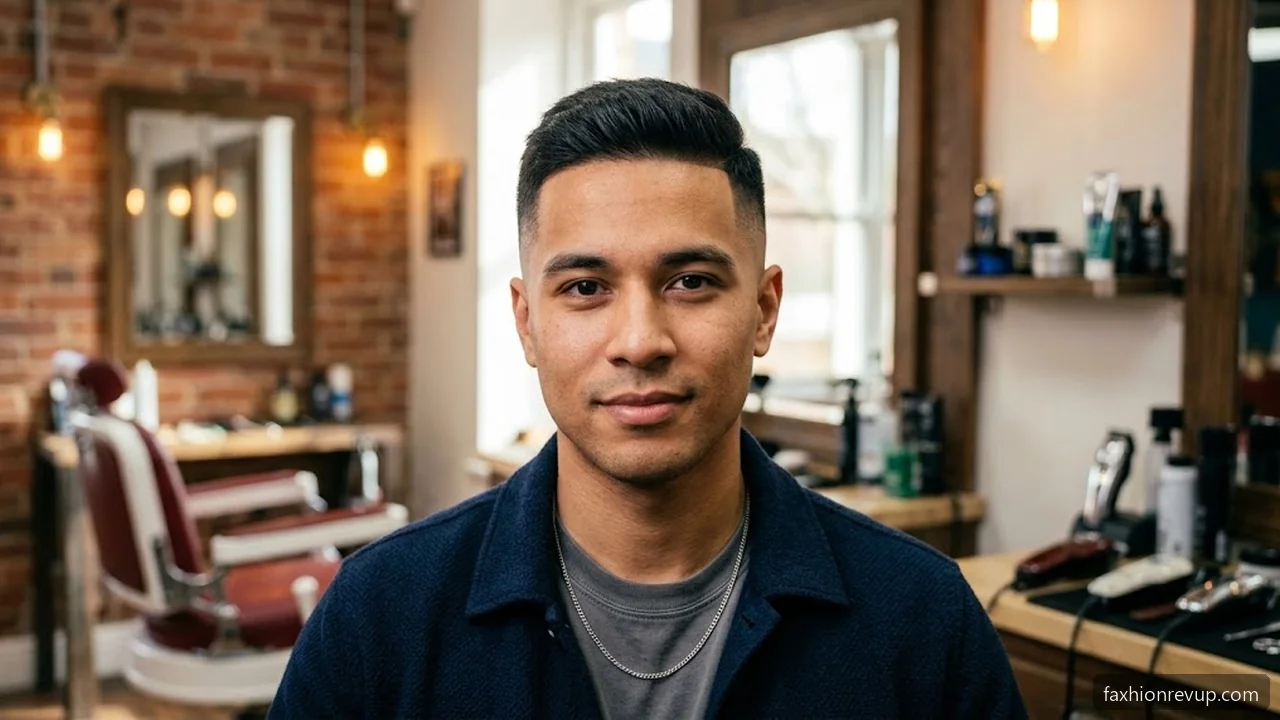
Low Fade vs Mid Fade vs High Fade: Which One Wins in 2026?

For most men, Low Fade vs Mid Fade vs High Fade depends on where the shortest hair starts. A low fade begins just above the ear and neckline, which keeps the sides fuller. A mid fade starts at the temple line, so it sits higher and looks sharper. A high fade starts near the parietal ridge, leaving a bold line that needs frequent trims.
Your face shape and hair type decide the best fade height for you. Round faces gain height from a high fade and tighter sides. Curly hair suits any height when the blend stays soft. Check your schedule first, since high fades need trims every two to three weeks.
Quick Answer
Low Fade vs Mid Fade vs High Fade depends on where the shortest hair starts. Low fade sits above the ear, mid fade at the temple, high fade near the ridge. Low fades suit oval faces, high fades add height for round faces. High fades need trims every two to three weeks, low fades every three to four.
Low Fade vs Mid Fade vs High Fade: Side-by-Side Comparison
| Fade Type | Starting Height | Best For | Maintenance |
|---|---|---|---|
| Low fade | Just above the ear and neckline | Oval and heart faces, straight or wavy hair | Touch-up every 3-4 weeks |
| Mid fade | Temple line | Square and heart faces, most hair types | Touch-up every 3-4 weeks |
| High fade | Near the parietal ridge | Round and square faces, thick hair | Touch-up every 2-3 weeks |
| Skin fade | Goes to #0 or foil shaver | Oval and square faces, curly hair | Touch-up every 2-3 weeks |
| Drop fade | Curves down behind the ear | Diamond and heart faces, curly hair | Touch-up every 3-4 weeks |
| Burst fade | Arcs around the ear | Round and triangle faces, thick hair | Touch-up every 3-4 weeks |
| Taper fade | Sideburns and nape only | Oblong and heart faces, fine hair | Touch-up every 3-4 weeks |
| Mid taper | Sideburns and nape, keeps length | Oblong and diamond faces, wavy hair | Touch-up every 4 weeks |
What Is the Key Difference Between Low, Mid, and High Fade?
The height where your barber starts the shortest section is the main difference. A low fade keeps the most hair on the sides and grows out slowly. A mid fade removes weight at the temple and sharpens your jawline. A high fade leaves almost no hair above the ear and needs the most trims.
Low Fade vs Mid Fade: What Is the Difference?
A low fade starts just above your ear, so the sides keep visible length. A mid fade starts at the temple, which sits two to three inches higher on your head. That higher start removes more weight and makes the face look longer. Choose a low fade for a soft grow-out and a mid fade for a sharper finish.
Low Fade vs High Fade: What Is the Difference?
A low fade keeps some length above the ear and blends the sides and back short. A high fade starts near the parietal ridge, so it removes almost all side weight. That makes a high fade bold and a low fade subtle. Low fades need trims every three to four weeks, while high fades need them every two to three weeks. See American Academy of Dermatology hair care guidelines for more.
High Fade vs Mid Fade: What Is the Difference?
A mid fade starts at the temple and a high fade starts at the parietal ridge. The high version sits roughly one to two inches higher and takes off more hair. Mid fades blend more gently, so they look clean without a hard line. High fades give round faces height, but mid fades suit more face shapes overall. See Healthline hair health and wellness resources for more.
Skin Fade vs High Fade: What Is the Difference?
A high fade uses clippers with a guard and stops at a very short length. A skin fade goes all the way to #0 or a foil shaver, so you see bare skin. That makes a skin fade sharper and a high fade slightly softer. Both need a touch-up every two to three weeks to stay clean.
Which Fade Suits Your Face Shape?
Your face shape decides how much height and side weight you can handle. Round faces need a high fade to add length, while oblong faces should skip tall fades. Square faces can wear any height, because strong jawlines handle tight sides well. Diamond faces benefit from a low fade that keeps some fullness at the temples.
| Face Shape | Best Fade | Why It Works |
|---|---|---|
| Round | High fade | Adds height on top and slims the cheeks. |
| Square | Mid fade | Sharpens a strong jaw without hiding it. |
| Oblong | Low fade | Keeps side fullness and avoids tall height. |
| Heart | Mid fade | Balances a wide forehead and narrow chin. |
| Diamond | Low fade | Keeps temples fuller and avoids tight sides. |
| Triangle | Low fade with top volume | Adds upper width without tightening the jaw. |
Which Fade Suits Your Hair Type?
Hair type changes how a fade looks and how long it stays sharp. Straight hair shows clipper lines clearly, so guard choice matters more. Curly and coily hair hides lines but needs careful blending at the transition. Thick hair can carry a burst fade, while fine hair suits a soft taper.
Straight Hair: Which Fade Works

Straight hair shows every guard line, so your barber must blend with half sizes. A #1 to #2 guard on the sides keeps a low fade clean for three to four weeks. Mid fades need a #0.5 to #1.5 guard and more overlap passes to avoid hard steps. High fades on straight hair look very sharp, but any missed blend shows right away.
- Low fade: Ask for a #1.5 guard at the ear and a #2 near the top of the sides.
- Mid fade: Request a #1 guard at the temple and a #1.5 guard one inch above.
- High fade: Use a #0.5 guard at the parietal ridge and a #1 guard below it.
Curly Hair: Which Fade Works
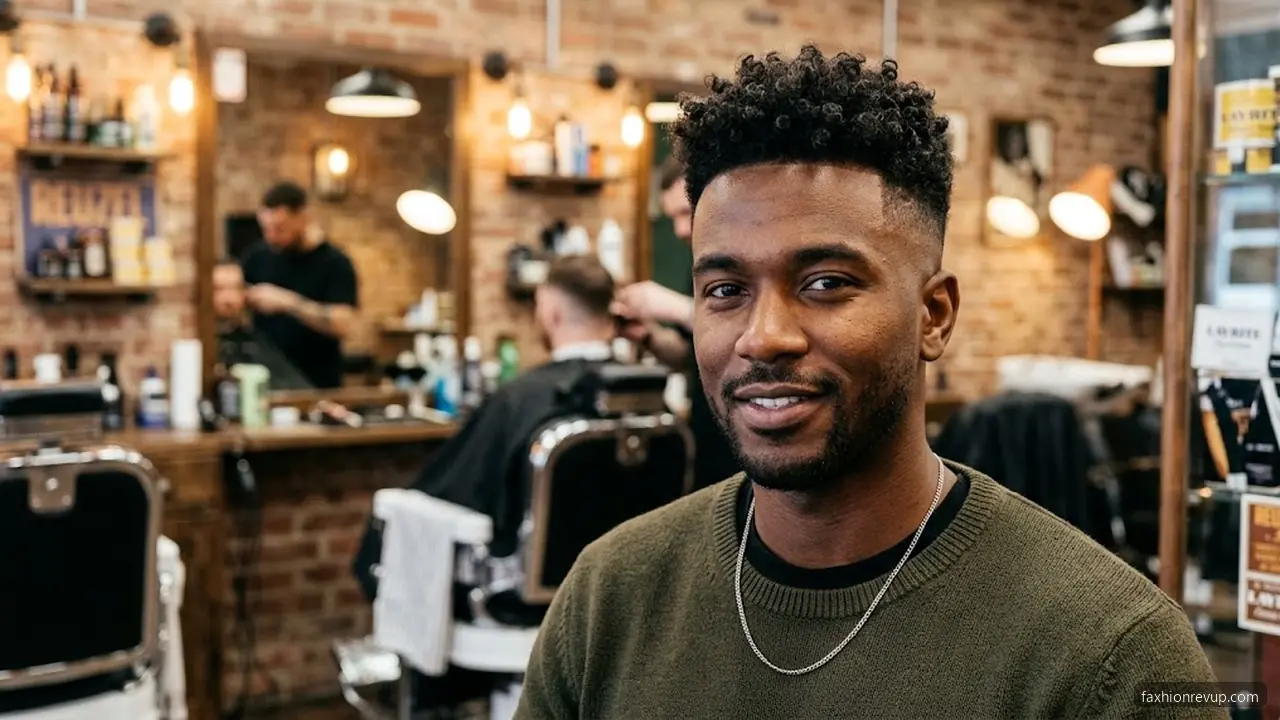
Curly hair can wear any fade height if the transition stays soft. A low fade leaves more weight around the ears, which supports 3A to 3C curls. A mid fade removes bulk at the temples, so 4A to 4C coils need a curl cream for definition. A high fade works on 2A to 2C waves if your barber cuts the top with scissors.
- Low fade + curly hair: Keep a #2 guard at the sideburn and let the curls cover the blend.
- Mid fade + curly hair: Use a #1 guard at the temple and add curl cream to wet ends.
- High fade + curly hair: Ask for a #0.5 guard near the ridge and keep three inches on top.
Burst Fade for Thick Hair
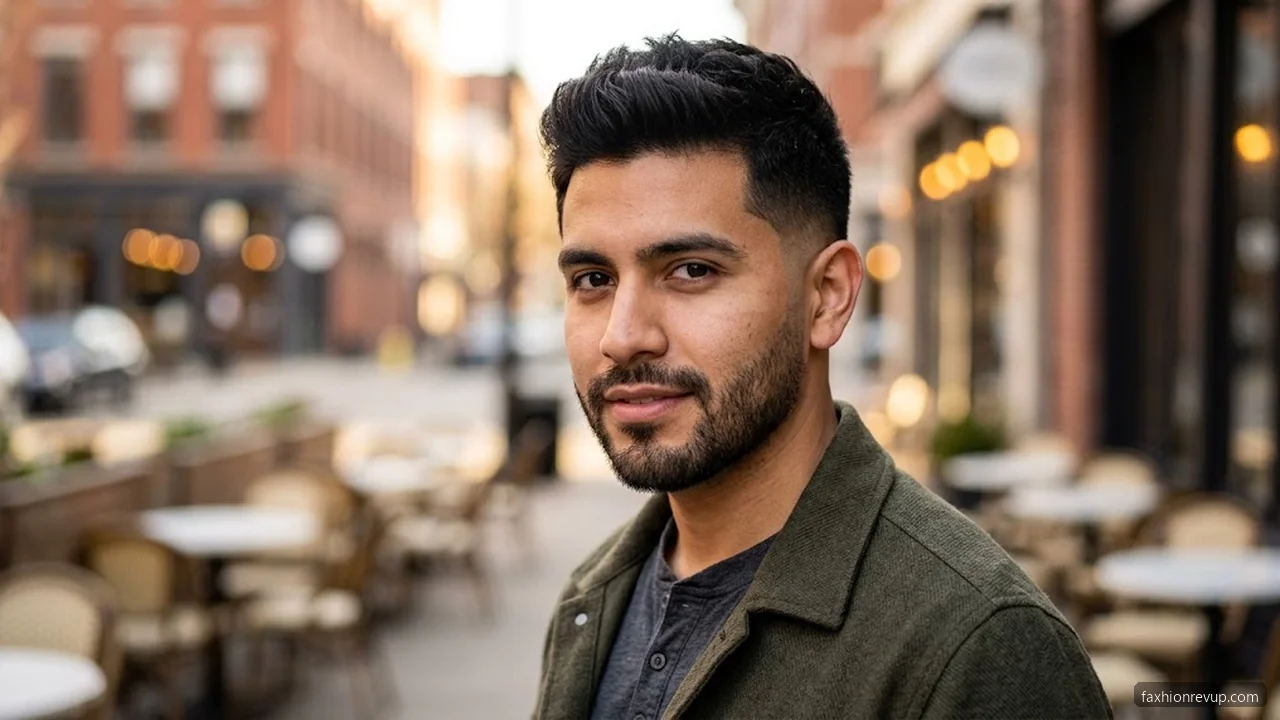
- Guard range: Use a #0.5 to #2 guard, then blend the arc with a #1 guard.
- Fade height: Start at the temple and arc the fade around the ear.
- Best texture: Thick straight or wavy hair holds the burst shape without extra product.
Drop Fade for Curly Hair

- Guard range: Use a #1 to #2 guard and drop the line with a #0.5 guard.
- Fade height: Begin at the temple and curve the fade low behind the ear.
- Best texture: 3A to 3C curls and thick waves keep the drop line soft.
Which Fade Suits Your Lifestyle?
Your daily routine and workplace rules should guide the fade height you choose. A high fade looks sharp but demands a barber visit every two to three weeks. A low fade grows out neatly, so busy men can wait three to four weeks. If you wear a helmet or play sports, a mid fade keeps hair off your face without looking bare.
What to Tell Your Barber?
Bring a photo and use guard numbers, because words like short or medium mean different things. Say where the fade should start: above the ear, at the temple, or near the ridge. Ask your barber to blend with half guards if you have straight hair. Mention how often you want to return, so they can leave enough length for your schedule.
How Often Should You Get Each Fade?
| Fade | Touch-Up Interval | Full Re-Cut | At-Home Fix |
|---|---|---|---|
| Low fade | 3-4 weeks | 6-8 weeks | Tidy neckline with #2 guard. |
| Mid fade | 3-4 weeks | 6-8 weeks | Blend temple with #1.5 guard. |
| High fade | 2-3 weeks | 4-6 weeks | Refresh sides with #0.5 guard. |
Quick Decision Guide
Use the guard number and the starting height as your two main filters. If you want low upkeep, pick a low fade or taper. If you have a round face, a high fade adds the height you need. If you have curly hair, any height works when your barber blends the transition well.
What is the difference between low, mid, and high fade?
The starting point separates the three fades more than any other detail. A low fade begins just above the ear and neckline. A mid fade begins at the temple line. A high fade begins at or above the temple near the parietal ridge. This leaves the least hair on the sides.
Common Mistakes to Avoid
- Asking for a high fade when you have an oblong face, which makes your head look longer.
- Using a #0 guard on straight hair without blending, because clipper marks show badly.
- Skipping the half guard between #1 and #2, which leaves a visible step in the fade.
How to Style Each Fade and Which Products
- Low fade: Use a dime-sized amount of matte clay on dry hair for a natural finish.
- Mid fade: Apply a pea-sized amount of pomade to damp hair for shine and control.
- High fade: Spray sea salt spray six times on damp hair, then blow-dry upward for volume.
Frequently Asked Questions
Low Fade vs Mid Fade vs High Fade: which should I get?
Choose a low fade if you want low upkeep and a soft grow-out. Pick a mid fade for a sharper temple line that still suits most face shapes. Go high if you have a round or square face or want bold contrast. Your barber can adjust the starting height after seeing your hair pattern.
Which fade lasts the longest?
A low fade lasts the longest between visits because it keeps more length on the sides. Most low fades look neat for three to four weeks. A mid fade gives you a similar window if your hair grows evenly. High and skin fades need attention every two to three weeks.
Which fade is best for a round face?
A high fade works best for a round face because it adds height and tightens the sides. That combination makes your face look longer and leaner. Ask your barber to leave two to three inches on top for extra lift. Skip any fade that adds volume at the sides.
Which fade is most versatile?
A mid fade is the most versatile because it suits square, oval, and heart faces. It also works on straight, wavy, and curly hair without looking extreme. You can wear it with a short top or three inches of length. That range makes it a safe first fade for most men.
What is the difference between a low fade and a mid taper?
A low fade blends the whole sides and back down to a short length. A mid taper only shortens the sideburns and nape while keeping length there. That means a low fade looks tighter and needs more frequent trims. A mid taper grows out more softly and lasts three to four weeks.
What is the difference between a skin fade and a high fade?
A high fade stops at a very short guard length near the parietal ridge. A skin fade goes all the way to #0 or a foil shaver for bare skin. That makes the skin fade sharper and the high fade slightly softer. Both need a touch-up every two to three weeks.
Can curly hair get any of the three fades?
Yes, curly hair can wear a low, mid, or high fade. The key is blending the transition so the curls do not sit on a hard line. Use a curl cream or light gel to define the top and reduce frizz. A #1 to #2 guard on the sides keeps the shape soft.
Which fade is best for straight hair?
A low fade works well on straight hair because it hides clipper marks near the ear. A mid fade also looks clean if your barber uses half guards. High fades on straight hair look very sharp but show any missed blend. Ask for a #1.5 guard at the temple for a softer line.
How do I ask for a fade without getting it too high?
Tell your barber exactly where the fade should start, using the ear or temple as a landmark. Say you want the shortest point no higher than the temple line. Ask them to blend with a #1.5 guard above the fade. Show a photo if you can, because words like high mean different things.
How often should I touch up a fade at home?
You can tidy a low fade at home every two weeks with a #2 guard on the neckline. A mid fade needs a #1.5 guard around the temples every ten days. High fades are hard to fix at home without leaving marks. Visit your barber every two to four weeks depending on your fade.
Conclusion
For most men, the safest first choice is a mid fade because it balances sharpness and upkeep. Choose a low fade for a softer grow-out and fewer barber visits. Pick a high fade if you have a round or square face or want bold contrast. The Low Fade vs Mid Fade vs High Fade decision starts with your face shape and routine.
In the chair, say the starting height and a guard number, then ask for a soft blend. Book your next visit based on the fade you chose, not on how it looks today. Low fades last three to four weeks, and high fades need two to three. That schedule keeps your cut looking fresh without extra guesswork.
Peter Johnson has spent over 10 years behind the chair as a licensed barber and hairstylist, working with men’s grooming brands across the US. He writes for faxhionrevup.com to bring practical, tested haircut advice to everyday readers. Peter stays current with trends through hands-on client work and industry training, ensuring every guide reflects real barbering expertise.